Shulph Ink
Artificial Intelligence, Machine Learning, and Deep Learning in Precision Medicine in Liver Diseases: Concept, Technology, Application and Perspectives
Artificial Intelligence, Machine Learning, and Deep Learning in Precision Medicine in Liver Diseases: Concept, Technology, Application and Perspectives
💎 Earn 618 Points (£6.18) on this item.
YOU SAVE £10.38
- Condition: Brand new
- UK Delivery times: Usually arrives within 2 - 3 working days
- UK Shipping: Fee starts at £2.39. Subject to product weight & dimension
Bulk ordering. Want 15 or more copies? Get a personalised quote and bigger discounts. Learn more about bulk orders.
Couldn't load pickup availability
- More about Artificial Intelligence, Machine Learning, and Deep Learning in Precision Medicine in Liver Diseases: Concept, Technology, Application and Perspectives
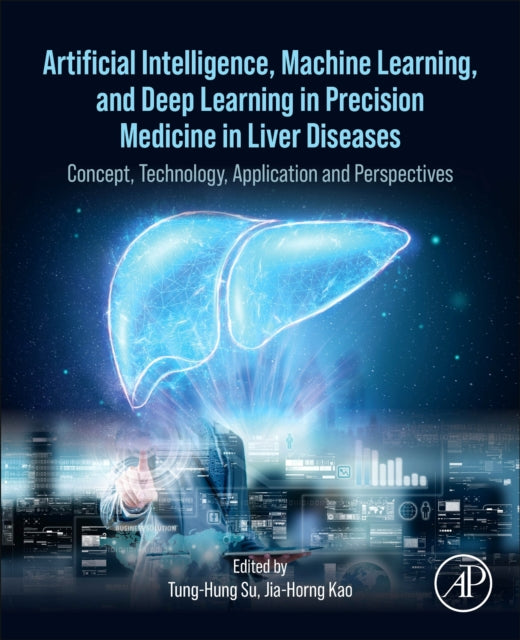
Artificial Intelligence, Machine Learning, and Deep Learning in Precision Medicine and Liver Diseases: Concept, Technology, Application, and Perspectives combines four major applications of AI in clinical medicine specific to liver diseases, providing a state-of-the-art summary of AI in precision medicine in hepatology. It covers data preparation, methodology, and application within disease-specific cases, as well as ethical and legal issues and future challenges.
Format: Paperback / softback
Length: 350 pages
Publication date: 22 August 2023
Publisher: Elsevier Science & Technology
Artificial Intelligence (AI),Machine Learning (ML),and Deep Learning (DL) have emerged as powerful tools in precision medicine and liver diseases, offering significant advancements in diagnosis, treatment, and disease management. In this comprehensive book, we delve into the intricate world of AI in clinical medicine, specifically focusing on its applications in liver diseases.
Radiology Imaging: AI plays a pivotal role in radiology imaging, enabling doctors to interpret medical images with greater accuracy and efficiency. By leveraging advanced algorithms and machine learning techniques, AI can assist in identifying abnormalities, diagnosing diseases, and monitoring treatment progress. For instance, AI-powered tools can analyze CT scans, MRI images, and X-rays to detect liver tumors, liver fibrosis, and other liver-related conditions.
Electronic Health Records: Electronic health records (EHRs) hold immense potential for AI integration. By analyzing vast amounts of patient data, AI can help identify patterns, predict disease outcomes, and optimize treatment plans. AI algorithms can also assist in drug discovery, disease risk assessment, and patient monitoring, leading to improved patient care and reduced healthcare costs.
Pathology: AI is revolutionizing pathology by enabling faster and more accurate diagnosis of diseases. By analyzing tissue samples and histological images, AI can assist pathologists in identifying microscopic abnormalities, distinguishing between different disease subtypes, and providing personalized treatment recommendations. For example, AI-powered tools can help detect cancerous cells, analyze genetic mutations, and predict disease progression.
Multiomics: Multiomics is the study of multiple biological markers, such as DNA, RNA, proteins, and metabolites, to gain a comprehensive understanding of disease. AI is particularly useful in multiomics analysis, as it can handle large datasets, identify patterns, and make predictions based on complex data. For instance, AI can help identify biomarkers for liver diseases, predict disease progression, and develop personalized treatment strategies.
The book provides a comprehensive overview of AI in precision medicine in hepatology, clarifying the concept and technology of AI and highlighting its current and future applications. Coverage includes data preparation, methodology, and application within disease-specific cases, such as fibrosis, viral and steatohepatitis, cirrhosis, hepatocellular carcinoma, acute liver failure, liver transplantation, and more. The ethical and legal issues surrounding AI are also discussed, along with future challenges and perspectives.
By highlighting numerous new AI applications that can further research, diagnosis, and treatment, this reference serves as an invaluable resource for practicing hepatologists and researchers interested in AI applications in medicine. The integration of AI in precision medicine has the potential to revolutionize the field of hepatology, leading to improved patient outcomes and a better understanding of liver diseases.
In conclusion, Artificial Intelligence,Machine Learning,and Deep Learning in Precision Medicine and Liver Diseases: Concept,Technology,Application,and Perspectives is a comprehensive guide that explores the transformative power of AI in clinical medicine, particularly in liver diseases. By leveraging advanced technologies and machine learning techniques, AI can enhance diagnostic accuracy, optimize treatment plans, and improve patient care. As the field of AI continues to evolve, we can expect even more exciting developments in precision medicine and liver diseases.
Weight: 732g
Dimension: 190 x 237 x 20 (mm)
ISBN-13: 9780323991360
This item can be found in:
UK and International shipping information
UK and International shipping information
UK Delivery and returns information:
- Delivery within 2 - 3 days when ordering in the UK.
- Shipping fee for UK customers from £2.39. Fully tracked shipping service available.
- Returns policy: Return within 30 days of receipt for full refund.
International deliveries:
Shulph Ink now ships to Australia, Belgium, Canada, France, Germany, Ireland, Italy, India, Luxembourg Saudi Arabia, Singapore, Spain, Netherlands, New Zealand, United Arab Emirates, United States of America.
- Delivery times: within 5 - 10 days for international orders.
- Shipping fee: charges vary for overseas orders. Only tracked services are available for most international orders. Some countries have untracked shipping options.
- Customs charges: If ordering to addresses outside the United Kingdom, you may or may not incur additional customs and duties fees during local delivery.