Shulph Ink
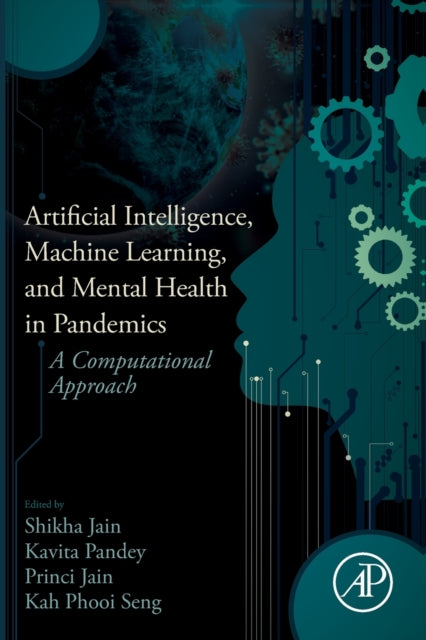
Artificial Intelligence, Machine Learning, and Mental Health in Pandemics: A Computational Approach
Artificial Intelligence, Machine Learning, and Mental Health in Pandemics: A Computational Approach
💎 Earn 526 Points (£5.26) on this item.
YOU SAVE £9.77
- Condition: Brand new
- UK Delivery times: Usually arrives within 2 - 3 working days
- UK Shipping: Fee starts at £2.39. Subject to product weight & dimension
Bulk ordering. Want 15 or more copies? Get a personalised quote and bigger discounts. Learn more about bulk orders.
Couldn't load pickup availability
- More about Artificial Intelligence, Machine Learning, and Mental Health in Pandemics: A Computational Approach
Artificial Intelligence, Machine Learning, and Mental Health in Pandemics: A Computational Approach is a comprehensive guide for public health authorities, researchers, and health professionals in psychological health, exploring how AI and ML-based solutions can assist with monitoring, detection, and intervention for mental health at an early stage.
Format: Paperback / softback
Length: 418 pages
Publication date: 22 April 2022
Publisher: Elsevier Science & Technology
Artificial Intelligence, Machine Learning, and Mental Health in Pandemics: A Computational Approach is a comprehensive guide for public health authorities, researchers, and health professionals in psychological health. The book takes a unique approach by exploring how Artificial Intelligence (AI) and Machine Learning (ML) based solutions can assist with monitoring, detection, and intervention for mental health at an early stage. Chapters include computational approaches, computational models, machine learning-based anxiety and depression detection, and artificial intelligence detection of mental health. With the increase in the number of natural disasters and the ongoing pandemic, people are experiencing uncertainty, leading to fear, anxiety, and depression, hence this is a timely resource on the latest updates in the field.
The book begins by introducing the concept of AI and ML in mental health and their potential applications. It then discusses the challenges and limitations of traditional mental health assessment and treatment methods. The authors propose computational approaches that can help overcome these challenges and improve the accuracy and efficiency of mental health diagnosis and treatment.
One of the key chapters in the book is on computational models for mental health assessment. The authors discuss various machine learning algorithms and statistical techniques that can be used to analyze data from psychological assessments, such as questionnaires, interviews, and brain scans. These models can help identify patterns and trends in mental health symptoms and predict the risk of developing mental health disorders.
Another important chapter is on machine learning-based anxiety and depression detection. The authors discuss how ML algorithms can be used to analyze data from social media, text messages, and other sources to identify individuals who may be experiencing symptoms of anxiety or depression. These algorithms can also help monitor the progress of individuals who are receiving treatment and provide real-time feedback to healthcare providers.
Artificial intelligence detection of mental health is another chapter that highlights the potential of AI in mental health assessment and treatment. The authors discuss how AI algorithms can be used to analyze data from various sources, such as patient records, medical images, and social media, to identify patterns and trends in mental health symptoms. These algorithms can also help provide personalized treatment recommendations to individuals based on their specific symptoms and medical history.
The book also includes case studies and examples of how AI and ML-based solutions have been implemented in real-world settings to improve mental health outcomes. These examples demonstrate the potential of these technologies to transform the way mental health is assessed, treated, and monitored.
In conclusion, Artificial Intelligence, Machine Learning, and Mental Health in Pandemics: A Computational Approach is a valuable resource for public health authorities, researchers, and health professionals in psychological health. The book takes a unique approach by exploring how AI and ML-based solutions can assist with monitoring, detection, and intervention for mental health at an early stage. By leveraging the power of computational models, machine learning algorithms, and artificial intelligence, the book provides a comprehensive guide for improving mental health outcomes in the face of pandemics and other natural disasters.
Weight: 680g
Dimension: 229 x 152 (mm)
ISBN-13: 9780323911962
This item can be found in:
UK and International shipping information
UK and International shipping information
UK Delivery and returns information:
- Delivery within 2 - 3 days when ordering in the UK.
- Shipping fee for UK customers from £2.39. Fully tracked shipping service available.
- Returns policy: Return within 30 days of receipt for full refund.
International deliveries:
Shulph Ink now ships to Australia, Belgium, Canada, France, Germany, Ireland, Italy, India, Luxembourg Saudi Arabia, Singapore, Spain, Netherlands, New Zealand, United Arab Emirates, United States of America.
- Delivery times: within 5 - 10 days for international orders.
- Shipping fee: charges vary for overseas orders. Only tracked services are available for most international orders. Some countries have untracked shipping options.
- Customs charges: If ordering to addresses outside the United Kingdom, you may or may not incur additional customs and duties fees during local delivery.