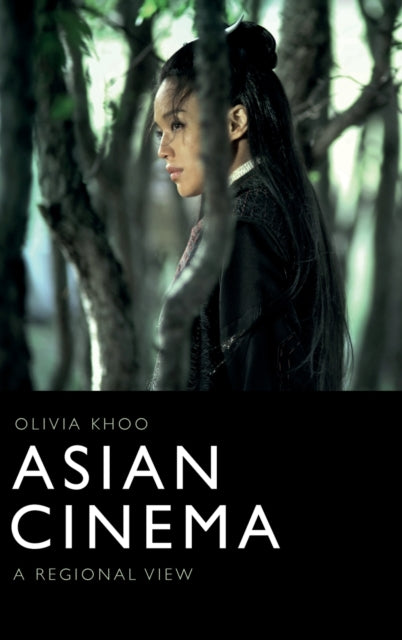
Olivia Khoo
Asian Cinema: A Regional View
Asian Cinema: A Regional View
💎 Earn 383 Points (£3.83) on this item.
We can order this item for you. Delivery usually takes about 4 to 6 weeks.
This item is not held in our immediate stock. We will order it for you after checkout.
Estimated delivery: About 4 to 6 weeks
YOU SAVE £23.30
- Condition: Brand new
- UK Delivery times: Usually arrives within 2 - 3 working days
- UK Shipping: Fee starts at £2.39. Subject to product weight & dimension
Bulk ordering. Want 15 or more copies? Get a personalised quote and bigger discounts. Learn more about bulk orders.
Couldn't load pickup availability
- More about Asian Cinema: A Regional View
This book explores the collaborative models of film production, distribution, exhibition, and reception that have enabled greater co-operation and integration between Asia's film industries.
Format: Hardback
Length: 208 pages
Publication date: 28 February 2021
Publisher: Edinburgh University Press
This book delves into the intricate tapestry of collaborative models that have fostered greater cooperation and integration among Asia's vibrant film industries. It uncovers a rich landscape of collaboration, where film production, distribution, exhibition, and reception converge to create a dynamic ecosystem that drives innovation, creativity, and cultural exchange.
Within this comprehensive exploration, the authors shed light on the diverse approaches and strategies employed by film professionals across the region. They examine the intricate networks and partnerships that have emerged, enabling filmmakers to access a broader range of resources, expertise, and markets. From joint ventures and co-productions to distribution agreements and film festivals, these collaborations have not only expanded the reach and impact of Asian films but also fostered a sense of unity and solidarity among filmmakers and film enthusiasts alike.
Moreover, the book delves into the economic and cultural implications of these collaborative models. It explores how they have contributed to the growth and development of Asia's film industries, creating new opportunities for investment, employment, and cultural exchange. It also examines the challenges and barriers that filmmakers face in navigating the complex terrain of international collaboration, such as language barriers, cultural differences, and regulatory frameworks.
Through a series of case studies and interviews with key stakeholders, the book provides a deep understanding of the dynamics and complexities of Asia's film industries. It offers valuable insights into the strategies employed by filmmakers, industry professionals, and policymakers to promote collaboration, foster innovation, and ensure the sustainable growth of Asia's film sector.
In conclusion, this book is a vital contribution to the field of film studies, offering a comprehensive and insightful examination of the collaborative models that have shaped Asia's film industries. It provides a roadmap for future collaboration and growth, highlighting the importance of cross-cultural understanding, shared resources, and collective efforts in building a vibrant and prosperous film ecosystem.
Introduction:
Asia's film industries have undergone a remarkable transformation in recent years, driven by a surge in production, distribution, exhibition, and reception. The growth of these industries has been facilitated by the emergence of collaborative models that have brought together filmmakers, industry professionals, and film enthusiasts from across the region. These models have not only expanded the reach and impact of Asian films but also fostered a sense of unity and solidarity among filmmakers and film enthusiasts alike.
In this book, we will explore the collaborative models of film production, distribution, exhibition, and reception that have enabled greater co-operation and integration between Asia's film industries. We will examine the diverse approaches and strategies employed by film professionals across the region, as well as the economic and cultural implications of these collaborative models. Through a series of case studies and interviews with key stakeholders, we will provide a deep understanding of the dynamics and complexities of Asia's film industries, offering valuable insights into the strategies employed by filmmakers, industry professionals, and policymakers to promote collaboration, foster innovation, and ensure the sustainable growth of Asia's film sector.
Collaborative Models of Film Production:
One of the key collaborative models in Asia's film industries is joint ventures and co-productions. These partnerships allow filmmakers to access a broader range of resources, expertise, and markets, enabling them to create films that reflect the unique cultural and social contexts of their respective countries. Joint ventures and co-productions have been particularly successful in China, where the government has actively promoted the development of the film industry through policies such as tax incentives and subsidies.
In India, the film industry has also embraced collaborative models, with filmmakers often partnering with international production companies and studios to create films that appeal to a global audience. For example, the film "Slumdog Millionaire," which won the Academy Award for Best Picture, was co-produced by Indian and British companies and was distributed worldwide.
Another collaborative model in Asia's film industries is the use of regional film festivals. These festivals provide a platform for filmmakers to showcase their work to a broader audience and connect with industry professionals, investors, and distributors. For example, the Singapore International Film Festival (SIFF) is one of the largest film festivals in Asia, attracting filmmakers and film enthusiasts from around the world.
Collaborative models of film production have also been facilitated by the growth of digital technology and the internet. Platforms such as Netflix, Amazon Prime Video, and YouTube have provided filmmakers with new opportunities to distribute their work directly to audiences, bypassing traditional distribution channels. This has allowed filmmakers to reach a wider audience and generate more revenue, while also providing consumers with greater access to diverse and innovative films.
Collaborative Models of Film Distribution:
Collaborative models of film distribution have also played a significant role in the growth and development of Asia's film industries. Distributors have become more proactive in their approach to marketing and promoting films, partnering with filmmakers and industry professionals to create effective marketing campaigns that resonate with audiences. Distributors have also been exploring new distribution channels, such as online streaming platforms and satellite television, to reach a wider audience and generate more revenue.
In Japan, the film industry has traditionally relied on theatrical distribution, with major studios and distributors partnering with theaters to release films. However, in recent years, the industry has also embraced digital distribution, with platforms such as Amazon Prime Video and Netflix providing Japanese audiences with access to a wide range of international films.
In South Korea, the film industry has also embraced digital distribution, with platforms such as KakaoTalk and Viki providing Korean audiences with access to a wide range of international films. This has allowed filmmakers to reach a broader audience and generate more revenue, while also providing consumers with greater access to diverse and innovative films.
Collaborative models of film distribution have also been facilitated by the growth of regional film festivals. These festivals provide a platform for distributors to showcase their work to a broader audience and connect with industry professionals, investors, and distributors. For example, the Busan International Film Festival (BIFF) is one of the largest film festivals in Asia, attracting filmmakers and film enthusiasts from around the world.
Collaborative Models of Film Exhibition:
Collaborative models of film exhibition have also played a significant role in the growth and development of Asia's film industries. Exhibitors have become more proactive in their approach to programming and promoting films, partnering with filmmakers and industry professionals to create effective marketing campaigns that resonate with audiences. Exhibitors have also been exploring new exhibition formats, such as arthouse cinemas and alternative screening spaces, to attract a wider audience and generate more revenue.
In Japan, the film industry has traditionally relied on theatrical distribution, with major studios and distributors partnering with theaters to release films. However, in recent years, the industry has also embraced digital exhibition, with platforms such as Amazon Prime Video and Netflix providing Japanese audiences with access to a wide range of international films.
In South Korea, the film industry has also embraced digital exhibition, with platforms such as KakaoTalk and Viki providing Korean audiences with access to a wide range of international films. This has allowed filmmakers to reach a broader audience and generate more revenue, while also providing consumers with greater access to diverse and innovative films.
Collaborative models of film exhibition have also been facilitated by the growth of regional film festivals. These festivals provide a platform for exhibitors to showcase their work to a broader audience and connect with industry professionals, investors, and distributors. For example, the Hong Kong International Film Festival (HKIFF) is one of the largest film festivals in Asia, attracting filmmakers and film enthusiasts from around the world.
Collaborative Models of Film Reception:
Collaborative models of film reception have also played a significant role in the growth and development of Asia's film industries. Film critics and audiences have become more proactive in their approach to reviewing and discussing films, partnering with filmmakers and industry professionals to create effective marketing campaigns that resonate with audiences. Film critics and audiences have also been exploring new ways of consuming films, such as online streaming and social media, to engage with filmmakers and other film enthusiasts.
In Japan, the film industry has traditionally relied on theatrical distribution, with major studios and distributors partnering with theaters to release films. However, in recent years, the industry has also embraced digital reception, with platforms such as Amazon Prime Video and Netflix providing Japanese audiences with access to a wide range of international films.
In South Korea, the film industry has also embraced digital reception, with platforms such as KakaoTalk and Viki providing Korean audiences with access to a wide range of international films. This has allowed filmmakers to reach a broader audience and generate more revenue, while also providing consumers with greater access to diverse and innovative films.
Collaborative models of film reception have also been facilitated by the growth of regional film festivals. These festivals provide a platform for film critics and audiences to showcase their work to a broader audience and connect with industry professionals, investors, and distributors. For example, the Taipei International Film Festival (TIFF) is one of the largest film festivals in Asia, attracting filmmakers and film enthusiasts from around the world.
Conclusion:
In conclusion, the collaborative models of film production, distribution, exhibition, and reception that have emerged in Asia's film industries have played a significant role in the growth and development of these industries. These models have facilitated greater co-operation and integration among filmmakers, industry professionals, and film enthusiasts, enabling them to create films that reflect the unique cultural and social contexts of their respective countries. By leveraging the power of collaboration, Asia's film industries have been able to reach a broader audience and generate more revenue, while also promoting cultural exchange and innovation. As the film industry continues to evolve and adapt to new technologies and market trends, it is clear that collaborative models will continue to play a vital role in shaping the future of Asia's film industries.
Weight: 398g
Dimension: 162 x 242 x 17 (mm)
ISBN-13: 9781474461764
UK and International shipping information
UK and International shipping information
UK Delivery and returns information:
- Delivery within 2 - 3 days when ordering in the UK.
- Shipping fee for UK customers from £2.39. Fully tracked shipping service available.
- Returns policy: Return within 30 days of receipt for full refund.
International deliveries:
Shulph Ink now ships to Australia, Belgium, Canada, France, Germany, Ireland, Italy, India, Luxembourg Saudi Arabia, Singapore, Spain, Netherlands, New Zealand, United Arab Emirates, United States of America.
- Delivery times: within 5 - 10 days for international orders.
- Shipping fee: charges vary for overseas orders. Only tracked services are available for most international orders. Some countries have untracked shipping options.
- Customs charges: If ordering to addresses outside the United Kingdom, you may or may not incur additional customs and duties fees during local delivery.