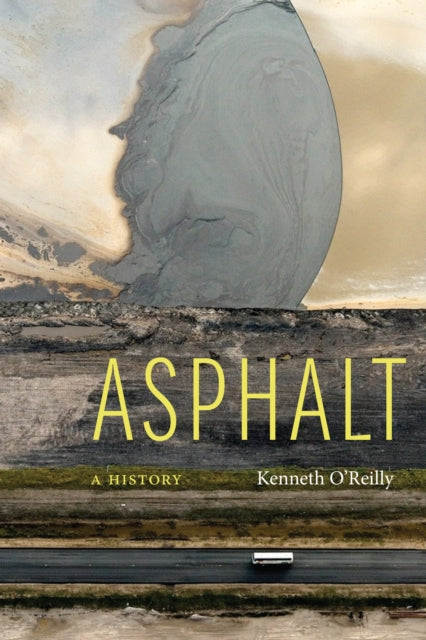
Kenneth O'Reilly
Asphalt: A History
Asphalt: A History
💎 Earn 106 Points (£1.06) on this item.
We can order this item for you. Delivery usually takes about 4 to 6 weeks.
This item is not held in our immediate stock. We will order it for you after checkout.
Estimated delivery: About 4 to 6 weeks
YOU SAVE £2.76
- Condition: Brand new
- UK Delivery times: Usually arrives within 2 - 3 working days
- UK Shipping: Fee starts at £2.39. Subject to product weight & dimension
Bulk ordering. Want 15 or more copies? Get a personalised quote and bigger discounts. Learn more about bulk orders.
Couldn't load pickup availability
- More about Asphalt: A History
La Brea Tar Pits and Athabasca oil sands in Alberta, Canada, contain natural asphalt that can be upgraded to synthetic crude oil. However, if this harvesting continues unabated, it could lead to a different kind of muck—a threat to our environment. Asphalt has played a significant role in the development of America, allowing unprecedented access to natural beauty. In his book "Asphalt: A History," Kenneth OReilly explores the importance of asphalt in human society and culture, arguing that it creates our environment but also threatens it.
Format: Hardback
Length: 344 pages
Publication date: 01 July 2021
Publisher: University of Nebraska Press
The La Brea Tar Pits, a historical site in California, once held captive prehistoric mammals. However, a similar threat now looms over the Athabasca oil sands in Alberta, Canada. These vast deposits of natural asphalt, destined for upgrading to synthetic crude oil, pose a significant concern if their harvesting continues unmitigated. The implications are far-reaching, as we may find ourselves entangled in a different kind of muck.
Asphalt, a humble hydrocarbon, has played a pivotal role in human history for thousands of years. Its emergence as pavement has brought about remarkable transformations, shaping the way we experience our surroundings. Since the 1920s, the automobile and blacktop have revolutionized transportation, enabling countless Americans to explore the vast expanse of their continent. Blacktop roads, runways, and parking lots have become the central arteries of our environment, creating a distinct "political territory" and a "political economy of velocity."
In his book "Asphalt: A History," Kenneth OReilly delves into the intricate history of asphalt, encompassing its natural and processed forms, from ancient times to the present. Through this comprehensive exploration, OReilly aims to establish the significance of asphalt within various contexts of human society and culture. While he acknowledges that asphalt plays a crucial role in shaping our environment, he also raises concerns about its potential threats. By examining its role in economics, politics, and global warming, OReilly uncovers the intricate connections between asphalt and the history and future of America and the world.
The Athabasca oil sands, with their vast reserves of natural asphalt, represent a significant opportunity for economic development. However, the extraction and processing of these resources come with environmental consequences. The burning of fossil fuels to extract and refine asphalt releases harmful greenhouse gases, contributing to climate change and air pollution. The resulting environmental degradation threatens the delicate balance of ecosystems and the well-being of communities.
To address these challenges, there are efforts underway to explore alternative technologies and sustainable practices in the asphalt industry. One promising approach is the use of recycled asphalt, which can reduce the demand for new asphalt materials and minimize the environmental impact of production. Additionally, efforts are being made to develop more environmentally friendly asphalt formulations that emit fewer greenhouse gases and promote the reuse and recycling of existing asphalt.
In conclusion, the history and significance of asphalt cannot be overstated. From its humble beginnings as a glue for arrowheads to its role in shaping the modern landscape, asphalt has played a pivotal role in human civilization. However, its continued use comes with environmental challenges that require urgent attention. By adopting sustainable practices and exploring alternative technologies, we can mitigate the negative impacts of asphalt and ensure a healthier and more sustainable future for generations to come.
Dimension: 229 x 152 (mm)
ISBN-13: 9781496222077
This item can be found in:
UK and International shipping information
UK and International shipping information
UK Delivery and returns information:
- Delivery within 2 - 3 days when ordering in the UK.
- Shipping fee for UK customers from £2.39. Fully tracked shipping service available.
- Returns policy: Return within 30 days of receipt for full refund.
International deliveries:
Shulph Ink now ships to Australia, Belgium, Canada, France, Germany, Ireland, Italy, India, Luxembourg Saudi Arabia, Singapore, Spain, Netherlands, New Zealand, United Arab Emirates, United States of America.
- Delivery times: within 5 - 10 days for international orders.
- Shipping fee: charges vary for overseas orders. Only tracked services are available for most international orders. Some countries have untracked shipping options.
- Customs charges: If ordering to addresses outside the United Kingdom, you may or may not incur additional customs and duties fees during local delivery.