Shulph Ink
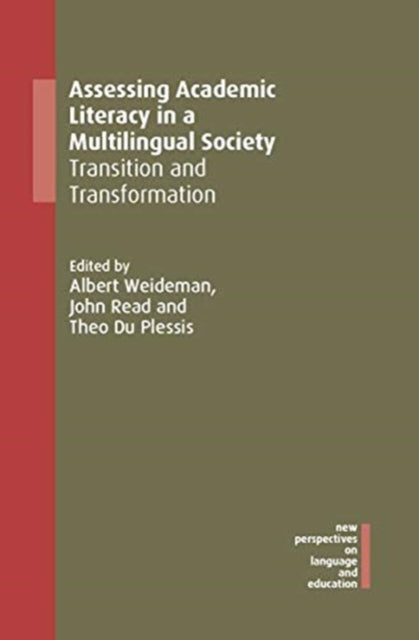
Assessing Academic Literacy in a Multilingual Society: Transition and Transformation
Assessing Academic Literacy in a Multilingual Society: Transition and Transformation
We can order this item for you. Delivery usually takes about 4 to 6 weeks.
This item is not held in our immediate stock. We will order it for you after checkout.
Estimated delivery: About 4 to 6 weeks
YOU SAVE £22.20
- Condition: Brand new
- UK Delivery times: Usually arrives within 2 - 3 working days
- UK Shipping: Fee starts at £3.89. Subject to product weight & dimension
Bulk ordering. Want 15 or more copies? Get a personalised quote and bigger discounts. Learn more about bulk orders.
Couldn't load pickup availability
- More about Assessing Academic Literacy in a Multilingual Society: Transition and Transformation
South African universities struggle to meet the academic language and literacy needs of their students, with English and Afrikaans being the dominant mediums of instruction. This book aims to assess and develop students' language and literacy skills to enable them to succeed in their degree studies. It also seeks to showcase innovative solutions developed by South African educators to a wider international audience.
Format: Hardback
Length: 280 pages
Publication date: 02 November 2020
Publisher: Multilingual Matters
South African universities encounter significant obstacles in adequately addressing the academic language and literacy requirements of their students. While English serves as the primary medium of instruction, with Afrikaans also being utilized to a lesser extent, only a minority of the national population possesses native fluency in these languages. Adding to the complexity, nine other languages can be used as mediums of instruction in schools, making the transition to tertiary education a challenging endeavor for students from these backgrounds. This book's primary objective is to develop assessment procedures that accurately evaluate students' academic language and literacy levels and needs. Rather than excluding students from higher education, the aim is to identify those who would benefit from additional development to successfully pursue their degree studies. Furthermore, the volume seeks to disseminate innovative solutions developed by South African educators to a broader international audience.
The dominant medium of instruction in South African universities is English, with Afrikaans also being utilized to a lesser extent. However, only a minority of the national population possesses native fluency in these languages. Nine other languages can be used as mediums of instruction in schools, making the transition to tertiary education a challenging endeavor for students from these backgrounds. This book's primary objective is to develop assessment procedures that accurately evaluate students' academic language and literacy levels and needs. Rather than excluding students from higher education, the aim is to identify those who would benefit from additional development to successfully pursue their degree studies. Furthermore, the volume seeks to disseminate innovative solutions developed by South African educators to a broader international audience.
The transition to tertiary education is particularly challenging for students from schools where nine other languages are used as mediums of instruction. These students face additional barriers to achieving academic success due to the lack of fluency in the dominant language of instruction, English. To address this issue, South African universities have implemented various strategies to support students' language and literacy development. One of the most effective approaches is the use of language support programs, which provide additional resources and support to students who need help with their English language skills. These programs often include language classes, tutoring, and writing workshops, which help students improve their language proficiency and academic writing abilities.
In addition to language support programs, South African universities have also recognized the importance of incorporating cultural awareness and sensitivity into their teaching practices. This involves incorporating indigenous languages and cultures into the curriculum and teaching materials to promote a sense of belonging and understanding among students from diverse backgrounds. By valuing and respecting different cultures, universities can create a more inclusive and supportive learning environment that promotes academic success for all students.
Furthermore, South African universities have implemented innovative teaching methods that are designed to engage and motivate students. These methods include interactive lectures, group discussions, and practical assignments that allow students to apply their knowledge and skills in real-world situations. By providing a dynamic and engaging learning experience, universities can help students develop critical thinking and problem-solving skills, which are essential for academic success.
In conclusion, South African universities face significant challenges in meeting the needs of their students in the area of academic language and literacy. However, by implementing effective strategies such as language support programs, cultural awareness and sensitivity, and innovative teaching methods, universities can help students develop the skills and knowledge necessary to succeed in their academic endeavors. By bringing innovative solutions developed by South African educators to a wider international audience, universities can contribute to the global discourse on education and promote the development of a more inclusive and equitable education system.
Weight: 574g
Dimension: 164 x 240 x 24 (mm)
ISBN-13: 9781788926201
UK and International shipping information
UK and International shipping information
We deliver throughout the United Kingdom and to 128 countries and territories worldwide, including the United States, Australia, Canada, Germany, Spain and France.