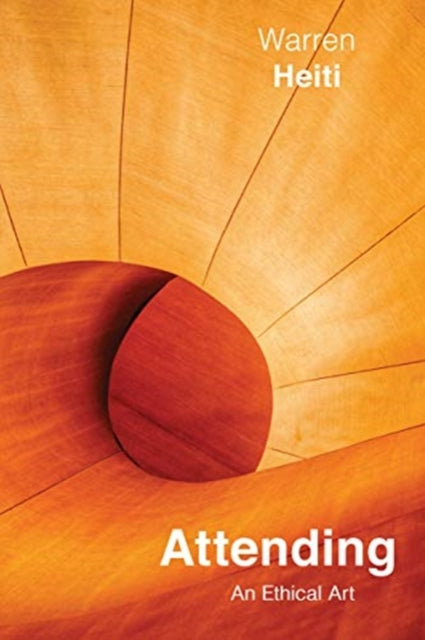
Warren Heiti
Attending: An Ethical Art
Attending: An Ethical Art
YOU SAVE £7.07
- Condition: Brand new
- UK Delivery times: Usually arrives within 2 - 3 working days
- UK Shipping: Fee starts at £3.89. Subject to product weight & dimension
Bulk ordering. Want 15 or more copies? Get a personalised quote and bigger discounts. Learn more about bulk orders.
Couldn't load pickup availability
- More about Attending: An Ethical Art
Attending, a patient contemplation focused on a particular being, is a central ethical activity that has not been recognized by the European philosophical tradition. Warren Heiti traces an alternative genealogy of ethics from Platonism recovered by Simone Weil and developed by Iris Murdoch, John McDowell, and Jan Zwicky. Heiti aims to clarify the terrain by setting up objects of attention from multiple disciplines, including philosophy, literature, psychology, film, and visual art.
Format: Paperback / softback
Length: 488 pages
Publication date: 15 July 2021
Publisher: McGill-Queen's University Press
Attending – patient contemplation focused on a particular being – is a central ethical activity that has not been recognized by any of the main moral systems in the European philosophical tradition. That tradition has imagined that the moral agent is primarily a problem solver and world changer when what might be needed most is a witness. Moral theory has been agonized by dualism – motivation is analyzed into beliefs and desires,descriptions of facts and dissatisfactions with them,while action is represented as an effort to lessen dissatisfaction by altering the empirical world. In Attending Warren Heiti traces an alternative genealogy of ethics,drawing from the Platonism recovered by Simone Weil and developed in the work of Iris Murdoch,John McDowell,and Jan Zwicky. According to Weil,virtue is knowledge,knowledge is embodied,and the knower is nested in an ecosystem of relationships. Instead of analyzing and solving theoretical problems,Heiti aims to clarify the terrain by setting up objects of attention from more than one discipline,including not only philosophy but also literature,psychology,film,and visual art.
The traditional picture captures one important type of ethical activity: faced with a moral problem,one looks to a general rule to furnish the solution. But not all problems conform to this model. Heiti offers an alternative: to see what is needed,one attends to the particular being.
Attending – patient contemplation focused on a particular being – is a central ethical activity that has not been recognized by any of the main moral systems in the European philosophical tradition. That tradition has imagined that the moral agent is primarily a problem solver and world changer when what might be needed most is a witness. Moral theory has been agonized by dualism – motivation is analyzed into beliefs and desires,descriptions of facts and dissatisfactions with them,while action is represented as an effort to lessen dissatisfaction by altering the empirical world. In Attending Warren Heiti traces an alternative genealogy of ethics,drawing from the Platonism recovered by Simone Weil and developed in the work of Iris Murdoch,John McDowell,and Jan Zwicky. According to Weil,virtue is knowledge,knowledge is embodied,and the knower is nested in an ecosystem of relationships. Instead of analyzing and solving theoretical problems,Heiti aims to clarify the terrain by setting up objects of attention from more than one discipline,including not only philosophy but also literature,psychology,film,and visual art.
The traditional picture captures one important type of ethical activity: faced with a moral problem,one looks to a general rule to furnish the solution. But not all problems conform to this model. Heiti offers an alternative: to see what is needed,one attends to the particular being.
Attending – patient contemplation focused on a particular being – is a central ethical activity that has not been recognized by any of the main moral systems in the European philosophical tradition. That tradition has imagined that the moral agent is primarily a problem solver and world changer when what might be needed most is a witness. Moral theory has been agonized by dualism – motivation is analyzed into beliefs and desires,descriptions of facts and dissatisfactions with them,while action is represented as an effort to lessen dissatisfaction by altering the empirical world. In Attending Warren Heiti traces an alternative genealogy of ethics,drawing from the Platonism recovered by Simone Weil and developed in the work of Iris Murdoch,John McDowell,and Jan Zwicky. According to Weil,virtue is knowledge,knowledge is embodied,and the knower is nested in an ecosystem of relationships. Instead of analyzing and solving theoretical problems,Heiti aims to clarify the terrain by setting up objects of attention from more than one discipline,including not only philosophy but also literature,psychology,film,and visual art.
The traditional picture captures one important type of ethical activity: faced with a moral problem,one looks to a general rule to furnish the solution. But not all problems conform to this model. Heiti offers an alternative: to see what is needed,one attends to the particular being.
Attending – patient contemplation focused on a particular being – is a central ethical activity that has not been recognized by any of the main moral systems in the European philosophical tradition. That tradition has imagined that the moral agent is primarily a problem solver and world changer when what might be needed most is a witness. Moral theory has been agonized by dualism – motivation is analyzed into beliefs and desires,descriptions of facts and dissatisfactions with them,while action is represented as an effort to lessen dissatisfaction by altering the empirical world. In Attending Warren Heiti traces an alternative genealogy of ethics,drawing from the Platonism recovered by Simone Weil and developed in the work of Iris Murdoch,John McDowell,and Jan Zwicky. According to Weil,virtue is knowledge,knowledge is embodied,and the knower is nested in an ecosystem of relationships. Instead of analyzing and solving theoretical problems,Heiti aims to clarify the terrain by setting up objects of attention from more than one discipline,including not only philosophy but also literature,psychology,film,and visual art.
The traditional picture captures one important type of ethical activity: faced with a moral problem,one looks to a general rule to furnish the solution. But not all problems conform to this model. Heiti offers an alternative: to see what is needed,one attends to the particular being.
Attending – patient contemplation focused on a particular being – is a central ethical activity that has not been recognized by any of the main moral systems in the European philosophical tradition. That tradition has imagined that the moral agent is primarily a problem solver and world changer when what might be needed most is a witness. Moral theory has been agonized by dualism – motivation is analyzed into beliefs and desires,descriptions of facts and dissatisfactions with them,while action is represented as an effort to lessen dissatisfaction by altering the empirical world. In Attending Warren Heiti traces an alternative genealogy of ethics,drawing from the Platonism recovered by Simone Weil and developed in the work of Iris Murdoch,John McDowell,and Jan Zwicky. According to Weil,virtue is knowledge,knowledge is embodied,and the knower is nested in an ecosystem of relationships. Instead of analyzing and solving theoretical problems,Heiti aims to clarify the terrain by setting up objects of attention from more than one discipline,including not only philosophy but also literature,psychology,film,and visual art.
The traditional picture captures one important type of ethical activity: faced with a moral problem,one looks to a general rule to furnish the solution. But not all problems conform to this model. Heiti offers an alternative: to see what is needed,one attends to the particular being.
Attending – patient contemplation focused on a particular being – is a central ethical activity that has not been recognized by any of the main moral systems in the European philosophical tradition. That tradition has imagined that the moral agent is primarily a problem solver and world changer when what might be needed most is a witness. Moral theory has been agonized by dualism – motivation is analyzed into beliefs and desires,descriptions of facts and dissatisfactions with them,while action is represented as an effort to lessen dissatisfaction by altering the empirical world. In Attending Warren Heiti traces an alternative genealogy of ethics,drawing from the Platonism recovered by Simone Weil and developed in the work of Iris Murdoch,John McDowell,and Jan Zwicky. According to Weil,virtue is knowledge,knowledge is embodied,and the knower is nested in an ecosystem of relationships. Instead of analyzing and solving theoretical problems,Heiti aims to clarify the terrain by setting up objects of attention from more than one discipline,including not only philosophy but also literature,psychology,film,and visual art.
The traditional picture captures one important type of ethical activity: faced with a moral problem,one looks to a general rule to furnish the solution. But not all problems conform to this model. Heiti offers an alternative: to see what is needed,one attends to the particular being.
Attending – patient contemplation focused on a particular being – is a central ethical activity that has not been recognized by any of the main moral systems in the European philosophical tradition. That tradition has imagined that the moral agent is primarily a problem solver and world changer when what might be needed most is a witness. Moral theory has been agonized by dualism – motivation is analyzed into beliefs and desires,descriptions of facts and dissatisfactions with them,while action is represented as an effort to lessen dissatisfaction by altering the empirical world. In Attending Warren Heiti traces an alternative genealogy of ethics,drawing from the Platonism recovered by Simone Weil and developed in the work of Iris Murdoch,John McDowell,and Jan Zwicky. According to Weil,virtue is knowledge,knowledge is embodied,and the knower is nested in an ecosystem of relationships. Instead of analyzing and solving theoretical problems,Heiti aims to clarify the terrain by setting up objects of attention from more than one discipline,including not only philosophy but also literature,psychology,film,and visual art.
The traditional picture captures one important type of ethical activity: faced with a moral problem,one looks to a general rule to furnish the solution. But not all problems conform to this model. Heiti offers an alternative: to see what is needed,one attends to the particular being.
Attending – patient contemplation focused on a particular being – is a central ethical activity that has not been recognized by any of the main moral systems in the European philosophical tradition. That tradition has imagined that the moral agent is primarily a problem solver and world changer when what might be needed most is a witness. Moral theory has been agonized by dualism – motivation is analyzed into beliefs and desires,descriptions of facts and dissatisfactions with them,while action is represented as an effort to lessen dissatisfaction by altering the empirical world. In Attending Warren Heiti traces an alternative genealogy of ethics,drawing from the Platonism recovered by Simone Weil and developed in the work of Iris Murdoch,John McDowell,and Jan Zwicky. According to Weil,virtue is knowledge,knowledge is embodied,and the knower is nested in an ecosystem of relationships. Instead of analyzing and solving theoretical problems,Heiti aims to clarify the terrain by setting up objects of attention from more than one discipline,including not only philosophy but also literature,psychology,film,and visual art.
The traditional picture captures one important type of ethical activity: faced with a moral problem,one looks to a general rule to furnish the solution. But not all problems conform to this model. Heiti offers an alternative: to see what is needed,one attends to the particular being.
Attending – patient contemplation focused on a particular being – is a central ethical activity that has not been recognized by any of the main moral systems in the European philosophical tradition. That tradition has imagined that the moral agent is primarily a problem solver and world changer when what might be needed most is a witness. Moral theory has been agonized by dualism – motivation is analyzed into beliefs and desires,descriptions of facts and dissatisfactions with them,while action is represented as an effort to lessen dissatisfaction by altering the empirical world. In Attending Warren Heiti traces an alternative genealogy of ethics,drawing from the Platonism recovered by Simone Weil and developed in the work of Iris Murdoch,John McDowell,and Jan Zwicky. According to Weil,virtue is knowledge,knowledge is embodied,and the knower is nested in an ecosystem of relationships. Instead of analyzing and solving theoretical problems,Heiti aims to clarify the terrain by setting up objects of attention from more than one discipline,including not only philosophy but also literature,psychology,film,and visual art.
The traditional picture captures one important type of ethical activity: faced with a moral problem,one looks to a general rule to furnish the solution. But not all problems conform to this model. Heiti offers an alternative: to see what is needed,one attends to the particular being.
Attending – patient contemplation focused on a particular being – is a central ethical activity that has not been recognized by any of the main moral systems in the European philosophical tradition. That tradition has imagined that the moral agent is primarily a problem solver and world changer when what might be needed most is a witness. Moral theory has been agonized by dualism – motivation is analyzed into beliefs and desires,descriptions of facts and dissatisfactions with them,while action is represented as an effort to lessen dissatisfaction by altering the empirical world. In Attending Warren Heiti traces an alternative genealogy of ethics,drawing from the Platonism recovered by Simone Weil and developed in the work of Iris Murdoch,John McDowell,and Jan Zwicky. According to Weil,virtue is knowledge,knowledge is embodied,and the knower is nested in an ecosystem of relationships. Instead of analyzing and solving theoretical problems,Heiti aims to clarify the terrain by setting up objects of attention from more than one discipline,including not only philosophy but also literature,psychology,film,and visual art.
The traditional picture captures one important type of ethical activity: faced with a moral problem,one looks to a general rule to furnish the solution. But not all problems conform to this model. Heiti offers an alternative: to see what is needed,one attends to the particular being.
Attending – patient contemplation focused on a particular being – is a central ethical activity that has not been recognized by any of the main moral systems in the European philosophical tradition. That tradition has imagined that the moral agent is primarily a problem solver and world changer when what might be needed most is a witness. Moral theory has been agonized by dualism – motivation is analyzed into beliefs and desires,descriptions of facts and dissatisfactions with them,while action is represented as an effort to lessen dissatisfaction by altering the empirical world. In Attending Warren Heiti traces an alternative genealogy of ethics,drawing from the Platonism recovered by Simone Weil and developed in the work of Iris Murdoch,John McDowell,and Jan Zwicky. According to Weil,virtue is knowledge,knowledge is embodied,and the knower is nested in an ecosystem of relationships. Instead of analyzing and solving theoretical problems,Heiti aims to clarify the terrain by setting up objects of attention from more than one discipline,including not only philosophy but also literature,psychology,film,and visual art.
The traditional picture captures one important type of ethical activity: faced with a moral problem,one looks to a general rule to furnish the solution. But not all problems conform to this model. Heiti offers an alternative: to see what is needed,one attends to the particular being.
Attending – patient contemplation focused on a particular being – is a central ethical activity that has not been recognized by any of the main moral systems in the European philosophical tradition. That tradition has imagined that the moral agent is primarily a problem solver and world changer when what might be needed most is a witness. Moral theory has been agonized by dualism – motivation is analyzed into beliefs and desires,descriptions of facts and dissatisfactions with them,while action is represented as an effort to lessen dissatisfaction by altering the empirical world. In Attending Warren Heiti traces an alternative genealogy of ethics,drawing from the Platonism recovered by Simone Weil and developed in the work of Iris Murdoch,John McDowell,and Jan Zwicky. According to Weil,virtue is knowledge,knowledge is embodied,and the knower is nested in an ecosystem of relationships. Instead of analyzing and solving theoretical problems,Heiti aims to clarify the terrain by setting up objects of attention from more than one discipline,including not only philosophy but also literature,psychology,film,and visual art.
The traditional picture captures one important type of ethical activity: faced with a moral problem,one looks to a general rule to furnish the solution. But not all problems conform to this model. Heiti offers an alternative: to see what is needed,one attends to the particular being.
Attending – patient contemplation focused on a particular being – is a central ethical activity that has not been recognized by any of the main moral systems in the European philosophical tradition. That tradition has imagined that the moral agent is primarily a problem solver and world changer when what might be needed most is a witness. Moral theory has been agonized by dualism – motivation is analyzed into beliefs and desires, descriptions of facts and dissatisfactions with them, while action is represented as an effort to lessen dissatisfaction by altering the empirical world. In Attending, Warren Heiti traces an alternative genealogy of ethics, drawing from the Platonism recovered by Simone Weil and developed in the work of Iris Murdoch, John McDowell, and Jan Zwicky. According to Weil, virtue is knowledge, knowledge is embodied, and the knower is nested in an ecosystem of relationships. Instead of analyzing and solving theoretical problems, Heiti aims to clarify the terrain by setting up objects of attention from more than one discipline, including not only philosophy but also literature, psychology, film, and visual art.
The traditional picture captures one important type of ethical activity: faced with a moral problem, one looks to a general rule to furnish the solution. But not all problems conform to this model. Heiti offers an alternative: to see what is needed, one attends to the particular being.
Attending – patient contemplation focused on a particular being – is a central ethical activity that has not been recognized by any of the main moral systems in the European philosophical tradition. That tradition has imagined that the moral agent is primarily a problem solver and world changer when what might be needed most is a witness. Moral theory has been agonized by dualism – motivation is analyzed into beliefs and desires, descriptions of facts and dissatisfactions with them, while action is represented as an effort to lessen dissatisfaction by altering the empirical world. In Attending, Warren Heiti traces an alternative genealogy of ethics, drawing from the Platonism recovered by Simone Weil and developed in the work of Iris Murdoch, John McDowell, and Jan Zwicky. According to Weil, virtue is knowledge, knowledge is embodied, and the knower is nested in an ecosystem of relationships. Instead of analyzing and solving theoretical problems, Heiti aims to clarify the terrain by setting up objects of attention from more than one discipline, including not only philosophy but also literature, psychology, film, and visual art.
The traditional picture captures one important type of ethical activity: faced with a moral problem, one looks to a general rule to furnish the solution. But not all problems conform to this model. Heiti offers an alternative: to see what is needed, one attends to the particular being.
Attending – patient contemplation focused on a particular being – is a central ethical activity that has not been recognized by any of the main moral systems in the European philosophical tradition. That tradition has imagined that the moral agent is primarily a problem solver and world changer when what might be needed most is a witness. Moral theory has been agonized by dualism – motivation is analyzed into beliefs and desires, descriptions of facts and dissatisfactions with them, while action is represented as an effort to lessen dissatisfaction by altering the empirical world. In Attending, Warren Heiti traces an alternative genealogy of ethics, drawing from the Platonism recovered by Simone Weil and developed in the work of Iris Murdoch, John McDowell, and Jan Zwicky. According to Weil, virtue is knowledge, knowledge is embodied, and the knower is nested in an ecosystem of relationships. Instead of analyzing and solving theoretical problems, Heiti aims to clarify the terrain by setting up objects of attention from more than one discipline, including not only philosophy but also literature, psychology, film, and visual art.
The traditional picture captures one important type of ethical activity: faced with a moral problem, one looks to a general rule to furnish the solution. But not all problems conform to this model. Heiti offers an alternative: to see what is needed, one attends to the particular being.
Attending – patient contemplation focused on a particular being – is a central ethical activity that has not been recognized by any of the main moral systems in the European philosophical tradition. That tradition has imagined that the moral agent is primarily a problem solver and world changer when what might be needed most is a witness. Moral theory has been agonized by dualism – motivation is analyzed into beliefs and desires, descriptions of facts and dissatisfactions with them, while action is represented as an effort to lessen dissatisfaction by altering the empirical world. In Attending, Warren Heiti traces an alternative genealogy of ethics, drawing from the Platonism recovered by Simone Weil and developed in the work of Iris Murdoch, John McDowell, and Jan Zwicky. According to Weil, virtue is knowledge, knowledge is embodied, and the knower is nested in an ecosystem of relationships. Instead of analyzing and solving theoretical problems, Heiti aims to clarify the terrain by setting up objects of attention from more than one discipline, including not only philosophy but also literature, psychology, film, and visual art.
The traditional picture captures one important type of ethical activity: faced with a moral problem, one looks to a general rule to furnish the solution. But not all problems conform to this model. Heiti offers an alternative: to see what is needed, one attends to the particular being.
Attending – patient contemplation focused on a particular being – is a central ethical activity that has not been recognized by any of the main moral systems in the European philosophical tradition. That tradition has imagined that the moral agent is primarily a problem solver and world changer when what might be needed most is a witness. Moral theory has been agonized by dualism – motivation is analyzed into beliefs and desires, descriptions of facts and dissatisfactions with them, while action is represented as an effort to lessen dissatisfaction by altering the empirical world. In Attending, Warren Heiti traces an alternative genealogy of ethics, drawing from the Platonism recovered by Simone Weil and developed in the work of Iris Murdoch, John McDowell, and Jan Zwicky. According to Weil, virtue is knowledge, knowledge is embodied, and the knower is nested in an ecosystem of relationships. Instead of analyzing and solving theoretical problems, Heiti aims to clarify the terrain by setting up objects of attention from more than one discipline, including not only philosophy but also literature, psychology, film, and visual art.
Weight: 548g
Dimension: 221 x 230 x 26 (mm)
ISBN-13: 9780228006138
UK and International shipping information
UK and International shipping information
We deliver throughout the United Kingdom and to 128 countries and territories worldwide, including the United States, Australia, Canada, Germany, Spain and France.