Shulph Ink
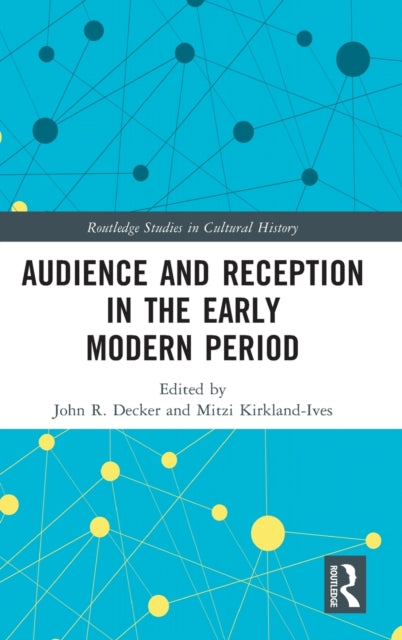
Audience and Reception in the Early Modern Period
Audience and Reception in the Early Modern Period
💎 Earn 811 Points (£8.11) on this item.
We can order this item for you. Delivery usually takes about 4 to 6 weeks.
This item is not held in our immediate stock. We will order it for you after checkout.
Estimated delivery: About 4 to 6 weeks
YOU SAVE £9.63
- Condition: Brand new
- UK Delivery times: Usually arrives within 2 - 3 working days
- UK Shipping: Fee starts at £2.39. Subject to product weight & dimension
Bulk ordering. Want 15 or more copies? Get a personalised quote and bigger discounts. Learn more about bulk orders.
Couldn't load pickup availability
- More about Audience and Reception in the Early Modern Period
Early modern audiences, readerships, and viewerships were diverse, with differences in status, education, language, wealth, and experience influencing how they received and interpreted sermons, public proclamations, dramatic and musical performances, images, objects, and spaces. This volume explores how authors, poets, artists, preachers, theologians, playwrights, and performers took account of and encoded pluriform potential audiences, readers, and viewers in their works, and how these varied parties encountered and responded to these works.
Format: Hardback
Length: 408 pages
Publication date: 10 September 2021
Publisher: Taylor & Francis Ltd
Early modern audiences, readerships, and viewership were far from homogeneous. A multitude of factors, including status, education, language, wealth, and experience, played a significant role in shaping how individuals or groups perceived and interpreted sermons, public proclamations, dramatic and musical performances, images, objects, and spaces. The manner in which these various elements were framed and executed had a profound impact on their relevance and effectiveness.
The chapters in this volume delve into the diverse approaches taken by authors, poets, artists, preachers, theologians, playwrights, and performers to consider and encode the potential audiences, readers, and viewers of their works. The contributors explore these intricate interactions through a range of critical and methodological lenses, shedding light on the complex ways in which these parties encountered and responded to these artistic creations.
In the early modern period, audiences were diverse and multifaceted, encompassing individuals from various social, economic, and cultural backgrounds. Status, education, and wealth were among the key variables that shaped their perspectives and interpretations. For instance, those with higher social status may have had greater access to education and cultural resources, which allowed them to engage with complex ideas and narratives. Conversely, individuals from lower social classes may have been less familiar with the nuances of literary and artistic forms, relying on simpler and more accessible modes of communication.
Language was another crucial factor that influenced audience reception. Different languages had distinct grammatical structures, rhetorical devices, and cultural references, which could create barriers to understanding for non-native speakers. Performers and authors often adapted their works to cater to different linguistic communities, employing translations or adaptations to ensure that their messages were conveyed effectively.
Education also played a significant role in shaping audience reception. Individuals with higher levels of education were more likely to have a broader range of knowledge and cultural references, which enabled them to appreciate the nuances and complexities of artistic works. Conversely, those with limited education may have found certain works challenging to comprehend, relying on visual or auditory cues to gain a sense of meaning.
Experience, in the form of travel, exploration, and personal encounters, also influenced audience reception. Individuals who had traveled to different parts of the world or had direct experience with different cultures and societies were more likely to have a deeper understanding of the themes and narratives presented in artistic works. This knowledge and understanding could enhance their appreciation of the works and contribute to their interpretation.
In addition to these demographic factors, individual differences in personality, temperament, and cultural background also played a role in shaping audience reception. Some individuals were more open-minded and receptive to new ideas, while others were more conservative and resistant to change. These differences in perspective could influence how individuals interpreted and responded to artistic works.
The chapters in this volume explore the various ways in which authors, poets, artists, preachers, theologians, playwrights.
Weight: 930g
Dimension: 229 x 152 (mm)
ISBN-13: 9780367676261
This item can be found in:
UK and International shipping information
UK and International shipping information
UK Delivery and returns information:
- Delivery within 2 - 3 days when ordering in the UK.
- Shipping fee for UK customers from £2.39. Fully tracked shipping service available.
- Returns policy: Return within 30 days of receipt for full refund.
International deliveries:
Shulph Ink now ships to Australia, Belgium, Canada, France, Germany, Ireland, Italy, India, Luxembourg Saudi Arabia, Singapore, Spain, Netherlands, New Zealand, United Arab Emirates, United States of America.
- Delivery times: within 5 - 10 days for international orders.
- Shipping fee: charges vary for overseas orders. Only tracked services are available for most international orders. Some countries have untracked shipping options.
- Customs charges: If ordering to addresses outside the United Kingdom, you may or may not incur additional customs and duties fees during local delivery.