Kim Huynh
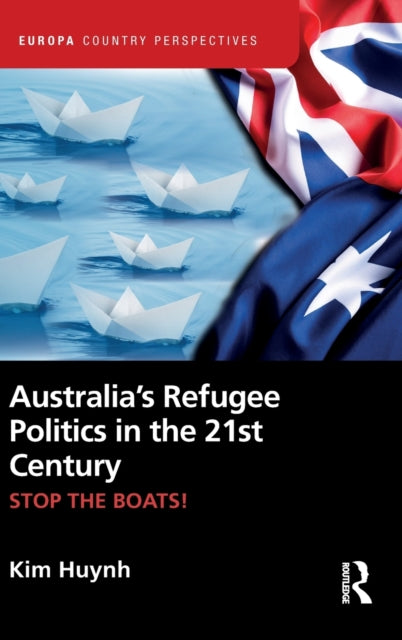
Australia's Refugee Politics in the 21st Century: STOP THE BOATS!
Australia's Refugee Politics in the 21st Century: STOP THE BOATS!
💎 Earn 684 Points (£6.84) on this item.
We can order this item for you. Delivery usually takes about 4 to 6 weeks.
This item is not held in our immediate stock. We will order it for you after checkout.
Estimated delivery: About 4 to 6 weeks
YOU SAVE £8.12
- Condition: Brand new
- UK Delivery times: Usually arrives within 2 - 3 working days
- UK Shipping: Fee starts at £2.39. Subject to product weight & dimension
Bulk ordering. Want 15 or more copies? Get a personalised quote and bigger discounts. Learn more about bulk orders.
Couldn't load pickup availability
- More about Australia's Refugee Politics in the 21st Century: STOP THE BOATS!
The book explores the 'Stop the Boats era' between the 2013 and 2022 federal elections in Australia, examining the political view that to accept a single boat, family, or person is to risk being overwhelmed by many others. It examines the impact of this commitment on regional and international relations, those who seek refuge in Australia, and those who call it 'home'.
Format: Hardback
Length: 100 pages
Publication date: 23 June 2023
Publisher: Taylor & Francis Ltd
Boat arrivals have played a significant role in shaping 21st-century Australia, dividing the country and shaping its political landscape. This book delves into the 'Stop the Boats era' between the 2013 and 2022 federal elections, examining the dominant political view that to accept a single boat, family, or person is to risk being overwhelmed by many others. Consequently, the government must take drastic measures to secure Australia's borders and deter unauthorized arrivals, hence the slogan 'Stop the Boats!' This book explores the key political events and arguments for and against Australia's assurance that anyone who comes without permission will never be able to stay. It examines the impact of this commitment on regional and international relations, on those seeking refuge in Australia, and on those who consider it their home. This volume serves as a valuable political history and analysis for scholars, policymakers, students, journalists, and anyone interested in questions of contemporary exclusion and belonging.
Introduction:
Boat arrivals have defined and divided 21st-century Australia, shaping the country's political landscape and generating significant debate. This book examines the 'Stop the Boats era' between the 2013 and 2022 federal elections, a period marked by the dominant political view that to accept a single boat, family, or person is to risk being overwhelmed by many others. Consequently, the government must take drastic measures to secure Australia's borders and deter unauthorized arrivals, hence the slogan 'Stop the Boats!' This book explores the key political events and arguments for and against Australia's assurance that anyone who comes without permission will never be able to stay. It examines the impact of this commitment on regional and international relations, on those seeking refuge in Australia, and on those who consider it their home. This volume serves as a valuable political history and analysis for scholars, policymakers, students, journalists, and anyone interested in questions of contemporary exclusion and belonging.
Key Political Events:
The 'Stop the Boats era' was characterized by a series of key political events that shaped the country's response to boat arrivals. These events included the introduction of the 'Pacific Solution' by the Howard Government in 2001, which involved the interception and detention of asylum seekers in offshore processing centers in Papua New Guinea and Nauru. The policy was widely criticized for its human rights abuses and for failing to address the root causes of asylum seekers' journeys.
In 2013, the Abbott Government introduced the 'Turnback Policy,' which aimed to prevent asylum seekers from reaching Australian shores by turning back boats at sea. The policy was met with widespread opposition and was deemed illegal by the High Court of Australia. The policy also led to a significant increase in the number of asylum seekers detained in offshore processing centers.
In 2016, the Turnback Policy was replaced by the 'Medicare Plan,' which involved the resettlement of asylum seekers in Australia and the provision of medical care. The policy was welcomed by some as a more humane approach to managing asylum seekers, but it was also criticized for its slow processing times and for failing to address the root causes of asylum seekers' journeys.
In 2018, the Morrison Government introduced the 'Border Protection Policy,' which aimed to deter unauthorized arrivals by strengthening Australia's border security measures. The policy included the deployment of additional military personnel to the border, the construction of new detention centers, and the introduction of new laws to prevent asylum seekers from entering Australia. The policy was widely criticized for its harsh treatment of asylum seekers and for failing to address the root causes of their journeys.
Arguments for and against the Assurance:
The assurance that anyone who comes without permission will never be able to stay has been a central theme of Australia's response to boat arrivals. Proponents of the assurance argue that it is necessary to prevent unauthorized arrivals and protect the security and stability of Australia. They argue that the government must take a firm stance on border control and deter anyone who attempts to enter Australia illegally. Proponents also argue that the assurance is necessary to maintain Australia's reputation as a safe and welcoming country and to prevent the spread of terrorism and other security threats.
Opponents of the assurance argue that it is cruel and inhumane to deny asylum seekers the right to seek refuge in Australia. They argue that the government must provide a safe and legal pathway to asylum for those who are fleeing persecution and violence. Opponents also argue that the assurance is ineffective in preventing unauthorized arrivals and that it undermines Australia's commitment to human rights and international law.
Impact on Regional and International Relations:
The assurance that anyone who comes without permission will never be able to stay has had significant impacts on regional and international relations. The policy has strained relations with neighboring countries, particularly Indonesia and Papua New Guinea, which have been criticized for their role in facilitating asylum seekers' journeys. The policy has also led to a significant increase in the number of asylum seekers detained in offshore processing centers, which has drawn international criticism and concern.
The assurance has also had impacts on Australia's relationship with the United Nations and other international organizations. Australia has been criticized for its failure to comply with its international obligations to protect asylum seekers and to provide them with a safe and legal pathway to asylum. The policy has also led to a significant increase in the number of asylum seekers who are detained in offshore processing centers, which has drawn international criticism and concern.
Impact on Those Seeking Refuge in Australia:
The assurance that anyone who comes without permission will never be able to stay has had significant impacts on those seeking refuge in Australia. The policy has led to prolonged periods of detention and uncertainty for asylum seekers, who are often subjected to harsh conditions and inadequate medical care. The policy has also led to a significant increase in the number of asylum seekers who are detained in offshore processing centers, which has drawn international criticism and concern.
The assurance has also had impacts on the mental health and well-being of asylum seekers. The prolonged periods of detention and uncertainty have led to high levels of stress, anxiety, and depression among asylum seekers, who are often isolated and excluded from society. The policy has also led to a significant increase in the number of asylum seekers who are detained in offshore processing centers, which has drawn international criticism and concern.
Conclusion:
In conclusion, boat arrivals have played a significant role in shaping 21st-century Australia, dividing the country and shaping its political landscape. The 'Stop the Boats era' between the 2013 and 2022 federal elections was marked by the dominant political view that to accept a single boat, family, or person is to risk being overwhelmed by many others. Consequently, the government must take drastic measures to secure Australia's borders and deter unauthorized arrivals, hence the slogan 'Stop the Boats!' This book explores the key political events and arguments for and against Australia's assurance that anyone who comes without permission will never be able to stay. It examines the impact of this commitment on regional and international relations, on those seeking refuge in Australia, and on those who consider it their home. This volume serves as a valuable political history and analysis for scholars, policymakers, students, journalists, and anyone interested in questions of contemporary exclusion and belonging.
Weight: 370g
Dimension: 234 x 156 (mm)
ISBN-13: 9780367209636
UK and International shipping information
UK and International shipping information
UK Delivery and returns information:
- Delivery within 2 - 3 days when ordering in the UK.
- Shipping fee for UK customers from £2.39. Fully tracked shipping service available.
- Returns policy: Return within 30 days of receipt for full refund.
International deliveries:
Shulph Ink now ships to Australia, Belgium, Canada, France, Germany, Ireland, Italy, India, Luxembourg Saudi Arabia, Singapore, Spain, Netherlands, New Zealand, United Arab Emirates, United States of America.
- Delivery times: within 5 - 10 days for international orders.
- Shipping fee: charges vary for overseas orders. Only tracked services are available for most international orders. Some countries have untracked shipping options.
- Customs charges: If ordering to addresses outside the United Kingdom, you may or may not incur additional customs and duties fees during local delivery.