Azeem Ibrahim
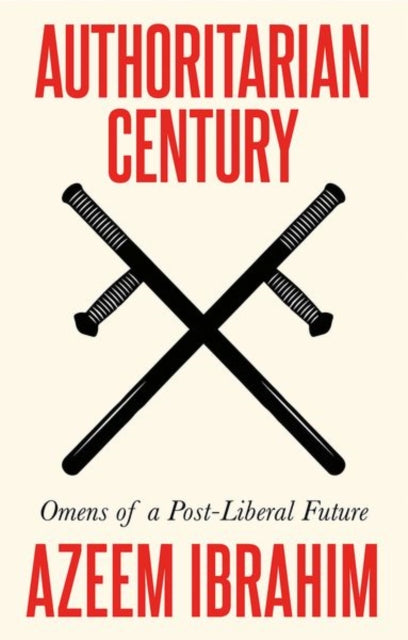
Authoritarian Century: Omens of a Post-Liberal Future
Authoritarian Century: Omens of a Post-Liberal Future
💎 Earn 82 Points (£0.82) on this item.
YOU SAVE £3.48
- Condition: Brand new
- UK Delivery times: Usually arrives within 2 - 3 working days
- UK Shipping: Fee starts at £2.39. Subject to product weight & dimension
Bulk ordering. Want 15 or more copies? Get a personalised quote and bigger discounts. Learn more about bulk orders.
Couldn't load pickup availability
- More about Authoritarian Century: Omens of a Post-Liberal Future
Liberal democracy has produced the most freedom and security, but a backlash has emerged due to Western leaders adopting total liberalism with the same rigidity that brought down communism. This has led to economic and foreign policy failures, undermining the public's faith in the political system. Azeem Ibrahim's book explores the roots of the century's descent into crisis and urges a rethink to renew liberal democracy for vulnerable lives and global emergencies.
Format: Hardback
Length: 336 pages
Publication date: 15 December 2022
Publisher: C Hurst & Co Publishers Ltd
Liberal democracy has emerged as the most successful form of government in terms of promoting freedom and security for the vast majority of people throughout history. This belief was particularly prevalent in the aftermath of the collapse of the Soviet Union, when it seemed that liberal democracy had triumphed over other political systems. However, today, we are witnessing a backlash against liberalism, and it is largely our fault. Western leaders, influenced by the fall of the Soviet Union, mistakenly interpreted it as an ideological victory and embraced a rigid form of total liberalism, which bore similarities to the policies that had led to the collapse of communism. As a result, the economic and foreign policy failures of neoliberalism have eroded public trust in liberal democracy. This has led to disaffected masses, the rise of opportunistic populists, and even Russian sabotage, as some seek to undermine the Western political system.
Furthermore, the Chinese model has emerged as a powerful alternative to liberal democracy, offering a different approach to economic development and governance. This has raised questions about the future of liberal democracy and its ability to address global emergencies such as climate change and pandemics.
In his book, "The Descent into Crisis: How the West Lost Its Way," Azeem Ibrahim explores the roots of the current crisis and challenges the critical mistakes made by contemporary liberals. He argues that liberal democracy must be renewed both domestically and internationally to ensure its survival. Ibrahim's narrative of the West's recent past is sobering, highlighting the failures of neoliberalism and the rise of authoritarianism in various parts of the world. However, he also offers a hopeful vision for the future, emphasizing the importance of a liberal order in saving vulnerable lives and confronting global emergencies.
One of the key mistakes made by contemporary liberals is their failure to recognize the importance of social and economic equality. Liberalism has traditionally emphasized individual freedom and market capitalism, but this approach has left many people behind. The concentration of wealth and power in the hands of a few has led to widespread inequality, poverty, and social unrest.
Another mistake is the neglect of democratic institutions and the rule of law. Liberal democracy relies on the participation of the people and the protection of their rights and freedoms. However, in recent years, we have seen a decline in democratic norms and the erosion of the rule of law. This has allowed authoritarian leaders to consolidate power and undermine the democratic process.
Furthermore, contemporary liberals have been slow to address the challenges posed by globalization. While globalization has brought about many benefits, it has also led to increased competition, economic instability, and social unrest. Liberalism has failed to provide a comprehensive response to these challenges, leaving many people feeling left behind and disaffected.
To renew liberal democracy, Ibrahim argues that we must prioritize social and economic equality, strengthen democratic institutions, and address the challenges posed by globalization. This will require a shift in our political and economic policies, away from neoliberalism and towards a more progressive and inclusive approach.
One of the key elements of a renewed liberal democracy is the promotion of social and economic equality. This means ensuring that everyone has access to basic needs such as food, water, healthcare, and education. It also means addressing the concentration of wealth and power, through policies such as wealth taxes, progressive taxation, and social welfare programs.
Another important aspect of a renewed liberal democracy is the strengthening of democratic institutions. This includes ensuring that elections are free and fair, that civil liberties are protected, and that the rule of law is upheld. It also means promoting the participation of the people in decision-making processes, through mechanisms such as citizen assemblies, participatory budgeting, and direct democracy.
In addition to addressing social and economic inequality and strengthening democratic institutions, a renewed liberal democracy must also address the challenges posed by globalization. This will require a more comprehensive approach to international relations, which emphasizes cooperation, dialogue, and respect for human rights. It will also require a commitment to addressing climate change and other environmental challenges, through policies such as carbon pricing, renewable energy, and sustainable development.
Finally, a renewed liberal democracy must also address the rise of authoritarianism and the threat posed by populism. This will require a strong commitment to democracy promotion, human rights, and the rule of law, as well as a willingness to engage with and address the concerns of disaffected populations.
In conclusion, liberal democracy has produced the most freedom and security for the most people of any form of government in human history. However, we are witnessing a backlash against liberalism, and it is largely our fault. We must prioritize social and economic equality, strengthen democratic institutions, and address the challenges posed by globalization to renew liberal democracy and ensure its survival. Only a liberal order can save vulnerable lives and confront global emergencies.
Dimension: 216 x 138 (mm)
ISBN-13: 9781787388000
UK and International shipping information
UK and International shipping information
UK Delivery and returns information:
- Delivery within 2 - 3 days when ordering in the UK.
- Shipping fee for UK customers from £2.39. Fully tracked shipping service available.
- Returns policy: Return within 30 days of receipt for full refund.
International deliveries:
Shulph Ink now ships to Australia, Belgium, Canada, France, Germany, Ireland, Italy, India, Luxembourg Saudi Arabia, Singapore, Spain, Netherlands, New Zealand, United Arab Emirates, United States of America.
- Delivery times: within 5 - 10 days for international orders.
- Shipping fee: charges vary for overseas orders. Only tracked services are available for most international orders. Some countries have untracked shipping options.
- Customs charges: If ordering to addresses outside the United Kingdom, you may or may not incur additional customs and duties fees during local delivery.