Shulph Ink
Authoritarian Practices and Humanitarian Negotiations
Authoritarian Practices and Humanitarian Negotiations
💎 Earn 811 Points (£8.11) on this item.
We can order this item for you. Delivery usually takes about 4 to 6 weeks.
This item is not held in our immediate stock. We will order it for you after checkout.
Estimated delivery: About 4 to 6 weeks
YOU SAVE £9.63
- Condition: Brand new
- UK Delivery times: Usually arrives within 2 - 3 working days
- UK Shipping: Fee starts at £2.39. Subject to product weight & dimension
Bulk ordering. Want 15 or more copies? Get a personalised quote and bigger discounts. Learn more about bulk orders.
Couldn't load pickup availability
- More about Authoritarian Practices and Humanitarian Negotiations
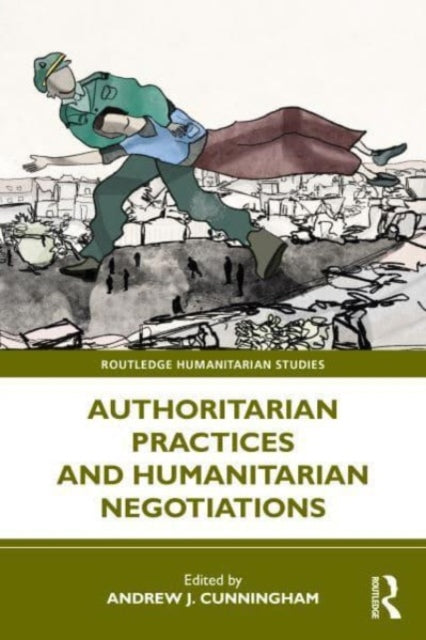
This book examines how international humanitarian NGOs negotiate with authoritarian regimes, using case studies from China, Afghanistan, Syria, and Ethiopia to illustrate humanitarian contexts and the practice of negotiating with authoritarian regimes. It provides a practice-oriented examination of how these NGOs conceptualize core political concepts such as sovereignty and how this relates to domestic politics, and includes a "spectrum of regimes" working model that can be used by operational organizations and students and scholars of humanitarian studies.
Format: Hardback
Length: 254 pages
Publication date: 07 December 2023
Publisher: Taylor & Francis Ltd
A comprehensive exploration of the complex dynamics between international humanitarian NGOs and authoritarian regimes, encompassing a practice-oriented approach and a theoretical framework. This book offers valuable insights into the challenges and opportunities faced by these organizations in negotiating access to populations in need, while also shedding light on the conceptualization of core political concepts such as sovereignty and their implications for domestic politics. Through a series of case studies on China, Afghanistan, Syria, and Ethiopia, the book illustrates the diverse humanitarian contexts and the practical strategies employed by NGOs to engage with authoritarian regimes. Additionally, it presents a "spectrum of regimes" working model that can be utilized by operational organizations, students, and scholars of humanitarian studies to better understand the complexities of humanitarian engagement in different contexts.
Introduction:
The relationship between international humanitarian NGOs (IHNGOs) and authoritarian regimes is a complex and multifaceted one, marked by both challenges and opportunities. IHNGOs play a critical role in providing aid and support to populations affected by conflict, natural disasters, and other humanitarian crises, often operating in environments where government control and restrictions are significant. At the same time, authoritarian regimes often view IHNGOs as a threat to their stability and control, and may attempt to limit their operations or even shut them down altogether.
Challenges:
One of the primary challenges faced by IHNGOs in negotiating access to populations in need is the issue of sovereignty. Authoritarian regimes often claim sovereignty over their territory and resources, which can limit IHNGOs' ability to provide aid and support. This can be particularly problematic in situations where populations are under siege or facing humanitarian crises, as IHNGOs may need to cross borders or access areas controlled by the regime.
Another challenge is the political context in which IHNGOs operate. Authoritarian regimes may use humanitarian aid as a political tool, either to gain international recognition or to undermine their opponents. This can lead to tensions between IHNGOs and the regime, as IHNGOs may be accused of supporting opposition groups or political agendas.
In addition, IHNGOs may face cultural and linguistic barriers when working in authoritarian regimes. These barriers can make it difficult for IHNGOs to communicate with local populations and understand their needs, which can in turn limit their ability to provide effective aid and support.
Opportunities:
Despite these challenges, there are also opportunities for IHNGOs to engage with authoritarian regimes. One of the most significant opportunities is the potential for collaboration and partnership with the regime. By working with the regime, IHNGOs can gain access to populations in need and provide aid and support in a more efficient and effective manner.
Another opportunity is the potential for advocacy and influence. IHNGOs can use their expertise and knowledge to advocate for the rights and needs of populations affected by authoritarian regimes, and can use their networks and resources to raise awareness of these issues on a global scale.
In addition, IHNGOs can use their presence in authoritarian regimes to build relationships with local communities and organizations, which can help them to better understand the needs and challenges faced by these populations.
Theoretical Framework:
To better understand the relationship between IHNGOs and authoritarian regimes, it is important to consider the theoretical framework that underpins this analysis. One of the most influential theories in this field is the "spectrum of regimes" working model, developed by political scientist Samuel P. Huntington.
According to Huntington, there are four different types of regimes: democratic, authoritarian, totalitarian, and hybrid. Democratic regimes are characterized by free and fair elections, respect for human rights, and a separation of powers. Authoritarian regimes, on the other hand, are characterized by limited political participation, repression of political opposition, and a concentration of power in the hands of a few. Totalitarian regimes, in contrast, are characterized by a single party that controls all aspects of society, including the economy, the media, and the military. Hybrid regimes, on the other hand, are characterized by a combination of democratic and authoritarian features.
Case Studies:
To illustrate the challenges and opportunities faced by IHNGOs in negotiating access to populations in need, this book includes a series of case studies on China, Afghanistan, Syria, and Ethiopia. Each case study provides a detailed examination of the humanitarian context and the practical strategies employed by IHNGOs to engage with authoritarian regimes.
In China, for example, IHNGOs have faced significant challenges in negotiating access to populations affected by the Chinese government's crackdown on the Uyghur minority. The Chinese government has imposed strict restrictions on IHNGOs' operations in the region, including limitations on their funding, staff, and activities. However, IHNGOs have also found opportunities to collaborate with the Chinese government, including through joint projects and initiatives aimed at improving the health and well-being of the Uyghur population.
In Afghanistan, IHNGOs have faced significant challenges in negotiating access to populations affected by the ongoing conflict. The Afghan government has limited IHNGOs' operations in the country, including restrictions on their funding, staff, and activities. However, IHNGOs have also found opportunities to collaborate with the Afghan government, including through joint projects and initiatives aimed at improving the health and well-being of the Afghan population.
In Syria, IHNGOs have faced significant challenges in negotiating access to populations affected by the ongoing conflict. The Syrian government has imposed strict restrictions on IHNGOs' operations in the country, including limitations on their funding, staff, and activities. However, IHNGOs have also found opportunities to collaborate with the Syrian government, including through joint projects and initiatives aimed at improving the health and well-being of the Syrian population.
In Ethiopia, IHNGOs have faced significant challenges in negotiating access to populations affected by the ongoing conflict. The Ethiopian government has limited IHNGOs' operations in the country, including restrictions on their funding, staff, and activities. However, IHNGOs have also found opportunities to collaborate with the Ethiopian government, including through joint projects and initiatives aimed at improving the health and well-being of the Ethiopian population.
Conclusion:
In conclusion, the relationship between international humanitarian NGOs and authoritarian regimes is a complex and multifaceted one, marked by both challenges and opportunities. IHNGOs play a critical role in providing aid and support to populations affected by conflict, natural disasters, and other humanitarian crises, and their ability to negotiate access to populations in need is essential to their effectiveness. By understanding the challenges and opportunities faced by IHNGOs in negotiating access to populations in need, we can better understand the complexities of humanitarian engagement in different contexts and develop more effective strategies for addressing these challenges.
Dimension: 234 x 156 (mm)
ISBN-13: 9781032327570
UK and International shipping information
UK and International shipping information
UK Delivery and returns information:
- Delivery within 2 - 3 days when ordering in the UK.
- Shipping fee for UK customers from £2.39. Fully tracked shipping service available.
- Returns policy: Return within 30 days of receipt for full refund.
International deliveries:
Shulph Ink now ships to Australia, Belgium, Canada, France, Germany, Ireland, Italy, India, Luxembourg Saudi Arabia, Singapore, Spain, Netherlands, New Zealand, United Arab Emirates, United States of America.
- Delivery times: within 5 - 10 days for international orders.
- Shipping fee: charges vary for overseas orders. Only tracked services are available for most international orders. Some countries have untracked shipping options.
- Customs charges: If ordering to addresses outside the United Kingdom, you may or may not incur additional customs and duties fees during local delivery.