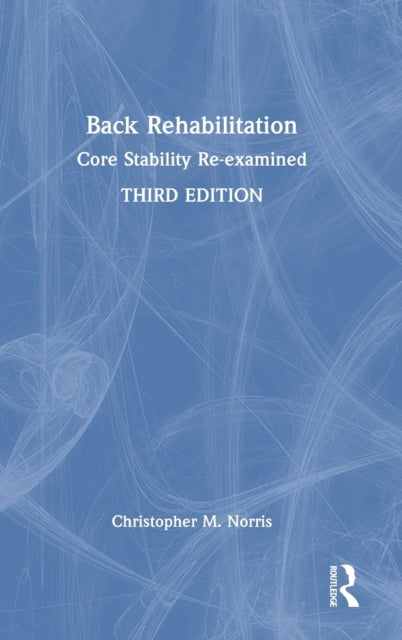
ChristopherNorris
Back Rehabilitation: Core Stability Re-examined
Back Rehabilitation: Core Stability Re-examined
💎 Earn 811 Points (£8.11) on this item.
We can order this item for you. Delivery usually takes about 4 to 6 weeks.
This item is not held in our immediate stock. We will order it for you after checkout.
Estimated delivery: About 4 to 6 weeks
YOU SAVE £9.63
- Condition: Brand new
- UK Delivery times: Usually arrives within 2 - 3 working days
- UK Shipping: Fee starts at £2.39. Subject to product weight & dimension
Bulk ordering. Want 15 or more copies? Get a personalised quote and bigger discounts. Learn more about bulk orders.
Couldn't load pickup availability
- More about Back Rehabilitation: Core Stability Re-examined
Exercise is essential for the prevention and treatment of low back pain, and this guide provides an integrated and practical approach for clinicians and personal trainers. It covers vital client assessment skills, exercise selection, teaching methods, and program structure and progression.
Format: Hardback
Length: 350 pages
Publication date: 11 July 2023
Publisher: Taylor & Francis Ltd
Back pain is a common problem that affects most of us at some point in our lives. Fortunately, exercise is a powerful tool for both preventing and treating low back pain. In this comprehensive guide, we will critically appraise the latest research and evidence-based practices to develop an integrated and practical approach suitable for day-to-day clinicians and personal trainers.
Understanding the Science of Back Pain
Before we dive into the specifics of exercise programming for low back pain, it's important to understand the underlying causes and mechanisms of this condition. Back pain can be caused by a variety of factors, including poor posture, weak muscles, and injuries. It can also be a result of underlying medical conditions such as arthritis, disc degeneration, or spinal stenosis.
Understanding the science of back pain is crucial for designing effective exercise programmes. It allows us to identify the specific muscles and movements that are most important for strengthening and stabilizing the low back. It also helps us to understand the potential risks and benefits of different types of exercise.
Client Assessment Skills
One of the key aspects of designing and teaching effective exercise programmes for low back pain is the assessment of the client's condition. This includes evaluating their range of motion, strength, flexibility, and pain levels. It also involves assessing their functional abilities and any underlying medical conditions that may affect their ability to exercise.
Vital client assessment skills are essential for ensuring that the exercise programme is tailored to the individual's needs and goals. This includes understanding the client's motivation and preferences, as well as their physical limitations and potential risks.
Which Exercises to Use and Why
Once we have assessed the client's condition, we can begin to design an exercise programme that is tailored to their specific needs. The exercises used in low back pain management should focus on strengthening the core muscles, improving flexibility, and promoting proper posture.
Some of the most effective exercises for low back pain include:
Core strengthening exercises: These exercises target the abdominal muscles, which are essential for supporting the low back. Examples include crunches, planks, and bicycle crunches.
Flexibility exercises: These exercises improve the range of motion in the low back and surrounding muscles. Examples include stretching, yoga, and Pilates.
Posture exercises: These exercises help to improve the alignment of the spine and reduce the risk of further injury. Examples include wall squats, dead bugs, and cat-cow stretches.
It's important to choose exercises that are appropriate for the client's level of fitness and ability. Exercises that are too challenging or risky may exacerbate the client's pain or lead to further injury.
The Most Effective Teaching Methods
In addition to choosing the right exercises, it's also important to use effective teaching methods to ensure that the exercises are performed correctly and safely. This includes providing clear instructions, demonstrating the exercises, and providing feedback and support to the client throughout the programme.
One of the most effective teaching methods for low back pain is the use of visual aids and cues. Visual aids can help the client to understand the correct form and technique for each exercise, while cues can help them to maintain proper posture and engage the correct muscles.
Another effective teaching method is the use of progressive overload. This involves gradually increasing the intensity and duration of the exercises over time to challenge the client's muscles and promote growth and improvement.
How to Structure and Progress a Full Back Pain Management Programme
Once we have designed an exercise programme for a client with low back pain, it's important to structure it in a way that promotes progress and sustainability. This includes setting clear goals and objectives, providing regular feedback and support, and gradually increasing the intensity and duration of the exercises over time.
It's also important to consider the client's lifestyle and other factors that may affect their ability to exercise. This may include their work schedule, physical activity levels, and any other medical conditions that may limit their ability to participate in physical activity.
Aimed at student therapists and clinical exercise teachers, as well as trainers planning exercise programmes for subjects recovering from low back pain, Back Rehabilitation is essential reading for therapists and exercise academics and professionals of all types.
In conclusion, low back pain is a common problem that affects many of us. Fortunately, exercise is a powerful tool for both preventing and treating this condition. By understanding the science of back pain, assessing clients' conditions, choosing appropriate exercises, and using effective teaching methods, we can develop integrated and practical exercise programmes that are tailored to the individual's needs and goals. Back Rehabilitation is a comprehensive guide that provides valuable insights and practical strategies for designing and teaching effective exercise programmes for low back pain. Whether you are a student therapist, clinical exercise teacher, or trainer, this guide will help you to develop the skills and knowledge necessary to help your clients achieve better health and well-being.
Weight: 830g
Dimension: 234 x 156 (mm)
ISBN-13: 9781032432151
Edition number: 3 ed
UK and International shipping information
UK and International shipping information
UK Delivery and returns information:
- Delivery within 2 - 3 days when ordering in the UK.
- Shipping fee for UK customers from £2.39. Fully tracked shipping service available.
- Returns policy: Return within 30 days of receipt for full refund.
International deliveries:
Shulph Ink now ships to Australia, Belgium, Canada, France, Germany, Ireland, Italy, India, Luxembourg Saudi Arabia, Singapore, Spain, Netherlands, New Zealand, United Arab Emirates, United States of America.
- Delivery times: within 5 - 10 days for international orders.
- Shipping fee: charges vary for overseas orders. Only tracked services are available for most international orders. Some countries have untracked shipping options.
- Customs charges: If ordering to addresses outside the United Kingdom, you may or may not incur additional customs and duties fees during local delivery.