Yvonne Boyer,Larry Chartrand
Bead by Bead: Constitutional Rights and Metis Community
Bead by Bead: Constitutional Rights and Metis Community
💎 Earn 324 Points (£3.24) on this item.
YOU SAVE £9.06
- Condition: Brand new
- UK Delivery times: Usually arrives within 2 - 3 working days
- UK Shipping: Fee starts at £2.39. Subject to product weight & dimension
Bulk ordering. Want 15 or more copies? Get a personalised quote and bigger discounts. Learn more about bulk orders.
Couldn't load pickup availability
- More about Bead by Bead: Constitutional Rights and Metis Community
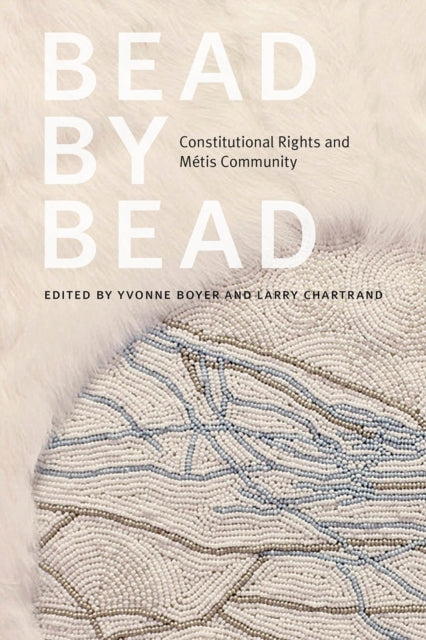
The phrase Métis peoples refers to Indigenous people in Canada who have mixed Indigenous and European ancestry. They have a distinct culture, history, and legal status. The book Bead by Bead explores the historical denial of Métis concerns and claims, such as land, resources, and governance, and offers a nuanced analysis of the parameters that current Indigenous legal doctrines place around Métis rights discourse. It aims to promote respectful, inclusive Métis-Canadian constitutional relationships by revealing the complexity and diversity of Métis identities and lived reality.
Format: Hardback
Length: 236 pages
Publication date: 26 May 2021
Publisher: University of British Columbia Press
The Métis peoples, a diverse group with a rich history and complex identity, have been the subject of ongoing debates and discussions in constitutional terms. As lawyers and scholars delve into the nature and scope of Métis identity and constitutional rights, it is essential to understand the Métis experience of colonization to foster reconciliation.
In the book "Bead by Bead," contributors shed light on the historical denial of Métis concerns and claims regarding land, resources, and governance. They address themes such as the invisibility of Métis women in court decisions, identity politics, and racist legal principles, unveiling the troubling issues that hinder Métis aspirations for a just future.
This nuanced analysis of the parameters that current Indigenous legal doctrines place around Métis rights discourse goes beyond a one-size-fits-all approach. By revealing the complexity and diversity of Métis identities and lived realities, the book opens new pathways to respectful, inclusive Métis-Canadian constitutional relationships.
The Métis peoples have a unique history and identity that is shaped by a combination of Indigenous and European heritage. They have faced significant challenges throughout history, including discrimination, marginalization, and the loss of land and resources. However, the Métis have also demonstrated resilience and perseverance in their pursuit of justice and equality.
In constitutional terms, the Métis peoples have been recognized as a distinct group with rights and interests that are distinct from those of other Indigenous peoples and Canadians. The Canadian Constitution recognizes the Métis as a "non-status" Indigenous people, which means they are not officially recognized as a First Nation, Inuit, or Metis Nation. However, the Métis have been granted certain rights and protections under the Constitution, including the right to self-government, the right to land, and the right to cultural practices and traditions.
The debate over Métis identity and constitutional rights has been ongoing for many years. Some scholars argue that the Métis are a distinct group with a unique history and culture that should be recognized as a separate nation or nation-within-a-nation. Others argue that the Métis are simply a subset of Indigenous peoples and should be included in the broader scope of Indigenous rights and protections.
One of the key issues in the debate over Métis identity and constitutional rights is the question of land ownership and access. The Métis have a long history of being land stewards and have been dispossessed of their land through a variety of means, including forced relocation, assimilation, and colonialism. Many Métis communities continue to struggle to regain access to their traditional lands and to assert their rights to land stewardship.
Another issue in the debate over Métis identity and constitutional rights is the question of identity politics. Métis individuals and communities have faced significant challenges in asserting their identity and claiming their rights. Many Métis have been subjected to discrimination and marginalization, and have been forced to navigate a complex web of legal and political systems to assert their rights.
In recent years, there has been a growing recognition of the importance of understanding Métis experience of colonization to achieve reconciliation. Reconciliation is a process that seeks to repair the harm caused by historical injustices and to build a more inclusive and respectful relationship between Indigenous peoples and Canadians.
In "Bead by Bead," contributors argue that understanding Métis experience of colonization is fundamental to achieving reconciliation. They argue that the historical denial of Métis concerns and claims has contributed to the ongoing marginalization and discrimination of Métis communities. By recognizing the Métis as a distinct group with a unique history and culture, and by addressing the historical injustices that have been perpetrated against them, it is possible to build a more inclusive and respectful relationship between Métis and other Indigenous peoples and Canadians.
The book also highlights the importance of Métis women in the Métis community and their role in asserting their rights and claiming their place in the broader Métis community. Métis women have often been marginalized and excluded from decision-making processes, and have faced significant barriers to participation in Métis governance. By addressing the invisibility
In conclusion, the Métis peoples, a diverse group with a rich history and complex identity, have been the subject of ongoing debates and discussions in constitutional terms. As lawyers and scholars delve into the nature and scope of Métis identity and constitutional rights, it is essential to understand the Métis experience of colonization to foster reconciliation.
In the book "Bead by Bead," contributors shed light on the historical denial of Métis concerns and claims regarding land, resources, and governance. They address themes such as the invisibility of Métis women in court decisions, identity politics, and racist legal principles, unveiling the troubling issues that hinder Métis aspirations for a just future.
This nuanced analysis of the parameters that current Indigenous legal doctrines place around Métis rights discourse goes beyond a one-size-fits-all approach. By revealing the complexity and diversity of Métis identities and lived realities, the book opens new pathways to respectful, inclusive Métis-Canadian constitutional relationships.
The Métis peoples have a unique history and identity that is shaped by a combination of Indigenous and European heritage. They have faced significant challenges throughout history, including discrimination, marginalization, and the loss of land and resources. However, the Métis have also demonstrated resilience and perseverance in their pursuit of justice and equality.
In constitutional terms, the Métis peoples have been recognized as a distinct group with rights and interests that are distinct from those of other Indigenous peoples and Canadians. The Canadian Constitution recognizes the Métis as a "non-status" Indigenous people, which means they are not officially recognized as a First Nation, Inuit, or Metis Nation. However, the Métis have been granted certain rights and protections under the Constitution, including the right to self-government, the right to land, and the right to cultural practices and traditions.
The debate over Métis identity and constitutional rights has been ongoing for many years. Some scholars argue that the Métis are a distinct group with a unique history and culture that should be recognized as a separate nation or nation-within-a-nation. Others argue that the Métis are simply a subset of Indigenous peoples and should be included in the broader scope of Indigenous rights and protections.
One of the key issues in the debate over Métis identity and constitutional rights is the question of land ownership and access. The Métis have a long history of being land stewards and have been dispossessed of their land through a variety of means, including forced relocation, assimilation, and colonialism. Many Métis communities continue to struggle to regain access to their traditional lands and to assert their rights to land stewardship.
Another issue in the debate over Métis identity and constitutional rights is the question of identity politics. Métis individuals and communities have faced significant challenges in asserting their identity and claiming their rights. Many Métis have been subjected to discrimination and marginalization, and have been forced to navigate a complex web of legal and political systems to assert their rights.
In recent years, there has been a growing recognition of the importance of understanding Métis experience of colonization to achieve reconciliation. Reconciliation is a process that seeks to repair the harm caused by historical injustices and to build a more inclusive and respectful relationship between Indigenous peoples and Canadians.
In "Bead by Bead," contributors argue that understanding Métis experience of colonization is fundamental to achieving reconciliation. They argue that the historical denial of Métis concerns and claims has contributed to the ongoing marginalization and discrimination of Métis communities. By recognizing the Métis as a distinct group with a unique history and culture, and by addressing the historical injustices that have been perpetrated against them, it is possible to build a more inclusive and respectful relationship between Métis and other Indigenous peoples and Canadians.
The book also highlights the importance of Métis women in the Métis community and their role in asserting their rights and claiming their place in the broader Métis community. Métis women have often been marginalized and excluded from decision-making processes, and have faced significant barriers to participation in Métis governance. By addressing the invisibility of Métis women in court decisions, identity politics, and racist legal principles, the book opens new pathways to respectful, inclusive Métis-Canadian constitutional relationships.
In conclusion, the Métis peoples, a diverse group with a rich history and complex identity, have been the subject of ongoing debates and discussions in constitutional terms. As lawyers and scholars delve into the nature and scope of Métis identity and constitutional rights, it is essential to understand the Métis experience of colonization to foster reconciliation.
In the book "Bead by Bead," contributors shed light on the historical denial of Métis concerns and claims regarding land, resources, and governance. They address themes such as the invisibility of Métis women in court decisions, identity politics, and racist legal principles, unveiling the troubling issues that hinder Métis aspirations for a just future.
This nuanced analysis of the parameters that current Indigenous legal doctrines place around Métis rights discourse goes beyond a one-size-fits-all approach. By revealing the complexity and diversity of Métis identities and lived realities, the book opens new pathways to respectful, inclusive Métis-Canadian constitutional relationships.
Dimension: 229 x 152 (mm)
ISBN-13: 9780774865968
This item can be found in:
UK and International shipping information
UK and International shipping information
UK Delivery and returns information:
- Delivery within 2 - 3 days when ordering in the UK.
- Shipping fee for UK customers from £2.39. Fully tracked shipping service available.
- Returns policy: Return within 30 days of receipt for full refund.
International deliveries:
Shulph Ink now ships to Australia, Belgium, Canada, France, Germany, Ireland, Italy, India, Luxembourg Saudi Arabia, Singapore, Spain, Netherlands, New Zealand, United Arab Emirates, United States of America.
- Delivery times: within 5 - 10 days for international orders.
- Shipping fee: charges vary for overseas orders. Only tracked services are available for most international orders. Some countries have untracked shipping options.
- Customs charges: If ordering to addresses outside the United Kingdom, you may or may not incur additional customs and duties fees during local delivery.