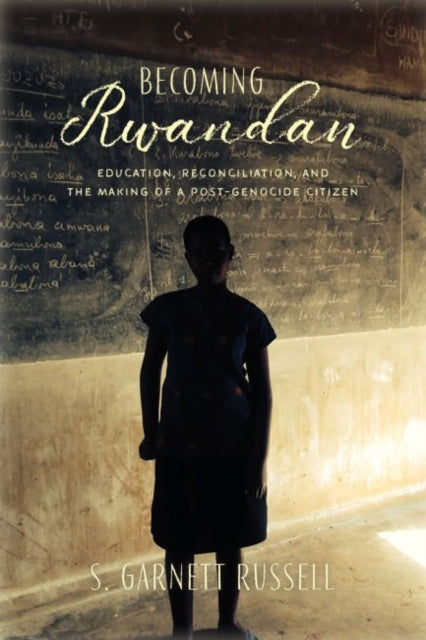
S. Garnett Russell
Becoming Rwandan: Education, Reconciliation, and the Making of a Post-Genocide Citizen
Becoming Rwandan: Education, Reconciliation, and the Making of a Post-Genocide Citizen
💎 Earn 120 Points (£1.20) on this item.
YOU SAVE £2.90
- Condition: Brand new
- UK Delivery times: Usually arrives within 2 - 3 working days
- UK Shipping: Fee starts at £2.39. Subject to product weight & dimension
Bulk ordering. Want 15 or more copies? Get a personalised quote and bigger discounts. Learn more about bulk orders.
Couldn't load pickup availability
- More about Becoming Rwandan: Education, Reconciliation, and the Making of a Post-Genocide Citizen
The Rwandan government uses education to promote peace and a unified future, but its attempts to manipulate global models for national goals have mixed results. Teachers and students engage with these models in ways that distort the government's intention, leading to unintended consequences and undermining sustainable peace.
Format: Paperback / softback
Length: 266 pages
Publication date: 30 October 2019
Publisher: Rutgers University Press
After the tragic events of the genocide, the Rwandan government has taken significant steps to rebuild and foster peace within the country. Recognizing the importance of education in shaping a unified and patriotic future, they have implemented various initiatives aimed at promoting education as a tool for reconciliation and national development. Their goal is to create a generation that is focused on building a society that is inclusive and respects the diversity of its people.
However, the government's efforts to manipulate global models around citizenship, human rights, and reconciliation to serve its national goals have yielded mixed results. While the intention behind these initiatives is noble, the way in which teachers and students engage with these global models often distorts the government's intended message, leading to unintended consequences and undermining the long-term sustainability of peace.
In his book, Becoming Rwandan, author Paul Rusesabagina explores this complex relationship between global discourses and national policy in Rwanda. He argues that although the Rwandan government incorporates global models into its national policy documents, the way in which teachers and students interpret and engage with these models can significantly impact the outcome. Rusesabagina highlights the need for a more nuanced and inclusive approach to education that takes into account the local context and the diverse perspectives of the students.
One of the key challenges that the government faces is the need to balance the promotion of national unity and patriotism with the recognition of the diverse ethnic and cultural identities of the Rwandan people. While the government seeks to create a sense of shared identity and belonging, there are concerns that this may be achieved at the expense of individual rights and freedoms. Rusesabagina argues that a sustainable peace can only be achieved through a process of reconciliation that recognizes the past injustices and addresses the underlying causes of conflict.
To address these challenges, the government has implemented various initiatives aimed at promoting education as a tool for reconciliation and national development. These include the development of curriculum materials that promote tolerance, respect, and understanding of different cultures and ethnic groups. The government has also established programs that encourage dialogue and collaboration between students from different backgrounds, promoting a sense of unity and shared responsibility.
However, the success of these initiatives depends on the willingness of teachers and students to engage with these global models in a meaningful and constructive way. Rusesabagina argues that teachers should be trained to critically analyze the information they receive and to teach students to think critically about the issues they face in their daily lives. Students, on the other hand, should be encouraged to participate in discussions and debates that promote empathy and understanding of different perspectives.
In conclusion, the Rwandan government's efforts to use the education system to promote peace and shape a new generation of Rwandans are commendable. However, the way in which teachers and students engage with these global models can have unintended consequences and undermine the long-term sustainability of peace. By adopting a more nuanced and inclusive approach to education, the government can help to create a generation that is focused on a unified and patriotic future while also respecting the diverse identities of its people.
Weight: 336g
Dimension: 141 x 215 x 17 (mm)
ISBN-13: 9781978802865
This item can be found in:
UK and International shipping information
UK and International shipping information
UK Delivery and returns information:
- Delivery within 2 - 3 days when ordering in the UK.
- Shipping fee for UK customers from £2.39. Fully tracked shipping service available.
- Returns policy: Return within 30 days of receipt for full refund.
International deliveries:
Shulph Ink now ships to Australia, Belgium, Canada, France, Germany, Ireland, Italy, India, Luxembourg Saudi Arabia, Singapore, Spain, Netherlands, New Zealand, United Arab Emirates, United States of America.
- Delivery times: within 5 - 10 days for international orders.
- Shipping fee: charges vary for overseas orders. Only tracked services are available for most international orders. Some countries have untracked shipping options.
- Customs charges: If ordering to addresses outside the United Kingdom, you may or may not incur additional customs and duties fees during local delivery.