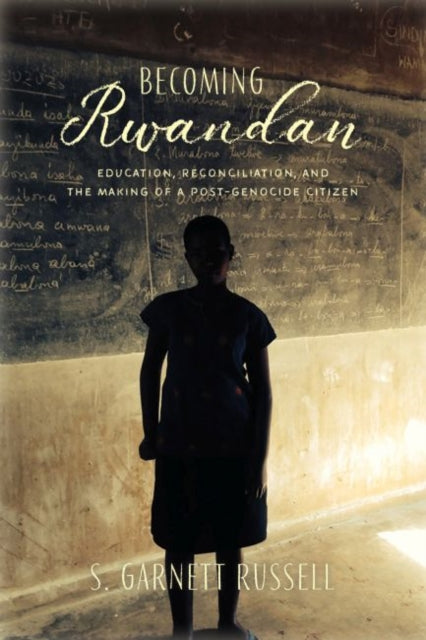
S. Garnett Russell
Becoming Rwandan: Education, Reconciliation, and the Making of a Post-Genocide Citizen
Becoming Rwandan: Education, Reconciliation, and the Making of a Post-Genocide Citizen
💎 Earn 352 Points (£3.52) on this item.
YOU SAVE £63.45
- Condition: Brand new
- UK Delivery times: Usually arrives within 2 - 3 working days
- UK Shipping: Fee starts at £2.39. Subject to product weight & dimension
Bulk ordering. Want 15 or more copies? Get a personalised quote and bigger discounts. Learn more about bulk orders.
Couldn't load pickup availability
- More about Becoming Rwandan: Education, Reconciliation, and the Making of a Post-Genocide Citizen
The Rwandan government uses education to promote peace and a unified future, but its attempts to manipulate global models for national goals have mixed results, leading to unintended consequences and undermining sustainable peace.
Format: Hardback
Length: 266 pages
Publication date: 30 October 2019
Publisher: Rutgers University Press
After the tragic events of the genocide, the Rwandan government has taken significant steps to rebuild and foster peace within the country. Recognizing the importance of education in shaping a unified and patriotic future, they have implemented various initiatives aimed at promoting education as a tool for reconciliation and national development. Their goal is to create a generation that is focused on building a society that is inclusive and respects the diversity of its people.
However, the government's efforts to manipulate global models around citizenship, human rights, and reconciliation to serve its national goals have yielded mixed results. While the intention behind these initiatives is noble, the way in which teachers and students engage with these global models often distorts the government's intended message, leading to unintended consequences and undermining the long-term sustainability of peace.
In his book, Becoming Rwandan, author Paul Rusesabagina explores this complex relationship between global discourses and national policy in Rwanda. He argues that although the Rwandan government incorporates global models into its national policy documents, the way in which teachers and students interpret and engage with these models can significantly impact the outcome. Rusesabagina highlights the need for a more nuanced and inclusive approach to education that takes into account the local context and cultural nuances of the country.
One of the key challenges that the government faces is the lack of adequate training and resources for teachers to effectively integrate global models into their teaching practices. Many teachers are not familiar with the nuances and complexities of these models, which can lead to misinterpretations and misunderstandings. This can further exacerbate existing tensions and divisions within society, as different groups may interpret the same global models in different ways.
To address this issue, the government has implemented various initiatives aimed at improving the quality of education and providing teachers with the necessary training and resources. These include the development of curriculum materials that incorporate global perspectives and the establishment of teacher training programs that focus on promoting peace, reconciliation, and human rights.
However, even with these efforts, there are still challenges that need to be addressed. One of the most significant challenges is the need to promote a culture of dialogue and understanding between different social groups in Rwanda. The genocide left deep scars and divisions within the country, and it is essential to work towards healing and reconciliation. Education can play a crucial role in promoting this culture of dialogue, as it can provide a platform for people to share their experiences, learn from each other, and build bridges of understanding.
Another challenge that the government faces is the need to address the issue of impunity and promote accountability for the crimes committed during the genocide. While the government has made significant progress in prosecuting those responsible for the genocide, there are still many cases that remain unresolved, which can create a sense of injustice and perpetuate tensions within society.
To address this issue, the government has implemented various initiatives aimed at promoting justice and reconciliation, including the establishment of truth and reconciliation commissions and the implementation of legal reforms that seek to address the legacy of the genocide.
In conclusion, the Rwandan government's efforts to use the education system to promote peace and shape a new generation of Rwandans are commendable. However, the way in which teachers and students engage with global models can often distort the government's intended message, leading to unintended consequences and undermining the long-term sustainability of peace. To address these challenges, it is essential to promote a more nuanced and inclusive approach to education that takes into account the local context and cultural nuances of the country. Additionally, the government needs to continue to invest in training and resources for teachers, promote a culture of dialogue and understanding between different social groups, and address the issue of impunity and promote accountability for the crimes committed during the genocide. By doing so, Rwanda can continue to make progress towards building a society that is inclusive, peaceful, and prosperous.
Weight: 444g
Dimension: 215 x 140 x 22 (mm)
ISBN-13: 9781978802872
This item can be found in:
UK and International shipping information
UK and International shipping information
UK Delivery and returns information:
- Delivery within 2 - 3 days when ordering in the UK.
- Shipping fee for UK customers from £2.39. Fully tracked shipping service available.
- Returns policy: Return within 30 days of receipt for full refund.
International deliveries:
Shulph Ink now ships to Australia, Belgium, Canada, France, Germany, Ireland, Italy, India, Luxembourg Saudi Arabia, Singapore, Spain, Netherlands, New Zealand, United Arab Emirates, United States of America.
- Delivery times: within 5 - 10 days for international orders.
- Shipping fee: charges vary for overseas orders. Only tracked services are available for most international orders. Some countries have untracked shipping options.
- Customs charges: If ordering to addresses outside the United Kingdom, you may or may not incur additional customs and duties fees during local delivery.