Nicole A. Jacobs
Bees in Early Modern Transatlantic Literature: Sovereign Colony
Bees in Early Modern Transatlantic Literature: Sovereign Colony
💎 Earn 207 Points (£2.07) on this item.
We can order this item for you. Delivery usually takes about 4 to 6 weeks.
This item is not held in our immediate stock. We will order it for you after checkout.
Estimated delivery: About 4 to 6 weeks
YOU SAVE £2.47
- Condition: Brand new
- UK Delivery times: Usually arrives within 2 - 3 working days
- UK Shipping: Fee starts at £2.39. Subject to product weight & dimension
Bulk ordering. Want 15 or more copies? Get a personalised quote and bigger discounts. Learn more about bulk orders.
Couldn't load pickup availability
- More about Bees in Early Modern Transatlantic Literature: Sovereign Colony
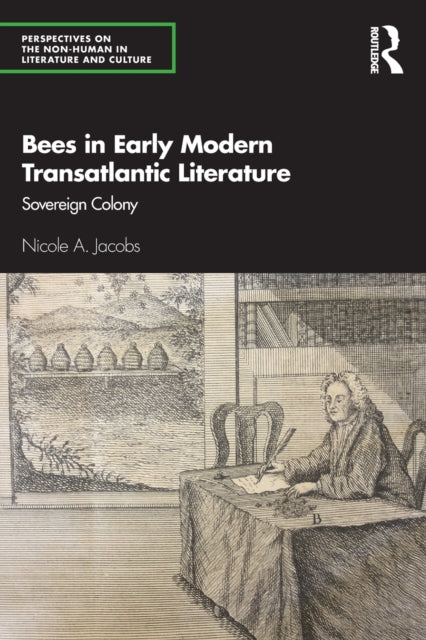
This book explores apian imagery in 17th and 18th-century literature and oral traditions, examining how bees symbolize communal society and colonization. It analyzes the works of William Shakespeare, Francis Daniel Pastorius, John Milton, Hester Pulter, and Bernard Mandeville, highlighting how bees shape conflicts over hierarchies in the early transatlantic world.
Format: Paperback / softback
Length: 194 pages
Publication date: 31 May 2023
Publisher: Taylor & Francis Ltd
This comprehensive book delves into the rich tapestry of apian imagery, encompassing bees, drones, honey, and the hive, as it manifests in the literary and oral traditions of the seventeenth and eighteenth centuries. During a pivotal era of expansion in England and the New World colonies, the metaphorical beehive faced unprecedented challenges while simultaneously emerging as a symbol of colonization itself. The beehive intricately linked the labor of individuals marginalized by factors such as race, class, gender, or species to broader issues of sovereignty. This scholarly exploration examines the profound works of renowned figures such as William Shakespeare, Francis Daniel Pastorius, Hopi, Wyandotte, and Pocasset cultures, as well as John Milton, Hester Pulter, and Bernard Mandeville. Its unique contribution lies in its exploration of the intricate narratives that simultaneously evoke recovery and destruction, centering the bee at the crossroads of human, animal, and environmental realms. The book makes a compelling argument that bees occupy a central representational and physical role in shaping conflicts over hierarchies in the early transatlantic world.
Introduction:
The seventeenth and eighteenth centuries witnessed a remarkable proliferation of apian imagery in literature and oral traditions. Bees, drones, honey, and the hive became symbols of communal society, facing unprecedented challenges during a period of expansion in England and the New World colonies. The beehive, as a metaphor, connected the labor of marginalized individuals to larger concerns of sovereignty, highlighting the complex interplay between race, class, gender, and species in shaping early transatlantic world hierarchies.
Literary and Oral Traditions:
The book explores the rich tapestry of apian imagery in various literary and oral traditions. It examines the works of William Shakespeare, renowned for his poetic portrayal of the natural world, including his famous play "A Midsummer Night's Dream," in which the characters interact with bees and their hives. Francis Daniel Pastorius, a German-American composer, incorporated bee imagery into his music, reflecting the cultural significance of bees in European and American societies. Hopi, Wyandotte, and Pocasset cultures, indigenous to the Americas, have deep connections to bees, with their traditions and beliefs intertwined with the insect. John Milton, a prominent English poet of the seventeenth century, wrote extensively about bees, using them as a metaphor for the divine and the human soul. Hester Pulter, a seventeenth-century English writer, explored the social and political implications of beekeeping in her novel "The Weavers." Bernard Mandeville, a renowned eighteenth-century philosopher, wrote about the "Fable of the Bees," a satirical work that critiqued the social and economic structures of his time.
The Beehive as Metaphor:
The beehive emerged as a powerful metaphor during the seventeenth and eighteenth centuries, symbolizing the collective efforts of marginalized individuals and communities. It connected the labor of those often excluded from power and privilege to broader issues of sovereignty and governance. The beehive became a symbol of unity, resilience, and cooperation, as individuals worked together to maintain and thrive in their hives. However, the metaphor of the beehive also faced challenges during this period. As societies expanded and colonized new territories, the beehive was often appropriated and manipulated to serve the interests of dominant groups. It was used to justify the exploitation and oppression of marginalized communities, perpetuating hierarchies and inequalities.
Recuperative and Destructive Narratives:
The book delves into the complex narratives that place the bee at the nexus of the human, animal, and environment. It explores the simultaneous recuperative and destructive narratives that shape our understanding of bees and their role in society. On the one hand, these narratives highlight the importance of bees as pollinators and contributors to the health of ecosystems. They emphasize the ecological significance of bees and their contribution to the production of food and other natural resources. On the other hand, these narratives also evoke destructive narratives that portray bees as pests, threats, or agents of chaos. These narratives often perpetuate harmful stereotypes and attitudes towards bees, leading to their decline and destruction.
Conflicts over Hierarchies:
The book argues that bees play a central representational and physical role in shaping conflicts over hierarchies in the early transatlantic world. The metaphor of the beehive was used to articulate and justify the power dynamics and hierarchies that existed in colonial societies. It was used to legitimize the dominance of certain groups over others, perpetuating systems of oppression and exploitation. Bees, as symbols of labor and cooperation, were appropriated to reinforce these hierarchies, as they were seen as essential for the production of wealth and prosperity. However, the book also highlights the resistance and resilience of marginalized communities who challenged these hierarchies and sought to reclaim their rights and dignity.
Conclusion:
In conclusion, this book offers a comprehensive exploration of apian imagery in the seventeenth and eighteenth centuries. It examines the rich tapestry of literary and oral traditions, highlighting the challenges and complexities of the metaphorical beehive. The book argues that bees occupy a central representational and physical role in shaping conflicts over hierarchies in the early transatlantic world. By exploring the simultaneous recuperative and destructive narratives that place the bee at the nexus of the human, animal, and environment, the book provides valuable insights into the complex interplay between power, identity, and the natural world. This study contributes to our understanding of the historical and cultural significance of bees and their role in shaping the early transatlantic world.
Weight: 453g
Dimension: 229 x 152 (mm)
ISBN-13: 9780367641573
This item can be found in:
UK and International shipping information
UK and International shipping information
UK Delivery and returns information:
- Delivery within 2 - 3 days when ordering in the UK.
- Shipping fee for UK customers from £2.39. Fully tracked shipping service available.
- Returns policy: Return within 30 days of receipt for full refund.
International deliveries:
Shulph Ink now ships to Australia, Belgium, Canada, France, Germany, Ireland, Italy, India, Luxembourg Saudi Arabia, Singapore, Spain, Netherlands, New Zealand, United Arab Emirates, United States of America.
- Delivery times: within 5 - 10 days for international orders.
- Shipping fee: charges vary for overseas orders. Only tracked services are available for most international orders. Some countries have untracked shipping options.
- Customs charges: If ordering to addresses outside the United Kingdom, you may or may not incur additional customs and duties fees during local delivery.