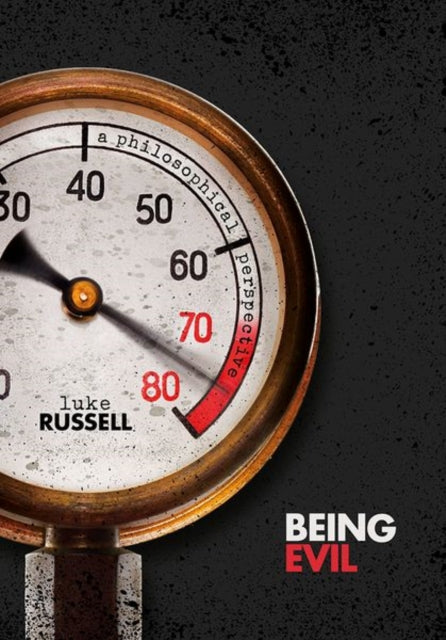
LukeRussell
Being Evil: A Philosophical Perspective
Being Evil: A Philosophical Perspective
💎 Earn 49 Points (£0.49) on this item.
YOU SAVE £4.09
- Condition: Brand new
- UK Delivery times: Usually arrives within 2 - 3 working days
- UK Shipping: Fee starts at £2.39. Subject to product weight & dimension
Bulk ordering. Want 15 or more copies? Get a personalised quote and bigger discounts. Learn more about bulk orders.
Couldn't load pickup availability
- More about Being Evil: A Philosophical Perspective
The 9/11 terrorist attacks were not merely wrong, but evil. This book explores why some philosophers think that evil is a myth or a fantasy, while others think that evil is real and is a concept that plays an important role in contemporary secular morality. It also asks whether evil is always horrific and incomprehensible, or if it can be banal.
Format: Hardback
Length: 160 pages
Publication date: 24 September 2020
Publisher: Oxford University Press
We often come across heinous acts of wrongdoing, with the media presenting a disheartening parade of violent assaults, rapes, and murders. However, even the most jaded and world-weary among us can be surprised. Occasionally, we encounter a crime so abhorrent, so reprehensible, so profoundly wrong, that we resort to the word "evil." The 9/11 terrorist attacks were not merely wrong but evil. A serial killer who tortures their victims is not merely a bad person; they are evil. And as the Holocaust demonstrated, we must remain vigilant against the threat of evil. But what exactly is it? If we use the word "evil," are we embracing a simplistic Manichean worldview, in which two cosmic forces of good and evil are pitted against one another? Are we guilty of demonizing our enemies? How does "evil" go beyond what is merely bad or wrong?
This book delves into the answers that philosophers have provided to these questions. Luke Russell explores why some philosophers believe that evil is a myth or a fantasy, while others argue that it is real and plays a crucial role in contemporary secular morality. Along the way, he questions whether evil is always horrific and incomprehensible or if it can be banal. Russell also engages with ongoing discussions over psychopathy and empathy, analyzing the psychology behind evildoing.
Some philosophers argue that evil is a myth or a fantasy. They contend that the concept of evil is a human invention, created to explain the suffering and misfortune that occurs in the world. These philosophers argue that there is no objective reality to evil, and that it is simply a label we apply to actions that we find harmful or wrong.
On the other hand, some philosophers believe that evil is real. They argue that evil is a concept that exists in the world and that it has a profound impact on our lives. These philosophers believe that evil is caused by human actions, such as greed, hatred, and violence, and that it can have devastating consequences for individuals and society as a whole.
One of the key questions that philosophers address is whether evil is always horrific and incomprehensible. Some philosophers argue that evil is always a result of human actions that are motivated by selfishness and greed. They argue that evil is always horrific and incomprehensible because it goes against the natural order of things and violates the principles of morality and ethics.
However, other philosophers argue that evil can be banal. They argue that evil can occur in everyday situations and that it can be caused by a variety of factors, such as ignorance, indifference, and fear. These philosophers argue that evil can be banal because it is often the result of ordinary human behavior and that it can be understood and addressed through rational analysis and moral reasoning.
Another important question that philosophers address is whether there is a special psychological hallmark that sets the evildoers apart from the rest of us. Some philosophers argue that there is a distinct psychological profile that is associated with evildoing, such as psychopathy or narcissism. These philosophers argue that evildoers have a lack of empathy and a disregard for the well-being of others, and that these characteristics can contribute to their ability to commit heinous acts.
However, other philosophers argue that there is no such thing as a "psychopathic" or "narcissistic" personality type. They argue that evildoing is not necessarily the result of a specific personality disorder but rather the result of a combination of factors, such as social, cultural, and environmental influences. These philosophers argue that evildoing is a complex phenomenon that cannot be reduced to a single psychological characteristic.
In conclusion, the concept of evil is a complex and multifaceted issue that has been debated by philosophers for centuries. While some philosophers argue that evil is a myth or a fantasy, others argue that it is real and has a profound impact on our lives. Philosophers address a range of questions related to the nature of evil, including whether it is always horrific and incomprehensible, whether it can be banal, and whether there is a special psychological hallmark that sets the evildoers apart from the rest of us. By exploring these questions, philosophers can help us better understand the causes and consequences of evil and develop strategies for addressing it in our society.
Weight: 250g
Dimension: 178 x 153 x 22 (mm)
ISBN-13: 9780198862079
UK and International shipping information
UK and International shipping information
UK Delivery and returns information:
- Delivery within 2 - 3 days when ordering in the UK.
- Shipping fee for UK customers from £2.39. Fully tracked shipping service available.
- Returns policy: Return within 30 days of receipt for full refund.
International deliveries:
Shulph Ink now ships to Australia, Belgium, Canada, France, Germany, Ireland, Italy, India, Luxembourg Saudi Arabia, Singapore, Spain, Netherlands, New Zealand, United Arab Emirates, United States of America.
- Delivery times: within 5 - 10 days for international orders.
- Shipping fee: charges vary for overseas orders. Only tracked services are available for most international orders. Some countries have untracked shipping options.
- Customs charges: If ordering to addresses outside the United Kingdom, you may or may not incur additional customs and duties fees during local delivery.