Shulph Ink
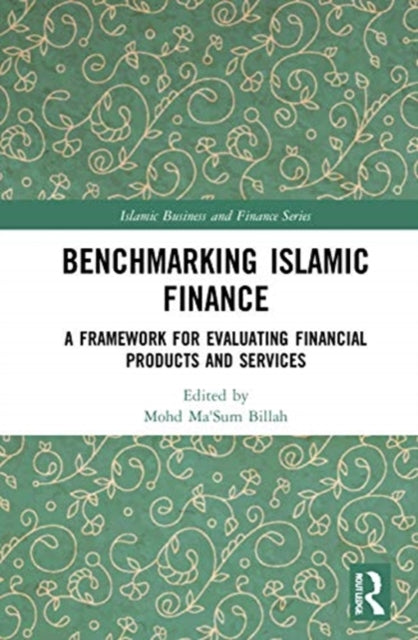
Benchmarking Islamic Finance: A Framework for Evaluating Financial Products and Services
Benchmarking Islamic Finance: A Framework for Evaluating Financial Products and Services
💎 Earn 811 Points (£8.11) on this item.
We can order this item for you. Delivery usually takes about 4 to 6 weeks.
This item is not held in our immediate stock. We will order it for you after checkout.
Estimated delivery: About 4 to 6 weeks
YOU SAVE £9.63
- Condition: Brand new
- UK Delivery times: Usually arrives within 2 - 3 working days
- UK Shipping: Fee starts at £2.39. Subject to product weight & dimension
Bulk ordering. Want 15 or more copies? Get a personalised quote and bigger discounts. Learn more about bulk orders.
Couldn't load pickup availability
- More about Benchmarking Islamic Finance: A Framework for Evaluating Financial Products and Services
Pricing or benchmarking is a process of evaluating the performance of a financial company's products and services or systems against other businesses considered to be at the top of their field. This book discusses whether the Islamic financial system has been dependent on the LIBOR/EURIBOR in its benchmarking exercises and whether it requires benchmarking of its products and services. It also looks at how benchmarking formulas should be adapted to ensure the satisfaction of customers within the principles of Maqasid al-Shariah.
Format: Hardback
Length: 254 pages
Publication date: 15 July 2021
Publisher: Taylor & Francis Ltd
Pricing or benchmarking is a comprehensive process that involves the evaluation of a financial company's products and services or systems in comparison to other businesses that are widely regarded as industry leaders. This evaluation is conducted by applying a measurement of "best in performance" to gauge the relative performance of these entities.
The purpose of pricing or benchmarking is to provide valuable insights into the strengths and weaknesses of a financial company's offerings, as well as to identify areas for improvement. By comparing its products and services to those of its competitors, a financial company can gain a better understanding of its market position and identify strategies to differentiate itself from the competition.
One of the key aspects of pricing or benchmarking is the use of measurement tools and methodologies. These tools and methodologies help financial companies to quantify and compare their performance against industry standards. There are various types of measurement tools and methodologies used in pricing or benchmarking, including financial ratios, non-financial, and qualitative measures.
Financial measures include metrics such as return on assets (ROA), return on equity (ROE), and net profit margin (NPM). These measures help financial companies to assess their profitability and financial efficiency. Non-financial measures include customer satisfaction ratings, brand reputation, and market share. These measures help financial companies to assess their market position and customer loyalty. Qualitative measures include market analysis, competitive landscape, and industry trends. These measures help financial companies to gain a deeper understanding of the market and identify potential opportunities and threats.
In the context of Islamic finance, pricing or benchmarking is particularly important. Islamic finance is a rapidly growing sector that operates under the principles of Sharī ͑ah, which emphasizes the ethical and socially responsible aspects of financial transactions. As such, Islamic finance institutions must adhere to strict ethical guidelines and standards, which include the need for benchmarking.
Benchmarking in Islamic finance involves the evaluation of the performance of Islamic financial products and services in comparison to their conventional counterparts. This evaluation is conducted to ensure that Islamic financial products and services are in line with Sharī ͑ah principles and are socially responsible.
There are several challenges associated with benchmarking in Islamic finance. One of the challenges is the lack of standardization in the Islamic finance industry. Different Islamic finance institutions may use different benchmarking methodologies and tools, which can make it difficult to compare their performance. Another challenge is the lack of transparency in the Islamic finance industry, which can make it difficult to assess the performance of Islamic financial products and services.
To address these challenges, there have been efforts to develop standardized benchmarking methodologies and tools in the Islamic finance industry. These efforts have been led to the emergence of Sharī ͑ah-justified benchmarking, which is a benchmarking methodology that is based on Sharī ͑ah principles and is socially responsible. Sharī ͑ah-justified benchmarking involves the evaluation of the performance of Islamic financial products and services in comparison to their conventional counterparts using a set of ethical criteria and standards.
One of the key benefits of Sharī ͑ah-justified benchmarking is that it provides a transparent and ethical framework for benchmarking in Islamic finance. It helps to ensure that Islamic financial products and services are in line with Sharī ͑ah principles and are socially responsible. Additionally, Sharī ͑ah-justified benchmarking can help to promote the development of the Islamic finance industry by providing a benchmark for investors and other stakeholders.
In conclusion, pricing or benchmarking is a critical process that involves the evaluation of a financial company's products and services or systems in comparison to other businesses that are widely regarded as industry leaders. This evaluation is conducted by applying a measurement of "best in performance" to gauge the relative performance of these entities. Pricing or benchmarking provides valuable insights into the strengths and weaknesses of a financial company's offerings, as well as to identify areas for improvement. By using measurement tools and methodologies, financial companies can quantify and compare their performance against industry standards, and gain a better understanding of their market position and customer loyalty. In the context of Islamic finance, pricing or benchmarking is particularly important, as Islamic finance institutions must adhere to strict ethical guidelines and standards, which include the need for benchmarking. Sharī ͑ah-justified benchmarking is a benchmarking methodology that is based on Sharī ͑ah principles and is socially responsible, and it provides a transparent and ethical framework for benchmarking in Islamic finance. By promoting the development of the Islamic finance industry, Sharī ͑ah-justified benchmarking can help to ensure that Islamic financial products and services are in line with Sharī ͑ah principles and are socially responsible.
Weight: 580g
Dimension: 159 x 241 x 23 (mm)
ISBN-13: 9780367546465
This item can be found in:
UK and International shipping information
UK and International shipping information
UK Delivery and returns information:
- Delivery within 2 - 3 days when ordering in the UK.
- Shipping fee for UK customers from £2.39. Fully tracked shipping service available.
- Returns policy: Return within 30 days of receipt for full refund.
International deliveries:
Shulph Ink now ships to Australia, Belgium, Canada, France, Germany, Ireland, Italy, India, Luxembourg Saudi Arabia, Singapore, Spain, Netherlands, New Zealand, United Arab Emirates, United States of America.
- Delivery times: within 5 - 10 days for international orders.
- Shipping fee: charges vary for overseas orders. Only tracked services are available for most international orders. Some countries have untracked shipping options.
- Customs charges: If ordering to addresses outside the United Kingdom, you may or may not incur additional customs and duties fees during local delivery.