Megan Cooley Peterson
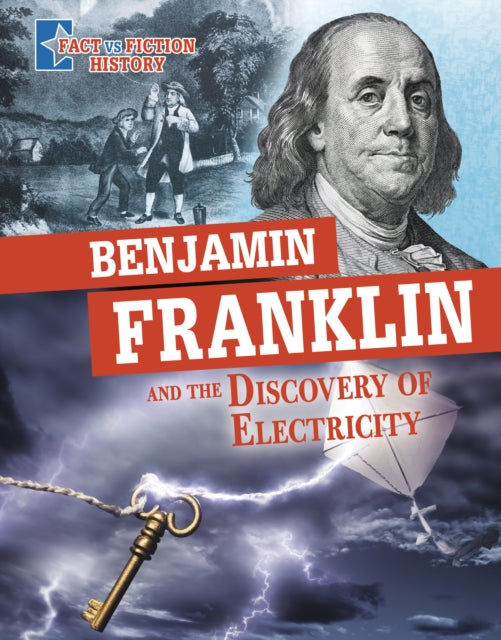
Benjamin Franklin and the Discovery of Electricity: Separating Fact from Fiction
Benjamin Franklin and the Discovery of Electricity: Separating Fact from Fiction
💎 Earn 55 Points (£0.55) on this item.
YOU SAVE £2.93
- Condition: Brand new
- UK Delivery times: Usually arrives within 2 - 3 working days
- UK Shipping: Fee starts at £2.39. Subject to product weight & dimension
Bulk ordering. Want 15 or more copies? Get a personalised quote and bigger discounts. Learn more about bulk orders.
Couldn't load pickup availability
- More about Benjamin Franklin and the Discovery of Electricity: Separating Fact from Fiction
In 1752, Benjamin Franklin conducted an experiment to demonstrate the electrical nature of lightning, but he did not discover electricity. Myths about his experiment have been told for years.
Format: Hardback
Length: 32 pages
Publication date: 17 August 2023
Publisher: Capstone Global Library Ltd
In 1752, a remarkable event unfolded in Philadelphia, USA, where the sky darkened, signaling the arrival of a thunderstorm. Prepared to conduct an experiment, Benjamin Franklin aimed to unveil the electrical nature of lightning. Despite the success of his endeavor, he did not discover electricity on that day. Over the years, myths and stories surrounding Franklin and his experiment have circulated, perpetuating misconceptions. However, this article aims to shed light on the truth by presenting infographics, primary sources, and expertly levelled text, allowing readers to discern what is fact and what is fiction.
The sky in Philadelphia darkened in 1752, signaling the arrival of a thunderstorm. Benjamin Franklin, known for his pioneering contributions to electricity, was ready to conduct an experiment to showcase the electrical nature of lightning. His experiment was a success, but he did not discover electricity on that day.
Over the years, myths and stories surrounding Franklin and his experiment have circulated, perpetuating misconceptions. One such myth is that Franklin flew a kite during the thunderstorm to attract lightning. However, this is not supported by historical evidence. Franklin's experiment involved using a kite and a key to conduct a lightning experiment, but the kite was not used to attract lightning.
Another myth is that Franklin discovered electricity during his lightning experiment. However, electricity was already known at the time of Franklin's experiment, and he did not make any significant contributions to its discovery. Electricity had been studied for centuries before Franklin's time, and his experiment was primarily focused on demonstrating the electrical nature of lightning.
Despite these myths, Benjamin Franklin's experiment was a significant milestone in the understanding of electricity. His work laid the foundation for future advancements in the field of electricity and helped to shape the development of modern science.
In conclusion, while the sky in Philadelphia darkened in 1752, and Benjamin Franklin conducted an experiment to showcase the electrical nature of lightning, he did not discover electricity on that day. Over the years, myths and stories surrounding Franklin and his experiment have circulated, perpetuating misconceptions. However, by examining primary sources and historical evidence, we can uncover the truth and appreciate the significance of Franklin's experiment in the history of electricity.
Weight: 288g
Dimension: 179 x 237 x 11 (mm)
ISBN-13: 9781398251540
UK and International shipping information
UK and International shipping information
UK Delivery and returns information:
- Delivery within 2 - 3 days when ordering in the UK.
- Shipping fee for UK customers from £2.39. Fully tracked shipping service available.
- Returns policy: Return within 30 days of receipt for full refund.
International deliveries:
Shulph Ink now ships to Australia, Belgium, Canada, France, Germany, Ireland, Italy, India, Luxembourg Saudi Arabia, Singapore, Spain, Netherlands, New Zealand, United Arab Emirates, United States of America.
- Delivery times: within 5 - 10 days for international orders.
- Shipping fee: charges vary for overseas orders. Only tracked services are available for most international orders. Some countries have untracked shipping options.
- Customs charges: If ordering to addresses outside the United Kingdom, you may or may not incur additional customs and duties fees during local delivery.