Shulph Ink
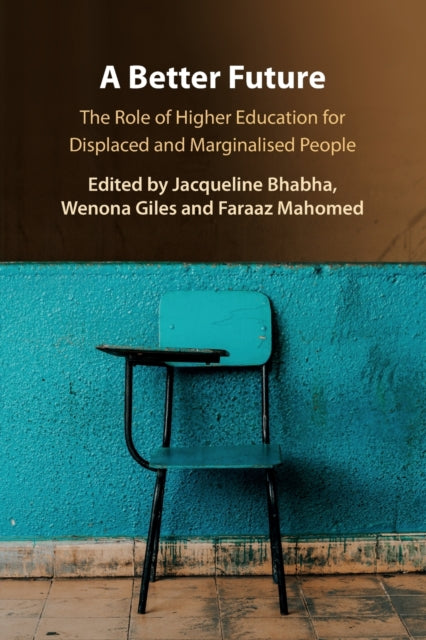
Better Future: The Role of Higher Education for Displaced and Marginalised People
Better Future: The Role of Higher Education for Displaced and Marginalised People
💎 Earn 217 Points (£2.17) on this item.
We can order this item for you. Delivery usually takes about 4 to 6 weeks.
This item is not held in our immediate stock. We will order it for you after checkout.
Estimated delivery: About 4 to 6 weeks
YOU SAVE £2.58
- Condition: Brand new
- UK Delivery times: Usually arrives within 2 - 3 working days
- UK Shipping: Fee starts at £2.39. Subject to product weight & dimension
Bulk ordering. Want 15 or more copies? Get a personalised quote and bigger discounts. Learn more about bulk orders.
Couldn't load pickup availability
- More about Better Future: The Role of Higher Education for Displaced and Marginalised People
Tertiary education is an important foundation for a democratic and just society, but universities and colleges are epicentres of egregious disparities in access, which impinge on traditionally marginalized communities. This book draws attention to this issue and assembles first-rate material from scholars and policy makers to understand and fight this violation of educational opportunity and social justice.
\n Format: Paperback / softback
\n Length: 496 pages
\n Publication date: 17 September 2020
\n Publisher: Cambridge University Press
\n
Policy makers, advocates, and scholars have long emphasized the significance of equal access to primary and secondary education as a cornerstone of a democratic and just society. Despite the growing importance of higher and specialist education in an increasingly technological and skill-focused global market, tertiary education has received much less attention. However, universities and colleges are epicenters of egregious disparities in access, which impinge on traditionally marginalized communities, such as racial minorities, migrants, indigenous populations, and people with disabilities. By drawing attention to this issue and assembling first-rate material from scholars and policy makers across the globe, this book performs an invaluable service for those interested in understanding and fighting a highly significant violation of educational opportunity and social justice.
Access to quality education is a fundamental human right, essential for personal growth, social mobility, and the development of a prosperous and inclusive society. However, significant barriers to education persist, particularly in developing countries and marginalized communities. This essay explores the importance of equal access to education and the challenges faced in achieving it.
One of the most significant barriers to equal access to education is poverty. Many families in developing countries cannot afford to send their children to school, particularly if they live in rural areas or low-income neighborhoods. This lack of financial resources can prevent children from acquiring the skills and knowledge necessary to succeed in life and contribute to their communities.
Gender inequality is another significant barrier to equal access to education. Girls are often marginalized and discriminated against in education, particularly in developing countries, where cultural norms and societal expectations often prioritize boys' education over girls'. This can lead to a gender gap in education, with girls having fewer opportunities to acquire the skills and knowledge necessary to succeed in life and contribute to their communities.
Ethnicity and race are also significant barriers to equal access to education. Children from marginalized communities, such as indigenous populations or racial minorities, may face discrimination and exclusion in education systems, which can limit their opportunities to acquire the skills and knowledge necessary to succeed in life and contribute to their communities.
Disability is another significant barrier to equal access to education. Children with disabilities may face barriers to accessing education, such as inaccessible classrooms, lack of assistive technology, and discrimination from teachers and peers. This can limit their opportunities to acquire the skills and knowledge necessary to succeed in life and contribute to their communities.
In addition to these barriers, there are also political and social factors that contribute to unequal access to education. For example, conflicts, natural disasters, and political instability can disrupt education systems and prevent children from attending school. In some cases, education systems may be designed to exclude certain groups of children, such as girls or children from marginalized communities.
To address these barriers to equal access to education, there are several strategies that can be implemented. One of the most effective strategies is to increase funding for education, particularly in developing countries and marginalized communities. This can include providing scholarships, grants, and other forms of financial assistance to families in need, as well as investing in infrastructure and resources such as schools, libraries, and computers.
Another effective strategy is to promote gender equality in education. This can include providing equal access to education for girls, promoting gender-sensitive teaching practices, and addressing cultural norms and societal expectations that discriminate against girls.
Ethnicity and race are also important factors to consider in promoting equal access to education. This can include promoting diversity and inclusion in education systems, providing language and cultural support for students from marginalized communities, and addressing systemic discrimination and exclusion.
Disability is another important factor to consider in promoting equal access to education. This can include providing accommodations and support for students with disabilities, as well as promoting inclusive teaching practices that are accessible to all students.
In addition to these strategies, it is also important to address political and social factors that contribute to unequal access to education. This can include promoting political stability and peace, investing in social services and infrastructure, and addressing systemic inequalities and discrimination.
In conclusion, equal access to education is a fundamental human right that is essential for personal growth, social mobility, and the development of a prosperous and inclusive society. However, significant barriers to education persist, particularly in developing countries and marginalized communities. By addressing these barriers and promoting gender equality, ethnicity and race, disability, and inclusive teaching practices, we can work towards achieving equal access to education for all.
\n Weight: 730g\n
Dimension: 155 x 231 x 27 (mm)\n
ISBN-13: 9781108738996\n \n
UK and International shipping information
UK and International shipping information
UK Delivery and returns information:
- Delivery within 2 - 3 days when ordering in the UK.
- Shipping fee for UK customers from £2.39. Fully tracked shipping service available.
- Returns policy: Return within 30 days of receipt for full refund.
International deliveries:
Shulph Ink now ships to Australia, Belgium, Canada, France, Germany, Ireland, Italy, India, Luxembourg Saudi Arabia, Singapore, Spain, Netherlands, New Zealand, United Arab Emirates, United States of America.
- Delivery times: within 5 - 10 days for international orders.
- Shipping fee: charges vary for overseas orders. Only tracked services are available for most international orders. Some countries have untracked shipping options.
- Customs charges: If ordering to addresses outside the United Kingdom, you may or may not incur additional customs and duties fees during local delivery.