En Li
Betting on the Civil Service Examinations: The Lottery in Late Qing China
Betting on the Civil Service Examinations: The Lottery in Late Qing China
💎 Earn 203 Points (£2.03) on this item.
YOU SAVE £10.32
- Condition: Brand new
- UK Delivery times: Usually arrives within 2 - 3 working days
- UK Shipping: Fee starts at £2.39. Subject to product weight & dimension
Bulk ordering. Want 15 or more copies? Get a personalised quote and bigger discounts. Learn more about bulk orders.
Couldn't load pickup availability
- More about Betting on the Civil Service Examinations: The Lottery in Late Qing China
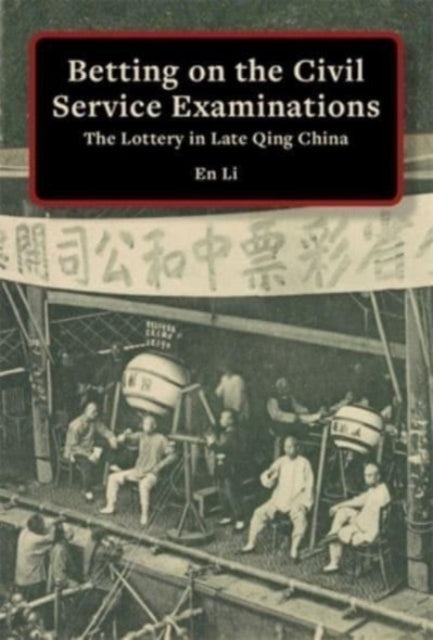
Weixing, or "surname guessing," was a highly organized lottery practice in China wherein money was bet on the surnames of which candidates would pass the civil and military examinations. En Li's book reconstructs the inner mechanisms of weixing and other lottery games in Guangdong, tracing institutional revenue innovations and creating an expansive community with cultural and informational channels stretching among Guangdong, Southeast Asia, and North America.
Format: Hardback
Length: 374 pages
Publication date: 20 June 2023
Publisher: Harvard University Press
Weixing, also known as "surname guessing," was a highly organized lottery practice in China where people bet on the surnames of candidates who were expected to pass the civil and military examinations. This practice had been in existence for centuries, dating back to the imperial era, and was a primary means for the Chinese state to select new officials from all over the empire. It was also a way for commoners to climb the social ladder and improve their economic status.
Betting on the examinations was possible because the examination system was highly centralized and controlled by the government. The government set the questions and determined the passing score, making it easy for bettors to predict the outcomes. Moreover, the stakes were high, with large amounts of money being bet on each examination.
The importance of betting on the examinations can be understood from several perspectives. Firstly, it was a way for people to gain wealth and improve their economic situation. The winners of the bets could receive substantial rewards, which could be used to start businesses, invest in real estate, or support their families. Secondly, it was a way for public officials to generate revenue for the government. The government charged a fee for each bet, and the proceeds were used to fund government programs and services.
Weixing was not without its controversies, however. In 1885, a scandal erupted when it was discovered that some examiners had been bribed to change the results of the examinations. This scandal led to the implementation of stricter regulations and increased scrutiny of the examination system. Despite these challenges, weixing continued to be popular among both commoners and officials until the early 1900s.
En Li's book, "Lottery and Revenue in Late Imperial China," provides a detailed reconstruction of the inner mechanisms of weixing and other lottery games in the southern province of Guangdong. The author places the history of the lottery in a larger context, tracing a series of institutional revenue innovations surrounding lottery regulation from the 1850s to the early 1900s. The book depicts an expansive community created by the lottery, with cultural and informational channels stretching among Guangdong, Southeast Asia, and North America.
The book sheds light on a new reality that emerged during the final decades of China's last imperial dynasty. It provides a nuanced understanding of competitions among lottery players and public officials seeking to maximize revenues. It also highlights the global network of players who participated in weixing and other lottery games.
In conclusion, weixing was a highly organized lottery practice in China that played a significant role in the selection of officials and the social mobility of commoners. While it was not without its controversies, it continued to be popular until the early 1900s. En Li's book provides a valuable insight into the inner mechanisms of weixing and its broader historical context, shedding light on a new reality that emerged during the final decades of China's last imperial dynasty.
Weight: 746g
Dimension: 159 x 237 x 31 (mm)
ISBN-13: 9780674293779
This item can be found in:
UK and International shipping information
UK and International shipping information
UK Delivery and returns information:
- Delivery within 2 - 3 days when ordering in the UK.
- Shipping fee for UK customers from £2.39. Fully tracked shipping service available.
- Returns policy: Return within 30 days of receipt for full refund.
International deliveries:
Shulph Ink now ships to Australia, Belgium, Canada, France, Germany, Ireland, Italy, India, Luxembourg Saudi Arabia, Singapore, Spain, Netherlands, New Zealand, United Arab Emirates, United States of America.
- Delivery times: within 5 - 10 days for international orders.
- Shipping fee: charges vary for overseas orders. Only tracked services are available for most international orders. Some countries have untracked shipping options.
- Customs charges: If ordering to addresses outside the United Kingdom, you may or may not incur additional customs and duties fees during local delivery.