Professor Douglas M.Peers
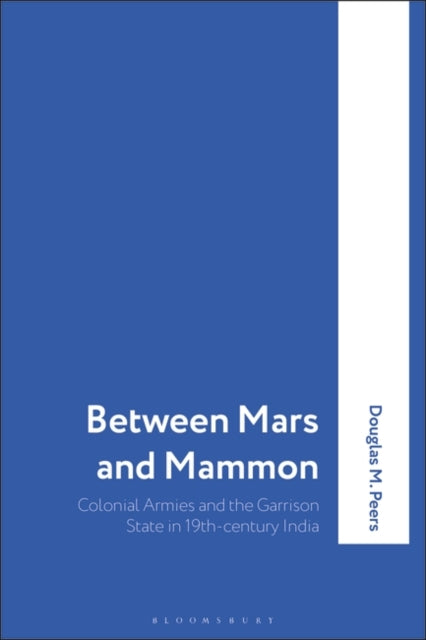
Between Mars and Mammon: Colonial Armies and the Garrison State in 19th-century India
Between Mars and Mammon: Colonial Armies and the Garrison State in 19th-century India
💎 Earn 175 Points (£1.75) on this item.
We can order this item for you. Delivery usually takes about 4 to 6 weeks.
This item is not held in our immediate stock. We will order it for you after checkout.
Estimated delivery: About 4 to 6 weeks
- Condition: Brand new
- UK Delivery times: Usually arrives within 2 - 3 working days
- UK Shipping: Fee starts at £2.39. Subject to product weight & dimension
Bulk ordering. Want 15 or more copies? Get a personalised quote and bigger discounts. Learn more about bulk orders.
Couldn't load pickup availability
- More about Between Mars and Mammon: Colonial Armies and the Garrison State in 19th-century India
The book by Douglas Peers highlights the importance of the army in the establishment and operation of the British Raj in India. It shows how the military was prioritized in peacetime and wartime, leading to the Burma War and the capture of Bhartpur. Authorities in London attempted to restrain the army, but their efforts were only partially successful. Even William Bentinck, known for his reform, was forced to concede Britain's dependence on the Indian army.
Format: Paperback / softback
Length: 296 pages
Publication date: 28 January 2021
Publisher: Bloomsbury Publishing PLC
While popular images of the British Raj are saturated with images and memories of military campaigns, remarkably few scholarly studies have considered the direct impact that the army exerted on the day-to-day operations of the British in India. Douglas Peers' book demonstrates not only how important the army was to the establishment of British domination but also to its subsequent form and operation. Soldiers and civilians, with rare exception, were united by the truism that British rule could only be retained by the sword. A rationale and a programme for the Raj emerged that emphasized the precariousness of British rule and showed that its security could only be assured by constant preparedness for war. Consequently, military imperatives and the army's demands for resources were given priority in peacetime as well as wartime. This accounts for the origin of the Burma War (1824-26) and the capture of Bhartpur (1825-26), neither of which would appear at first glance to be strategically vital or economically desirable. Authorities in London viewed this militarization of the colonial administration and its treasury with misgivings, recognizing not only the financial costs involved, but the political consequences of an increasingly autonomous army. Their efforts to restrain the army were only partially successful. Even William Bentinck (1828-1835), long famous for ushering in a period of reform in India, could only temporarily curb military spending and the influences of the army. He left the military chastened but undefeated; the army's interests were too deeply entrenched, and even Bentinck was forced to concede Britain's dependence on the Indian army.
The British Raj, a period of immense influence and power in India, is often portrayed in popular culture as a military-dominated era. However, a deeper examination of the period reveals that the army played a crucial role in shaping the British presence in India, both in terms of its establishment and its subsequent operation. In his book, Douglas Peers delves into the significance of the army in the establishment and maintenance of British domination in India. He argues that the army was not just a tool of conquest but also a vital component of the colonial administration.
Peers highlights how the army was instrumental in establishing British control over India. The army's presence and actions helped to suppress rebellions, secure borders, and maintain order. The army's ability to mobilize and deploy troops quickly and effectively allowed the British to respond to threats and maintain control in a rapidly changing political landscape.
Furthermore, the army played a significant role in shaping the form and operation of the British Raj. The military's demands for resources and power influenced the allocation of resources and the development of policies in India. The army's influence extended beyond the battlefield, as it influenced the political, social, and economic development of the country.
Peers also examines the impact of the army on the lives of soldiers and civilians in India. He notes that, with rare exception, soldiers and civilians were united by the belief that British rule could only be retained by the sword. This militaristic mindset led to a sense of preparedness and a willingness to sacrifice for the sake of the empire. The army's presence also created a sense of hierarchy and discipline within the colonial administration, which helped to maintain order and stability.
However, the militarization of the colonial administration and the army's demands for resources were not without controversy. Authorities in London viewed this militarization with misgivings, recognizing not only the financial costs involved but also the political consequences of an increasingly autonomous army. They attempted to restrain the army's power and influence, but their efforts were only partially successful.
Even William Bentinck, who is celebrated for his efforts to reform India, was only able to temporarily curb military spending and the influences of the army. Bentinck recognized the need for a more balanced approach to colonial administration, but his efforts were met with resistance from the army and other powerful factions within the colonial administration.
The militarization of the colonial administration and the army's demands for resources continued to shape the British presence in India throughout the 19th century. The Burma War (1824-26) and the capture of Bhartpur (1825-26) are two examples of military campaigns that were not strategically vital or economically desirable but were pursued due to military imperatives and the army's demands for resources.
In conclusion, Douglas Peers' book provides a valuable insight into the role of the army in the establishment and operation of the British Raj in India. He demonstrates how the army was not just a tool of conquest but also a vital component of the colonial administration. The army's presence and actions helped to establish British control over India, shape the form and operation of the Raj, and influence the lives of soldiers and civilians. While the militarization of the colonial administration and the army's demands for resources were controversial, their impact was undeniable. The army's interests were deeply entrenched, and even William Bentinck, who was known for his reform efforts, was only able to temporarily curb their power and influence.
Weight: 472g
Dimension: 234 x 155 x 19 (mm)
ISBN-13: 9781350183858
UK and International shipping information
UK and International shipping information
UK Delivery and returns information:
- Delivery within 2 - 3 days when ordering in the UK.
- Shipping fee for UK customers from £2.39. Fully tracked shipping service available.
- Returns policy: Return within 30 days of receipt for full refund.
International deliveries:
Shulph Ink now ships to Australia, Belgium, Canada, France, Germany, Ireland, Italy, India, Luxembourg Saudi Arabia, Singapore, Spain, Netherlands, New Zealand, United Arab Emirates, United States of America.
- Delivery times: within 5 - 10 days for international orders.
- Shipping fee: charges vary for overseas orders. Only tracked services are available for most international orders. Some countries have untracked shipping options.
- Customs charges: If ordering to addresses outside the United Kingdom, you may or may not incur additional customs and duties fees during local delivery.