Shulph Ink
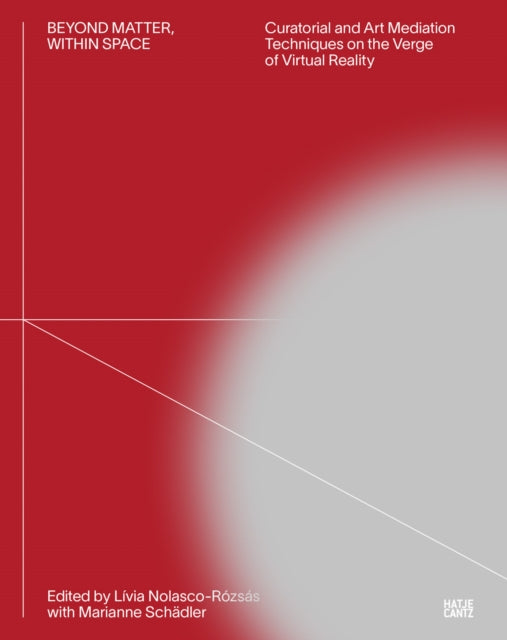
Beyond Matter, Within Space: Curatorial and Art Mediation Techniques on the Verge of Virtual Reality
Beyond Matter, Within Space: Curatorial and Art Mediation Techniques on the Verge of Virtual Reality
💎 Earn 212 Points (£2.12) on this item.
YOU SAVE £15.54
- Condition: Brand new
- UK Delivery times: Usually arrives within 2 - 3 working days
- UK Shipping: Fee starts at £2.39. Subject to product weight & dimension
Bulk ordering. Want 15 or more copies? Get a personalised quote and bigger discounts. Learn more about bulk orders.
Couldn't load pickup availability
- More about Beyond Matter, Within Space: Curatorial and Art Mediation Techniques on the Verge of Virtual Reality
The Beyond Matter research project explores the interplay of physical and virtual structures and their impact on spatial aspects in art production, curating, and art education, aiming to preserve cultural heritage in the digital age. The publication presents research activities, exhibition and book projects, and symposia from various partner institutions.
Format: Paperback / softback
Length: 576 pages
Publication date: 07 September 2023
Publisher: Hatje Cantz
Curating the Virtual Space: Exhibition Spaces as Knowledge Production and Exchange Hubs
Exhibition spaces are physical places where knowledge is created, shared, and exchanged. Their spatial properties play a crucial role in contextualizing information and enhancing the overall experience of visitors. In the digital age, where virtual exhibitions have become increasingly prevalent, it is essential to preserve the spatial aspects of physical exhibitions to ensure the preservation of cultural heritage.
The Beyond Matter research project (2019-2023) aims to explore the interplay between physical and virtual structures and their impact on spatial aspects in art production, curating, and art education. The project seeks to identify ways to preserve cultural heritage in the digital age by examining the various research activities, exhibition and book projects, and symposia that have taken place or emerged in the course of the international Beyond Matter project at various partner institutions.
This publication provides a comprehensive overview of the diverse research activities, exhibition and book projects, and symposia that have taken place or emerged in the course of the international Beyond Matter project at the various partner institutions. It highlights the importance of preserving the spatial aspects of physical exhibitions in the digital age and offers insights into the various strategies and techniques that can be used to achieve this goal.
One of the key challenges in curating virtual exhibitions is the loss of the physical presence of the artwork. While virtual exhibitions can provide a wider audience and greater accessibility, they can also lack the tactile and sensory experience that is essential to the appreciation of art. To address this challenge, the Beyond Matter project has developed a range of strategies and techniques that aim to recreate the physical presence of the artwork in the virtual space.
One of these strategies is the use of 3D modeling and rendering. 3D modeling allows artists to create detailed and accurate representations of their artwork, which can be displayed in a virtual environment. Rendering techniques can then be used to create a realistic and immersive experience for visitors, allowing them to interact with the artwork in a way that is similar to how they would in a physical exhibition.
Another strategy is the use of interactive elements. Interactive elements can include touchscreens, virtual reality headsets, and augmented reality experiences. These elements can allow visitors to explore the artwork in a more interactive and engaging way, providing a deeper understanding of the artwork and its context.
In addition to these strategies, the Beyond Matter project has also focused on the preservation of cultural heritage in the digital age. This includes the development of digital archives and the use of digital technologies to preserve and share cultural heritage. Digital archives can provide a permanent and accessible repository for cultural heritage, allowing it to be accessed by a wide range of people and organizations.
Digital technologies can also be used to create new forms of cultural expression. For example, virtual reality and augmented reality can be used to create immersive experiences that allow visitors to explore cultural heritage in a new and exciting way.
However, the use of digital technologies also presents challenges. One of the main challenges is the preservation of digital content. Digital content can be easily lost or damaged, and it can be difficult to ensure that it is accessible to future generations. To address this challenge, the Beyond Matter project has developed a range of strategies and techniques that aim to preserve digital content.
One of these strategies is the use of digital preservation strategies. Digital preservation strategies can include the use of digital archives, the use of digital preservation software, and the use of digital preservation policies. Digital archives can provide a permanent and accessible repository for digital content, while digital preservation software can help to ensure that digital content is preserved in a way that is compatible with future technologies.
Digital preservation policies can also help to ensure that digital content is accessible to future generations. Digital preservation policies can include the use of open access policies, the use of copyright laws, and the use of licensing agreements.
In conclusion, exhibition spaces are physical places of knowledge production and exchange that play a crucial role in contextualizing information and enhancing the overall experience of visitors. In the digital age, it is essential to preserve the spatial aspects of physical exhibitions to ensure the preservation of cultural heritage. The Beyond Matter research project has developed a range of strategies and techniques that aim to recreate the physical presence of the artwork in the virtual space, preserve cultural heritage in the digital age, and create new forms of cultural expression. By implementing these strategies and techniques, we can ensure that cultural heritage is accessible to future generations and that it continues to play a vital role in our society.
Weight: 1700g
Dimension: 264 x 210 (mm)
ISBN-13: 9783775756167
This item can be found in:
UK and International shipping information
UK and International shipping information
UK Delivery and returns information:
- Delivery within 2 - 3 days when ordering in the UK.
- Shipping fee for UK customers from £2.39. Fully tracked shipping service available.
- Returns policy: Return within 30 days of receipt for full refund.
International deliveries:
Shulph Ink now ships to Australia, Belgium, Canada, France, Germany, Ireland, Italy, India, Luxembourg Saudi Arabia, Singapore, Spain, Netherlands, New Zealand, United Arab Emirates, United States of America.
- Delivery times: within 5 - 10 days for international orders.
- Shipping fee: charges vary for overseas orders. Only tracked services are available for most international orders. Some countries have untracked shipping options.
- Customs charges: If ordering to addresses outside the United Kingdom, you may or may not incur additional customs and duties fees during local delivery.