Shulph Ink
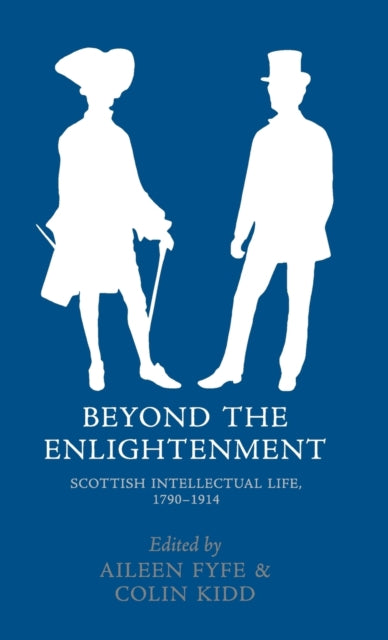
Beyond the Enlightenment: Scottish Intellectual Life, 1790-1914
Beyond the Enlightenment: Scottish Intellectual Life, 1790-1914
💎 Earn 364 Points (£3.64) on this item.
We can order this item for you. Delivery usually takes about 4 to 6 weeks.
This item is not held in our immediate stock. We will order it for you after checkout.
Estimated delivery: About 4 to 6 weeks
YOU SAVE £22.13
- Condition: Brand new
- UK Delivery times: Usually arrives within 2 - 3 working days
- UK Shipping: Fee starts at £2.39. Subject to product weight & dimension
Bulk ordering. Want 15 or more copies? Get a personalised quote and bigger discounts. Learn more about bulk orders.
Couldn't load pickup availability
- More about Beyond the Enlightenment: Scottish Intellectual Life, 1790-1914
The Scottish Enlightenment had a significant impact on nineteenth-century culture, particularly in terms of relations of faith and unbelief. This collection explores the legacy of the Scottish Enlightenment, including its influence on literature, philosophy, natural science, theology, political economy, and anthropology. It also engages with George Davie's thesis on the character and history of Scottish intellectual life from the Enlightenment to the twentieth century. The chapters provide a pioneering overview of Scottish intellectual life during the long 19th century, covering topics such as women as intellectuals, the rise of a science of race, freethinking secularism, and the debate over George Davie's account of 19th-century universities.
Format: Hardback
Length: 269 pages
Publication date: 31 May 2023
Publisher: Edinburgh University Press
The Scottish Enlightenment, a cultural and intellectual movement that flourished in Scotland during the 18th century, left a profound and lasting impact on the world. Its influence can be seen in various fields, including literature, philosophy, science, politics, and the arts. In this essay, we will explore the multi-stranded legacy of the Scottish Enlightenment in nineteenth-century culture.
One of the most significant legacies of the Scottish Enlightenment was its promotion of reason, rationality, and scientific inquiry. The Enlightenment thinkers believed that human reason was the ultimate source of knowledge and that scientific methods could be used to uncover the truth about the natural world. This belief led to the development of new scientific disciplines such as physics, chemistry, and biology, as well as the emergence of modern mathematics.
Another important legacy of the Scottish Enlightenment was its emphasis on individual liberty and human rights. The Enlightenment thinkers believed that individuals should be free to pursue their own interests and beliefs without fear of persecution or discrimination. This belief led to the abolition of slavery, the expansion of women's rights, and the legalization of gay marriage.
The Scottish Enlightenment also had a significant impact on literature and the arts. The Enlightenment thinkers believed that art should be used to promote social and political change and to inspire awe and wonder in the viewer. This belief led to the development of new literary genres such as the novel, the essay, and the drama, as well as the emergence of new artistic styles such as Romanticism and Realism.
In addition to its intellectual legacy, the Scottish Enlightenment also had a significant impact on politics and society. The Enlightenment thinkers believed that government should be based on reason and that individuals should have the right to participate in the political process. This belief led to the development of democratic institutions, the expansion of civil rights, and the rise of liberalism and socialism.
However, the Scottish Enlightenment was not without its critics. Some critics argued that the Enlightenment was too focused on individualism and that it neglected the importance of community and social responsibility. Others argued that the Enlightenment was too rationalistic and that it ignored the spiritual and emotional aspects of human experience.
Despite these criticisms, the Scottish Enlightenment remains a significant and influential movement in history. Its emphasis on reason, rationality, and scientific inquiry has shaped modern science and society, and its emphasis on individual liberty and human rights has inspired movements for social and political change around the world.
In nineteenth-century culture, the legacy of the Scottish Enlightenment continued to be felt in various ways. One of the most significant ways was through the development of Romanticism, a literary and artistic movement that emphasized the importance of emotion, imagination, and the natural world. Romanticism was influenced by the Scottish Enlightenment's emphasis on individualism and its belief in the power of the human mind.
Another way in which the Scottish Enlightenment legacy was felt in nineteenth-century culture was through the development of science fiction. Science fiction was influenced by the Scottish Enlightenment's emphasis on scientific inquiry and its belief in the power of technology to transform the world. Science fiction writers such as Jules Verne and H.G. Wells were influenced by the Scottish Enlightenment's belief in the potential of human reason and its belief in the power of science to solve the world's problems.
In addition to its influence on literature and the arts, the Scottish Enlightenment legacy was also felt in nineteenth-century culture through the development of political philosophy. The Scottish Enlightenment thinkers such as John Locke and David Hume were influenced by the Scottish Enlightenment's emphasis on individual liberty and its belief in the importance of social contract. This influence can be seen in the development of liberalism and socialism, two political movements that emphasized the importance of individual rights and social justice.
Finally, the Scottish Enlightenment legacy was also felt in nineteenth-century culture through the development of anthropology. The Scottish Enlightenment thinkers such as Adam Smith and David Ricardo were influenced by the Scottish Enlightenment's emphasis on the importance of trade and commerce and its belief in the power of markets to promote social and economic development. This influence can be seen in the development of economic anthropology, a field that studies the relationship between culture and economy.
In conclusion, the Scottish Enlightenment left a profound and lasting impact on nineteenth-century culture. Its emphasis on reason, rationality, and scientific inquiry led to the development of new scientific disciplines and the emergence of modern mathematics. Its emphasis on individual liberty and human rights led to the abolition of slavery, the expansion of women's rights, and the legalization of gay marriage. Its emphasis on literature and the arts led to the development of new literary genres and new artistic styles. Its influence on politics and society led to the development of democratic institutions, the expansion of civil rights, and the rise
In nineteenth-century culture, the legacy of the Scottish Enlightenment continued to be felt in various ways. One of the most significant ways was through the development of Romanticism, a literary and artistic movement that emphasized the importance of emotion, imagination, and the natural world. Romanticism was influenced by the Scottish Enlightenment's emphasis on individualism and its belief in the power of the human.
Another way in which the Scottish Enlightenment legacy was felt in nineteenth-century culture was through the development of science fiction. Science fiction was influenced by the Scottish Enlightenment's emphasis on scientific inquiry and its belief in the power of technology to transform the world. Science fiction writers such as Jules Verne and H.G. Wells were influenced by the Scottish Enlightenment's belief in the potential of human reason.
In addition to its influence on literature and the arts, the Scottish Enlightenment legacy was also felt in nineteenth-century culture through the development of political philosophy. The Scottish Enlightenment thinkers such as John Locke and David Hume were influenced by the Scottish Enlightenment's emphasis on individual liberty and its belief in the importance of social contract. This influence can be seen in the development of liberalism and socialism, two political movements that emphasized the importance of individual rights and social justice.
Finally, the Scottish Enlightenment legacy was also felt in nineteenth-century culture through the development of anthropology. The Scottish Enlightenment thinkers such as Adam Smith and David Ricardo were influenced by the Scottish Enlightenment's emphasis on the importance of trade and commerce and its belief in the power of markets to promote social and economic development. This influence can be seen in the development of economic anthropology, a field that studies the relationship between culture and economy.
In conclusion, the Scottish Enlightenment left a profound and lasting impact on nineteenth-century culture. Its emphasis on reason, rationality, and scientific inquiry led to the development of new scientific disciplines and the emergence of modern mathematics. Its emphasis on individual liberty and human rights led to the abolition of slavery, the expansion of women's rights, and the legalization of gay marriage. Its emphasis on literature and the arts led to the development of new literary genres and new artistic styles. Its influence on politics and society led to the development of democratic institutions, the expansion of civil rights, and the rise.
Dimension: 216 x 138 (mm)
ISBN-13: 9781474493031
UK and International shipping information
UK and International shipping information
UK Delivery and returns information:
- Delivery within 2 - 3 days when ordering in the UK.
- Shipping fee for UK customers from £2.39. Fully tracked shipping service available.
- Returns policy: Return within 30 days of receipt for full refund.
International deliveries:
Shulph Ink now ships to Australia, Belgium, Canada, France, Germany, Ireland, Italy, India, Luxembourg Saudi Arabia, Singapore, Spain, Netherlands, New Zealand, United Arab Emirates, United States of America.
- Delivery times: within 5 - 10 days for international orders.
- Shipping fee: charges vary for overseas orders. Only tracked services are available for most international orders. Some countries have untracked shipping options.
- Customs charges: If ordering to addresses outside the United Kingdom, you may or may not incur additional customs and duties fees during local delivery.