Shulph Ink
Beyond the Social Contract: An Anthropology of Tax
Beyond the Social Contract: An Anthropology of Tax
💎 Earn 68 Points (£0.68) on this item.
We can order this item for you. Delivery usually takes about 4 to 6 weeks.
This item is not held in our immediate stock. We will order it for you after checkout.
Estimated delivery: About 4 to 6 weeks
YOU SAVE £2.31
- Condition: Brand new
- UK Delivery times: Usually arrives within 2 - 3 working days
- UK Shipping: Fee starts at £3.89. Subject to product weight & dimension
Bulk ordering. Want 15 or more copies? Get a personalised quote and bigger discounts. Learn more about bulk orders.
Couldn't load pickup availability
- More about Beyond the Social Contract: An Anthropology of Tax
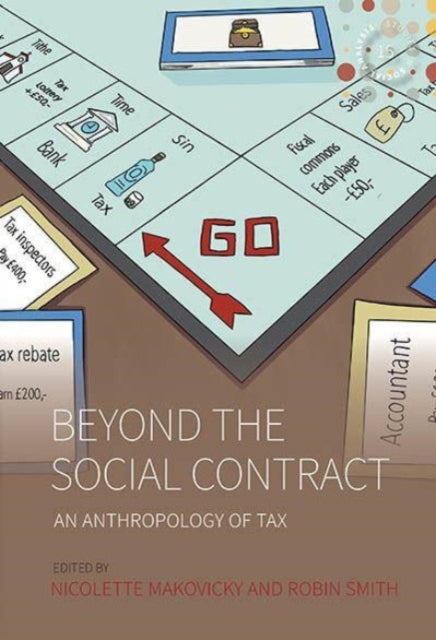
Tax and taxation are often seen as embodying the social contract, but this collection of essays challenges this notion by exploring the limits of social-contract thinking. Contributors examine contemporary fiscal structures and public debates about the moralities, practices, and imaginaries of tax systems, using tax to explore the nature of citizenship, personal freedom, and moral and economic value. They show how taxation may be influenced by spaces of fiscal sovereignty outside or alongside the state, taking various forms.
Format: Paperback / softback
Length: 154 pages
Publication date: 11 August 2023
Publisher: Berghahn Books
Tax and taxation have long been considered the cornerstone of social contract theory, but a new collection of essays challenges this notion by exploring the limits of social-contract thinking. The contributors delve into contemporary fiscal structures and public debates about the moralities, practices, and imaginaries of tax systems, using tax to explore the nature of citizenship, personal freedom, and moral and economic value. Their ethnographically grounded accounts show how taxation may be influenced by spaces of fiscal sovereignty that exist outside or alongside the state, taking various forms, from alternative religious communities to economic collectives.
One of the key themes of the collection is the role of taxation in shaping social and economic inequality. The contributors argue that tax policies can either exacerbate or mitigate these inequalities, depending on the design and implementation of the tax system. For example, progressive taxation can redistribute wealth and reduce poverty, while regressive taxation can increase inequality and limit economic mobility.
Another theme of the collection is the impact of taxation on individual freedom and autonomy. The contributors argue that taxation can limit individual freedom by imposing taxes on certain activities or goods, such as alcohol, tobacco, and gambling. However, they also argue that taxation can promote individual freedom by funding public goods and services that benefit society as a whole.
The collection also explores the role of taxation in promoting moral and economic value. The contributors argue that taxation can be used to promote social justice, environmental sustainability, and economic growth. For example, taxes on carbon emissions can help to reduce greenhouse gas emissions and mitigate the effects of climate change, while taxes on corporate profits can be used to fund social programs and infrastructure.
However, the collection also highlights the challenges associated with taxation. One of the main challenges is the complexity of the tax system, which can make it difficult for individuals and businesses to understand and comply with tax laws. This complexity can lead to tax evasion and avoidance, which can undermine the effectiveness of the tax system and reduce government revenue.
Another challenge is the political influence of taxation. Taxation can be used as a tool for political gain, with governments using tax policies to favor certain groups or interests over others. This can lead to a lack of transparency and accountability in the tax system, which can undermine public trust in government.
To address these challenges, the collection offers a range of solutions. One of the solutions is to simplify the tax system, making it easier for individuals and businesses to understand and comply with tax laws. This can be done by reducing the number of tax brackets and simplifying the tax code.
Another solution is to increase transparency and accountability in the tax system. This can be done by increasing the disclosure of tax information to the public and by creating independent tax oversight bodies.
Finally, the collection argues that taxation should be used to promote social justice, environmental sustainability, and economic growth. This can be done by implementing progressive taxation policies, investing in public goods and services, and promoting economic equality.
In conclusion, tax and taxation have long been considered the cornerstone of social contract theory, but a new collection of essays challenges this notion by exploring the limits of social-contract thinking. The contributors delve into contemporary fiscal structures and public debates about the moralities, practices, and imaginaries of tax systems, using tax to explore the nature of citizenship, personal freedom, and moral and economic value. Their ethnographically grounded accounts show how taxation may be influenced by spaces of fiscal sovereignty that exist outside or alongside the state, taking various forms, from alternative religious communities to economic collectives. While taxation can be a powerful tool for promoting social justice, environmental sustainability, and economic growth, it also presents challenges that must be addressed to ensure its effectiveness. By simplifying the tax system, increasing transparency and accountability, and using taxation to promote social justice, environmental sustainability, and economic growth, we can create a more equitable and sustainable society.
ISBN-13: 9781805390428
UK and International shipping information
UK and International shipping information
We deliver throughout the United Kingdom and to 128 countries and territories worldwide, including the United States, Australia, Canada, Germany, Spain and France.