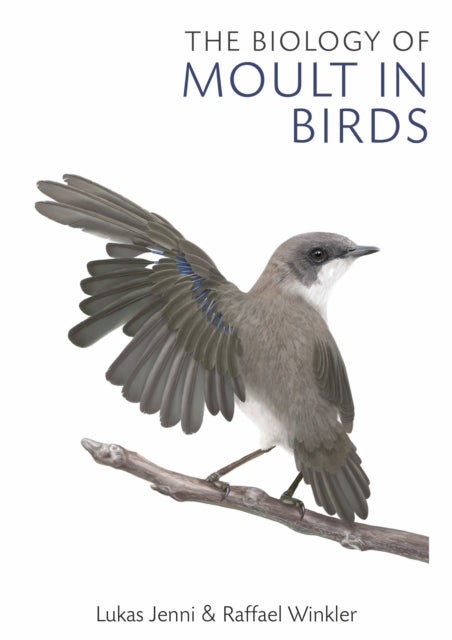
Lukas Jenni,Raffael Winkler
Biology of Moult in Birds
Biology of Moult in Birds
💎 Earn 340 Points (£3.40) on this item.
We can order this item for you. Delivery usually takes about 4 to 6 weeks.
This item is not held in our immediate stock. We will order it for you after checkout.
Estimated delivery: About 4 to 6 weeks
YOU SAVE £6.85
- Condition: Brand new
- UK Delivery times: Usually arrives within 2 - 3 working days
- UK Shipping: Fee starts at £2.39. Subject to product weight & dimension
Bulk ordering. Want 15 or more copies? Get a personalised quote and bigger discounts. Learn more about bulk orders.
Couldn't load pickup availability
- More about Biology of Moult in Birds
The first comprehensive review of the biology of moult in birds, covering all aspects from penguins to passerines. Moult is a process where feathers are renewed periodically, affecting a bird's appearance, physiology, and annual cycle. This book discusses the functions of plumage, feather maintenance, growth, and the various solutions birds have developed to fit moult into their annual cycle. It highlights the gaps in our knowledge and encourages further research.
Format: Hardback
Length: 320 pages
Publication date: 17 September 2020
Publisher: Bloomsbury Publishing PLC
The first comprehensive review of all aspects of the biology of moult, drawing information from across the literature and in all birds, from penguins to passerines. Feathers are amazing structures unique to birds and, for a variety of reasons, they need to be renewed periodically as a whole in a process called moult. During this process, all of the functions of plumage are impaired, and most aspects of a bird's life are affected. Every moult determines a bird's appearance anew, and restores plumage efficacy for flight and insulation. Moult profoundly affects physiology and the organization of the annual cycle, and it constrains reproduction and migration. Given these major impacts, which are equal to the other annual challenges of reproduction and migration, it is surprising that research on moult has largely been so neglected a subject. Lukas Jenni and Raffael Winkler have brought together the widely scattered results of studies on the processes and consequences of moult in birds. This book opens with an overview of the functions of plumage, and of feather maintenance and feather wear, and then introduces the two functions of moult: replacement of worn feathers and adjustment of plumage characteristics and appearance. The body of the book then examines feather growth and the physiology, energetics, and control of moult, and how various other physiological processes interact with moult and may compensate for its costs. Significantly, the authors explain how variations in moult and feather quality affect a bird's overall plumage quality, and they highlight the resulting consequences in terms of physical performance, appearance, and signaling. Finally, there is a review of all the various solutions that birds have developed to fit moult into the annual cycle. This long-awaited book provides a comprehensive and up-to-date account of the biology of moult in birds, covering everything from the functions of plumage to the physiological and ecological implications of moult. It will be essential reading for researchers and students in the fields of ornithology, ecology, and animal behavior, as well as anyone interested in the natural history of birds.
The first comprehensive review of all aspects of the biology of moult, drawing information from across the literature and in all birds, from penguins to passerines.
Feathers are amazing structures unique to birds and, for a variety of reasons, they need to be renewed periodically as a whole in a process called moult.
During this process, all of the functions of plumage are impaired, and most aspects of a bird's life are affected.
Every moult determines a bird's appearance anew, and restores plumage efficacy for flight and insulation.
Moult profoundly affects physiology and the organization of the annual cycle, and it constrains reproduction and migration.
Given these major impacts, which are equal to the other annual challenges of reproduction and migration, it is surprising that research on moult has largely been so neglected a subject.
Lukas Jenni and Raffael Winkler have brought together the widely scattered results of studies on the processes and consequences of moult in birds.
This book opens with an overview of the functions of plumage, and of feather maintenance and feather wear, and then introduces the two functions of moult: replacement of worn feathers and adjustment of plumage characteristics and appearance.
The body of the book then examines feather growth and the physiology, energetics, and control of moult, and how various other physiological processes interact with moult and may compensate for its costs.
Significantly, the authors explain how variations in moult and feather quality affect a bird's overall plumage quality, and they highlight the resulting consequences in terms of physical performance, appearance, and signaling.
Finally, there is a review of all the various solutions that birds have developed to fit moult into the annual cycle.
This long-awaited book provides a comprehensive and up-to-date account of the biology of moult in birds, covering everything from the functions of plumage to the physiological and ecological implications of moult.
It will be essential reading for researchers and students in the fields of ornithology, ecology, and animal behavior, as well as anyone interested in the natural history of birds.
Weight: 1046g
Dimension: 180 x 246 x 24 (mm)
ISBN-13: 9781472977229
UK and International shipping information
UK and International shipping information
UK Delivery and returns information:
- Delivery within 2 - 3 days when ordering in the UK.
- Shipping fee for UK customers from £2.39. Fully tracked shipping service available.
- Returns policy: Return within 30 days of receipt for full refund.
International deliveries:
Shulph Ink now ships to Australia, Belgium, Canada, France, Germany, Ireland, Italy, India, Luxembourg Saudi Arabia, Singapore, Spain, Netherlands, New Zealand, United Arab Emirates, United States of America.
- Delivery times: within 5 - 10 days for international orders.
- Shipping fee: charges vary for overseas orders. Only tracked services are available for most international orders. Some countries have untracked shipping options.
- Customs charges: If ordering to addresses outside the United Kingdom, you may or may not incur additional customs and duties fees during local delivery.