Shulph Ink
Bioresorbable Polymers and their Composites: Characterization and Fundamental Processing for Pharmaceutical and Medical Device Development
Bioresorbable Polymers and their Composites: Characterization and Fundamental Processing for Pharmaceutical and Medical Device Development
💎 Earn 1017 Points (£10.17) on this item.
We can order this item for you. Delivery usually takes about 4 to 6 weeks.
This item is not held in our immediate stock. We will order it for you after checkout.
Estimated delivery: About 4 to 6 weeks
YOU SAVE £26.45
- Condition: Brand new
- UK Delivery times: Usually arrives within 2 - 3 working days
- UK Shipping: Fee starts at £2.39. Subject to product weight & dimension
Bulk ordering. Want 15 or more copies? Get a personalised quote and bigger discounts. Learn more about bulk orders.
Couldn't load pickup availability
- More about Bioresorbable Polymers and their Composites: Characterization and Fundamental Processing for Pharmaceutical and Medical Device Development
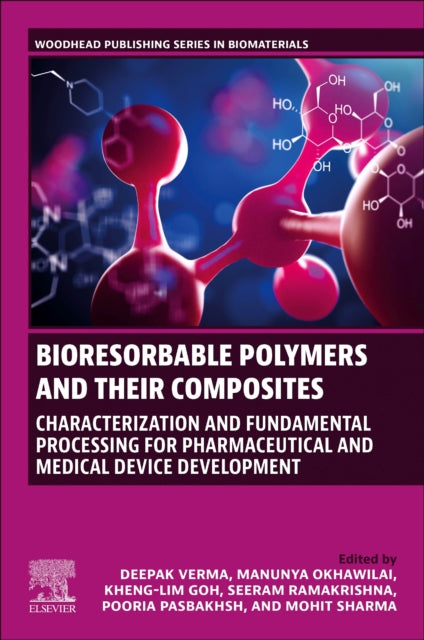
Bioresorbable Polymers and their Composites: Characterization and Fundamental Processing for Pharmaceutical and Medical Device Development is a comprehensive resource that covers the fundamentals, processing methods, and modeling approaches of these materials, as well as their applications in drug delivery, medical devices, and wound healing. It also provides detailed coverage of key aspects such as biocompatibility, biodegradability, and toxicology, making it an essential reference for researchers and R&D groups in the fields of materials science, biomedical engineering, pharmaceutical science, and regenerative medicine.
Format: Paperback / softback
Length: 580 pages
Publication date: 01 December 2023
Publisher: Elsevier - Health Sciences Division
Bioresorbable Polymers and their Composites: Characterization and Fundamental Processing for Pharmaceutical and Medical Device Development presents a comprehensive exploration of these remarkable materials and their diverse applications in the realm of biomedical sciences. The book is meticulously structured to cover a wide range of topics, including fundamentals, processing techniques, and modeling approaches. It provides in-depth coverage of various applications, such as drug delivery, medical devices, and wound healing. Additionally, critical aspects such as biocompatibility, biodegradability, and toxicology are extensively addressed, ensuring that readers have a thorough understanding of these materials when fabricating and utilizing them. This book serves as an interdisciplinary and indispensable resource for researchers in the fields of materials science, biomedical engineering, pharmaceutical science, and regenerative medicine. It is also valuable for R&D groups involved in the development of medical devices.
The utilization of bioresorbable polymers and their composites in pharmaceutical and medical device development has gained significant attention in recent years. These materials offer unique advantages, such as the ability to degrade naturally within the body, reducing the need for invasive procedures and minimizing potential complications. In this book, we will delve into the characterization and fundamental processing of bioresorbable polymers and their composites, with a focus on their applications in drug delivery, medical devices, and wound healing.
Bioresorbable polymers are synthetic or natural materials that can be designed to degrade within the body over a specific period. They are commonly used in drug delivery systems, where they release the active pharmaceutical ingredient in a controlled manner, minimizing side effects and improving patient compliance. One of the key challenges in developing bioresorbable polymers is ensuring their biocompatibility and biodegradability. Biocompatibility refers to the ability of the material to interact with biological tissues without causing adverse reactions or inflammation. Biodegradability, on the other hand, refers to the material's ability to break down into harmless byproducts within the body.
To achieve these properties, bioresorbable polymers are often modified with biocompatible additives, such as polylactic acid (PLA) or polyglycolic acid (PGA). These additives help to improve the biocompatibility and biodegradability of the polymers, while also enhancing their mechanical properties.
One of the most common processing techniques used in the development of bioresorbable polymers is extrusion. Extrusion involves the melting and shaping of the polymer into a desired shape, such as a film or a fiber. This technique is commonly used to produce bioresorbable films for drug delivery applications, as well as bioresorbable fibers for wound dressing and tissue engineering.
In addition to extrusion, other processing techniques such as injection molding, blow molding, and 3D printing are also used to fabricate bioresorbable polymers and their composites. These techniques allow for the production of complex shapes and structures that can be tailored to specific applications.
Modeling approaches are also essential in the development of bioresorbable polymers and their composites. Computational simulations, such as finite element analysis (FEA), can be used to predict the behavior of the materials under different conditions, such as temperature, pressure, and biological environment. This information can then be used to optimize the design of the materials and improve their performance.
Drug delivery is one of the most promising applications of bioresorbable polymers and their composites. Bioresorbable films and fibers can be used to deliver drugs directly to the target site, minimizing systemic side effects and improving patient outcomes. For example, bioresorbable films can be used to deliver drugs to the skin, where they can be absorbed into the bloodstream and provide local treatment for skin conditions such as acne and psoriasis.
Medical devices, such as stents and implants, are also benefiting from the use of bioresorbable polymers. Bioresorbable stents can be used to treat coronary artery disease, where they degrade over time and reduce the need for repeated procedures. Bioresorbable implants, such as hip and knee replacements, can be used to replace damaged or diseased tissues, and they also degrade over time, minimizing the risk of complications.
Wound healing is another area where bioresorbable polymers and their composites are being used. Bioresorbable films and fibers can be used to promote wound healing by providing a moist environment for the wound to heal, and they can also be used to cover and protect wounds from infection.
In conclusion, bioresorbable polymers and their composites are unique materials that offer significant advantages in pharmaceutical and medical device development. They can be designed to degrade naturally within the body, reducing the need for invasive procedures and minimizing potential complications. By understanding the characterization and fundamental processing of these materials, researchers and R&D groups can develop innovative solutions that improve patient outcomes and enhance the quality of life.
Dimension: 229 x 152 (mm)
ISBN-13: 9780443189159
UK and International shipping information
UK and International shipping information
UK Delivery and returns information:
- Delivery within 2 - 3 days when ordering in the UK.
- Shipping fee for UK customers from £2.39. Fully tracked shipping service available.
- Returns policy: Return within 30 days of receipt for full refund.
International deliveries:
Shulph Ink now ships to Australia, Belgium, Canada, France, Germany, Ireland, Italy, India, Luxembourg Saudi Arabia, Singapore, Spain, Netherlands, New Zealand, United Arab Emirates, United States of America.
- Delivery times: within 5 - 10 days for international orders.
- Shipping fee: charges vary for overseas orders. Only tracked services are available for most international orders. Some countries have untracked shipping options.
- Customs charges: If ordering to addresses outside the United Kingdom, you may or may not incur additional customs and duties fees during local delivery.