GerShun Avilez
Black Queer Freedom: Spaces of Injury and Paths of Desire
Black Queer Freedom: Spaces of Injury and Paths of Desire
💎 Earn 90 Points (£0.90) on this item.
YOU SAVE £3.83
- Condition: Brand new
- UK Delivery times: Usually arrives within 2 - 3 working days
- UK Shipping: Fee starts at £2.39. Subject to product weight & dimension
Bulk ordering. Want 15 or more copies? Get a personalised quote and bigger discounts. Learn more about bulk orders.
Couldn't load pickup availability
- More about Black Queer Freedom: Spaces of Injury and Paths of Desire
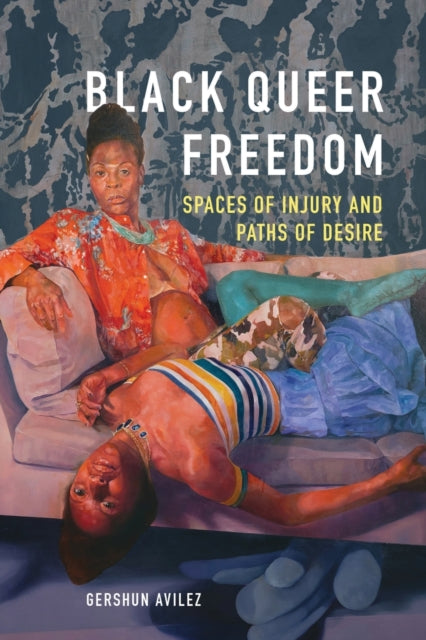
Black queer individuals face threats of physical, psychological, and socioeconomical injury, and artists have used art to create spaces for justice. GerShun Avilez analyzes the work of diasporic artists who have used art to create spaces for justice, revealing how desire and art open routes to black queer freedom when policy, the law, racism, and homophobia threaten physical safety, civil rights, and social mobility.
Format: Paperback / softback
Length: 208 pages
Publication date: 20 October 2020
Publisher: University of Illinois Press
Black queer individuals face significant challenges due to their perceived threat and vulnerability. They are subjected to physical, psychological, and socio-economic injury, which can have a profound impact on their lives. In response, queer black artists have become increasingly engaged in addressing these threats and creating spaces for justice. GerShun Avilez, a scholar of diasporic art, has analyzed the work of artists who have used art to navigate the challenges of living in a hostile environment. He focuses on how the state seeks to inhibit the movement of black queer bodies through public spaces, such as streets and borders, and how institutional spaces, such as prisons and hospitals, seek to expose and control queer bodies. Avilez reveals how desire and art can open routes to black queer freedom when policy, the law, racism, and homophobia threaten physical safety, civil rights, and social mobility.
One of the key ways that the state seeks to inhibit the movement of black queer bodies is through public spaces. Avilez argues that the state uses a range of tactics to control and regulate black queer bodies, including surveillance, harassment, and violence. For example, police officers may use excessive force against black queer individuals, or they may arrest them for minor offenses such as loitering or trespassing. This can lead to physical injury, psychological trauma, and a sense of isolation and marginalization.
Institutional spaces, such as prisons and hospitals, also play a significant role in the oppression of black queer individuals. Avilez notes that these spaces are often designed to control and monitor queer bodies, and that they can be particularly harmful to those who are already vulnerable. For example, prisons may use solitary confinement as a form of punishment, which can have a devastating impact on mental health. Hospitals may also discriminate against LGBTQ+ patients, denying them access to appropriate care and treatment.
Despite these challenges, queer black artists have found ways to create spaces for justice and resistance. Avilez highlights the work of artists such as Kara Walker, who uses large-scale installations to explore the history of slavery and racism. Walker's work often challenges the dominant narrative of American history and highlights the experiences of black queer individuals.
Another example of a queer black artist who has used art to create spaces for justice is Zineb Sedira. Sedira's work explores the experiences of women of color in the Middle East and North Africa, and she has used art to challenge the stereotypes and discrimination that they face. Sedira's work has been exhibited in galleries and museums around the world, and it has received critical acclaim.
In addition to creating spaces for justice, queer black artists have also used art to challenge the dominant narrative of sexuality and gender. Avilez notes that the dominant narrative of sexuality and gender is often based on heteronormativity and cisnormativity, which can be harmful to those who do not fit into these categories. Queer black artists have used art to challenge these norms and to create a more inclusive and diverse society.
One of the ways that queer black artists have challenged the dominant narrative of sexuality and gender is through the use of drag. Drag is a performance art that involves individuals dressing up as a different gender or sexuality. Drag has been used to challenge the idea that gender is fixed and binary, and to create a space for individuals to express their gender identity in a safe and supportive environment.
Queer black artists have also used art to challenge the idea that sexuality is a private matter. Avilez notes that the dominant narrative of sexuality is often based on shame and secrecy, and that it can be difficult for individuals to come out and be themselves. Queer black artists have used art to create a space for individuals to be open and honest about their sexuality, and to challenge the idea that it is a sin or a crime.
In addition to creating spaces for justice and resistance, queer black artists have also been involved in activism and advocacy. Avilez notes that many queer black artists have been involved in the fight for LGBTQ+ rights, and that they have used their art to raise awareness and to mobilize support. For example, the Black Lives Matter movement has been heavily influenced by the work of queer black artists, and many of the protests and demonstrations have been led by queer black individuals.
Despite these challenges, queer black artists have continued to create and to thrive. Avilez notes that the black diaspora is a rich and diverse community, and that there is a lot of talent and creativity within it. He encourages people to support and to celebrate queer black art, and to recognize the importance of its role in creating a more just and equitable society.
In conclusion, black queer individuals face significant challenges due to their perceived threat and vulnerability. Queer black artists have become increasingly engaged in addressing these threats and creating spaces for justice. GerShun Avilez has analyzed the work of artists who have used art to navigate the challenges of living in a hostile environment, and he has revealed how desire and art can open routes to black queer freedom when policy, the law, racism, and homophobia threaten physical safety, civil rights, and social mobility. By supporting and celebrating queer black art, we can help to create a more just and equitable society for all.
Weight: 328g
Dimension: 152 x 228 x 22 (mm)
ISBN-13: 9780252085284
UK and International shipping information
UK and International shipping information
UK Delivery and returns information:
- Delivery within 2 - 3 days when ordering in the UK.
- Shipping fee for UK customers from £2.39. Fully tracked shipping service available.
- Returns policy: Return within 30 days of receipt for full refund.
International deliveries:
Shulph Ink now ships to Australia, Belgium, Canada, France, Germany, Ireland, Italy, India, Luxembourg Saudi Arabia, Singapore, Spain, Netherlands, New Zealand, United Arab Emirates, United States of America.
- Delivery times: within 5 - 10 days for international orders.
- Shipping fee: charges vary for overseas orders. Only tracked services are available for most international orders. Some countries have untracked shipping options.
- Customs charges: If ordering to addresses outside the United Kingdom, you may or may not incur additional customs and duties fees during local delivery.