James StaceyTaylor
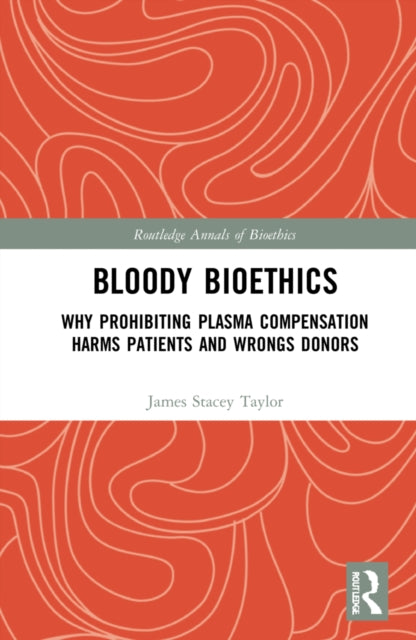
Bloody Bioethics: Why Prohibiting Plasma Compensation Harms Patients and Wrongs Donors
Bloody Bioethics: Why Prohibiting Plasma Compensation Harms Patients and Wrongs Donors
💎 Earn 811 Points (£8.11) on this item.
We can order this item for you. Delivery usually takes about 4 to 6 weeks.
This item is not held in our immediate stock. We will order it for you after checkout.
Estimated delivery: About 4 to 6 weeks
YOU SAVE £9.63
- Condition: Brand new
- UK Delivery times: Usually arrives within 2 - 3 working days
- UK Shipping: Fee starts at £3.89. Subject to product weight & dimension
Bulk ordering. Want 15 or more copies? Get a personalised quote and bigger discounts. Learn more about bulk orders.
Couldn't load pickup availability
- More about Bloody Bioethics: Why Prohibiting Plasma Compensation Harms Patients and Wrongs Donors
The book "Bloody Bioethics" argues that paying people for their blood plasma is morally permissible and that prohibiting donor compensation is morally wrong. It claims that compensating plasma donors greatly increases the amount of plasma obtained with no adverse effects on the quality of the pharmaceutical products that are manufactured from it, and that prohibiting compensation exploits donors and prevents them from giving their informed consent to donate. The book will appeal to researchers, advanced students, and medical professionals interested in bioethics, moral philosophy, and the moral limits of markets.
Format: Hardback
Length: 188 pages
Publication date: 11 March 2022
Publisher: Taylor & Francis Ltd
This groundbreaking book makes a compelling case for paying people for their blood plasma. It goes beyond merely advocating the moral permissibility of compensating plasma donors and argues that prohibiting donor compensation is morally wrong. In doing so, it addresses and refutes the various arguments put forth by opponents of compensation.
Opponents of donor compensation argue that it will lead to a reduction in the amount and quality of plasma obtained. They claim that compensating donors may exploit and coerce them, undermining social cohesion. However, James Stacey Taylor presents empirical evidence to the contrary. He demonstrates that compensating plasma donors significantly increases the amount of plasma obtained, without any adverse effects on the quality of the pharmaceutical products manufactured from it. By prohibiting compensation, patients are harmed as they are deprived of access to the medicines they need.
Taylor further argues that it is not the offer of compensation itself that exploits donors, but rather the prohibition of compensation. He points out that the prohibition fails to respect the moral need to secure a person's authoritative consent to her treatment. It also prevents donors from giving their informed consent to donate, thereby undermining the principles of autonomy and self-determination.
In conclusion, Bloody Bioethics makes a strong case for paying people for their blood plasma. It challenges the prevailing arguments against compensation and presents empirical evidence to support its benefits. This book will appeal to researchers, advanced students, and medical professionals interested in bioethics, moral philosophy, and the moral limits of markets. By advocating for the payment of plasma donors, we can ensure that patients receive the necessary medicines while respecting the rights and dignity of donors.
Dimension: 229 x 152 (mm)
ISBN-13: 9781032203867
UK and International shipping information
UK and International shipping information
We deliver throughout the United Kingdom and to 128 countries and territories worldwide, including the United States, Australia, Canada, Germany, Spain and France.