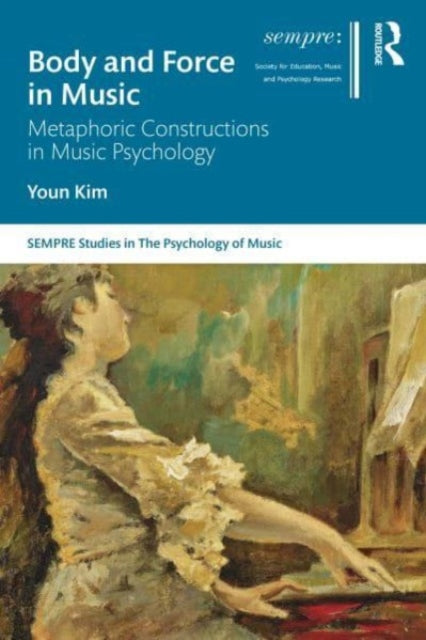
Youn Kim
Body and Force in Music: Metaphoric Constructions in Music Psychology
Body and Force in Music: Metaphoric Constructions in Music Psychology
💎 Earn 207 Points (£2.07) on this item.
We can order this item for you. Delivery usually takes about 4 to 6 weeks.
This item is not held in our immediate stock. We will order it for you after checkout.
Estimated delivery: About 4 to 6 weeks
YOU SAVE £2.47
- Condition: Brand new
- UK Delivery times: Usually arrives within 2 - 3 working days
- UK Shipping: Fee starts at £2.39. Subject to product weight & dimension
Bulk ordering. Want 15 or more copies? Get a personalised quote and bigger discounts. Learn more about bulk orders.
Couldn't load pickup availability
- More about Body and Force in Music: Metaphoric Constructions in Music Psychology
The body-force pair is a pervasive scientific metaphor in musical discourse, explored by Youn Kim in the emerging field of music psychology in the late nineteenth and early twentieth centuries. It encompasses psychological theories, pedagogical theories, rhythm theories, and aesthetical discussions, aiming to illuminate the past and present notions of music.
Format: Paperback / softback
Length: 158 pages
Publication date: 25 September 2023
Publisher: Taylor & Francis Ltd
Our perception of music is deeply rooted in metaphorical interpretations, permeating various musical discourses across theoretical, analytical, philosophical, pedagogical, and even scientific realms. Among the most pervasive and comprehensive scientific metaphors in musical discourse, the concepts of "body" and "force" emerge as central themes. Throughout the intricate tapestry of history, the body-force pair manifests itself in multiple layers of ideological frameworks, offering a rich spectrum of ways to conceptualize music.
In the late nineteenth and early twentieth centuries, Youn Kim delves into these concepts of body and force within the emerging field of music psychology. This interdisciplinary domain encompasses a wide range of contexts, including psychological theories of auditory perception and cognition, pedagogical theories on the performer's bodily mechanisms, speculative and practical theories of musical rhythm, and aesthetic discussions of the power of music.
Through this comprehensive investigation, Youn Kim seeks to shed light not only on the historical landscape of music psychology but also on the evolving notions of music that are being constructed in the present. By exploring the interplay between body and force, she unravels the intricate connections between the physical aspects of music-making and the psychological, cognitive, and emotional dimensions that shape our understanding and appreciation of music.
The study of body and force in music psychology offers valuable insights into the complex relationship between the human body and the expressive potential of music. It explores how musicians utilize their bodies as instruments to create sound, how audiences perceive and interpret musical performances through their bodily sensations, and how music can evoke physical responses and emotions. By examining the ways in which body and force are intertwined, music psychologists can gain a deeper understanding of the processes that underlie musical communication, creativity, and performance.
Furthermore, the investigation of body and force in music psychology expands our understanding of the broader cultural and societal implications of music. Music has long been associated with the body, from ancient rituals and religious ceremonies to contemporary dance and performance art. By exploring the ways in which body and force are expressed and interpreted in music, music psychologists can shed light on the ways in which music shapes and reflects cultural values, beliefs, and identities.
In conclusion, the study of body and force in music psychology is a rich and multifaceted field that offers a wealth of insights into the complex relationship between music, the body, and the mind. By exploring the metaphors and ideologies that underpin musical discourse, music psychologists can gain a deeper understanding of the ways in which music shapes our experiences, emotions, and cultural identities. This knowledge can be applied to various fields, including music education, performance practice, therapy, and cultural analysis, to enhance our understanding and appreciation of music as a powerful and transformative force in our lives.
Weight: 453g
Dimension: 234 x 156 (mm)
ISBN-13: 9780367520601
This item can be found in:
UK and International shipping information
UK and International shipping information
UK Delivery and returns information:
- Delivery within 2 - 3 days when ordering in the UK.
- Shipping fee for UK customers from £2.39. Fully tracked shipping service available.
- Returns policy: Return within 30 days of receipt for full refund.
International deliveries:
Shulph Ink now ships to Australia, Belgium, Canada, France, Germany, Ireland, Italy, India, Luxembourg Saudi Arabia, Singapore, Spain, Netherlands, New Zealand, United Arab Emirates, United States of America.
- Delivery times: within 5 - 10 days for international orders.
- Shipping fee: charges vary for overseas orders. Only tracked services are available for most international orders. Some countries have untracked shipping options.
- Customs charges: If ordering to addresses outside the United Kingdom, you may or may not incur additional customs and duties fees during local delivery.