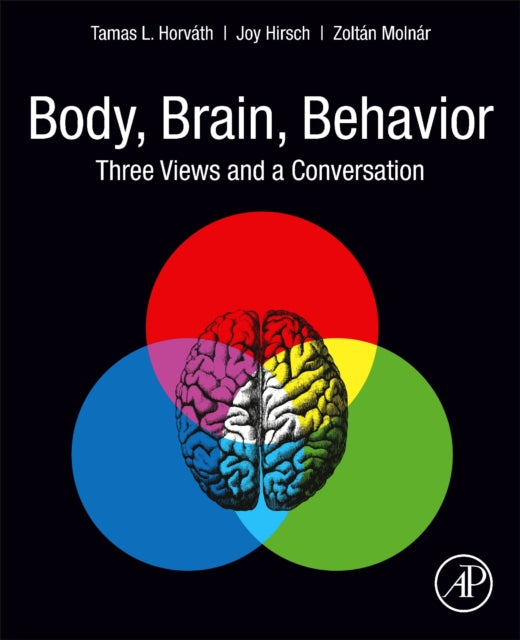
Tamas L.Horvath,JoyHirsch,ZoltanMolnar
Body, Brain, Behavior: Three Views and a Conversation
Body, Brain, Behavior: Three Views and a Conversation
💎 Earn 448 Points (£4.48) on this item.
YOU SAVE £8.33
- Condition: Brand new
- UK Delivery times: Usually arrives within 2 - 3 working days
- UK Shipping: Fee starts at £2.39. Subject to product weight & dimension
Bulk ordering. Want 15 or more copies? Get a personalised quote and bigger discounts. Learn more about bulk orders.
Couldn't load pickup availability
- More about Body, Brain, Behavior: Three Views and a Conversation
Body, Brain, Behavior: Three Views and a Conversation explores the integration of neuroscience, cellular, endocrine, developmental, and social processes, providing a critical read for understanding the nervous system's inner workings and its connections to contemporary life issues.
Format: Paperback / softback
Length: 444 pages
Publication date: 19 January 2022
Publisher: Elsevier Science Publishing Co Inc
Body, Brain, Behavior: Three Views and a Conversation is a groundbreaking book that explores the frontiers of brain research, with a particular focus on the intricate relationship between the brain, its development and evolution, peripheral organs, and other brains in communication. The book challenges existing views of neuroscience by presenting a novel approach that seamlessly integrates cellular, endocrine, developmental, and social processes into topics relevant to contemporary living in health and disease. Through a series of conversations between three scientists from different disciplines, the book offers a unique perspective on the integration of these fields.
One of the key themes of the book is the integration of cellular and endocrine processes. The authors argue that the brain is not just a collection of neurons but a complex system that includes a wide range of cells and tissues. These cells and tissues interact with each other in complex ways, and their interactions can have profound effects on the brain's function. The book explores the role of hormones, neurotransmitters, and other signaling molecules in the regulation of brain function, and how these molecules can be manipulated to treat various neurological disorders.
Another important theme of the book is the development and evolution of the brain. The authors argue that the brain is a product of evolution, and that its structure and function have been shaped by the environment in which it has evolved. They explore the different stages of brain development, from the earliest stages of embryogenesis to the adult brain, and how these stages have influenced the brain's ability to learn, remember, and adapt. The book also discusses the role of genetics in brain development, and how genetic mutations can lead to neurological disorders.
The book also explores the relationship between the brain and its peripheral organs. The authors argue that the brain is not just a standalone organ but is connected to a wide range of peripheral organs, including the eyes, ears, nose, and mouth. These organs provide the brain with information about the external world, and the brain uses this information to make decisions and control behavior. The book explores the role of sensory processing in the brain, and how sensory information is processed and integrated into the brain's cognitive processes.
In addition to these themes, the book also includes a series of conversations between three scientists from different disciplines. These conversations provide a unique perspective on the integration of these fields, and allow the authors to explore the challenges and opportunities that arise when studying the brain. The conversations cover a wide range of topics, including the role of the brain in creativity, the impact of technology on the brain, and the ethical implications of brain research.
One of the strengths of the book is its accessibility. The authors have written the book in a clear and concise manner, and have included numerous examples and illustrations to help readers understand the concepts. The book is also well-researched, and the authors have drawn on a wide range of scientific literature to support their arguments.
However, the book also has some limitations. One of the main limitations is that it is focused primarily on the brain, and does not cover other aspects of the nervous system, such as the spinal cord or the peripheral nervous system. This can be a significant limitation for readers who are interested in learning more about the nervous system as a whole.
Another limitation of the book is that it can be quite technical at times. The authors have included a lot of scientific terminology and concepts, which can be difficult for readers who are not familiar with the field. This can make the book challenging to read, and may discourage some readers from continuing to read.
Despite these limitations, Body, Brain, Behavior: Three Views and a Conversation is a valuable book for anyone who wants to become familiar with the inner workings of the nervous system and its intimate connections to the universe of contemporary life issues. The book offers a unique perspective on the integration of cellular, endocrine, developmental, and social processes, and provides a wealth of information that can be applied to a wide range of fields. Whether you are a student, researcher, or just interested in learning more about the brain, this book is worth reading.
In conclusion, Body, Brain, Behavior: Three Views and a Conversation is a groundbreaking book that explores the frontiers of brain research, with a particular focus on the intricate relationship between the brain, its development and evolution, peripheral organs, and other brains in communication. The book challenges existing views of neuroscience by presenting a novel approach that seamlessly integrates cellular, endocrine, developmental, and social processes into topics relevant to contemporary living in health and disease. Through a series of conversations between three scientists from different disciplines, the book offers a unique perspective on the integration of these fields, and provides a wealth of information that can be applied to a wide range of fields. Whether you are a student, researcher, or just interested in learning more about the brain, this book is worth reading.
Weight: 904g
Dimension: 190 x 234 x 28 (mm)
ISBN-13: 9780128180938
This item can be found in:
UK and International shipping information
UK and International shipping information
UK Delivery and returns information:
- Delivery within 2 - 3 days when ordering in the UK.
- Shipping fee for UK customers from £2.39. Fully tracked shipping service available.
- Returns policy: Return within 30 days of receipt for full refund.
International deliveries:
Shulph Ink now ships to Australia, Belgium, Canada, France, Germany, Ireland, Italy, India, Luxembourg Saudi Arabia, Singapore, Spain, Netherlands, New Zealand, United Arab Emirates, United States of America.
- Delivery times: within 5 - 10 days for international orders.
- Shipping fee: charges vary for overseas orders. Only tracked services are available for most international orders. Some countries have untracked shipping options.
- Customs charges: If ordering to addresses outside the United Kingdom, you may or may not incur additional customs and duties fees during local delivery.