Shulph Ink
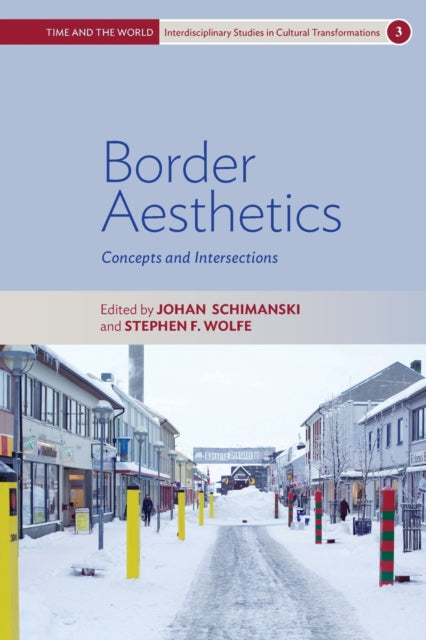
Border Aesthetics: Concepts and Intersections
Border Aesthetics: Concepts and Intersections
💎 Earn 102 Points (£1.02) on this item.
We can order this item for you. Delivery usually takes about 4 to 6 weeks.
This item is not held in our immediate stock. We will order it for you after checkout.
Estimated delivery: About 4 to 6 weeks
YOU SAVE £3.47
- Condition: Brand new
- UK Delivery times: Usually arrives within 2 - 3 working days
- UK Shipping: Fee starts at £3.89. Subject to product weight & dimension
Bulk ordering. Want 15 or more copies? Get a personalised quote and bigger discounts. Learn more about bulk orders.
Couldn't load pickup availability
- More about Border Aesthetics: Concepts and Intersections
The aesthetics of borders is a growing field of study that explores the legal, ideological, geographical, and historical aspects of borders. This pioneering collection provides theoretical starting points for an aesthetic understanding of borders through interdisciplinary analyses of literature, audio-visual borderscapes, historical and contemporary ecologies, political culture, and migration.
\n Format: Paperback / softback
\n Length: 188 pages
\n Publication date: 12 October 2018
\n Publisher: Berghahn Books
\n
Few concepts hold as much significance in understanding the modern world as borders, and the field of border studies has already amassed a substantial body of literature that delves into their legal, ideological, geographical, and historical dimensions. While these studies have made significant contributions to our understanding of borders, it is evident that there remains much room for further exploration and conceptual richness. This groundbreaking collection on the aesthetics of borders serves as a testament to this untapped potential.
Organized around six key ideas—ecology, imagination, invisibility, palimpsest, sovereignty, and waiting—the interlocking essays collected here offer theoretical foundations for an aesthetic understanding of borders. These ideas are intricately explored through interdisciplinary analyses of literature, audio-visual borderscapes, historical and contemporary ecologies, political culture, and migration.
In the first essay, "Ecology of Borders," the authors examine the ecological implications of borders, highlighting their role in shaping the distribution of species, resources, and environmental degradation. They argue that borders often serve as barriers to the movement of organisms, leading to the fragmentation of ecosystems and the loss of biodiversity. By exploring the ecological dimensions of borders, the authors suggest that a more holistic and inclusive approach to border management is necessary, one that considers the interconnectedness of ecosystems and the needs of local communities.
The second essay, "Imaginary Borders," delves into the role of imagination in shaping borders. The authors argue that imagination plays a crucial role in constructing and maintaining borders, as it allows people to perceive and interpret the world in distinct ways. They explore the ways in which imagination is used to create boundaries, both physical and symbolic, and the ways in which these boundaries are contested and reimagined. Through this analysis, the authors highlight the importance of recognizing the role of imagination in border studies and the need to engage with different perspectives and narratives to understand the complexities of border dynamics.
The third essay, "In/Visibility of Borders," explores the concept of borders as both visible and invisible entities. The authors argue that borders are not fixed or permanent, but rather fluid and dynamic, shaped by a range of factors such as political, economic, and social forces. They explore the ways in which borders are constructed and deconstructed, both physically and symbolically, and the ways in which they are experienced and perceived by individuals and communities. Through this analysis, the authors suggest that borders are not merely physical barriers, but also cultural and psychological constructs that shape our understanding of the world.
The fourth essay, "Palimpsest of Borders," examines the historical and cultural significance of borders. The authors argue that borders are not merely physical barriers, but also sites of cultural exchange, migration, and hybridization. They explore the ways in which borders have been used to define and control identities, cultures, and territories, and the ways in which they have been contested and transformed over time. Through this analysis, the authors highlight the importance of recognizing the historical and cultural dimensions of borders and the need to engage with different historical and cultural contexts to understand the complexities of border dynamics.
The fifth essay, "Sovereignty and Waiting," explores the concept of sovereignty in the context of borders. The authors argue that sovereignty is not a fixed or universal concept, but rather a contested and dynamic one that is shaped by a range of political, economic, and cultural factors. They explore the ways in which sovereignty is exercised and contested over borders, and the ways in which borders are used to assert and defend national interests. Through this analysis, the authors suggest that sovereignty is not a fixed or universal concept, but rather a fluid and contextual one that requires a nuanced understanding of the political, economic, and cultural contexts in which borders are situated.
The sixth essay, "Conclusion," offers a summary of the key ideas explored in the collection and highlights the importance of an aesthetic understanding of borders. The authors argue that borders are not merely physical barriers, but also sites of cultural, political, and social significance. They suggest that an aesthetic understanding of borders can help us to better understand the complexities of border dynamics, promote empathy and understanding between different communities, and develop more effective and sustainable border management practices.
In conclusion, this pioneering collection on the aesthetics of borders provides a rich and nuanced understanding of borders as both physical and cultural entities. By exploring the ecological, imaginary, invisibility, palimpsest, sovereignty, and waiting dimensions of borders, the authors offer theoretical foundations for an aesthetic understanding of these complex and multifaceted phenomena. The interdisciplinary approach adopted in this collection allows for a comprehensive exploration of borders from various perspectives, and the essays collected here provide valuable insights into the complexities of border management, governance, and human-environment interactions. As the field of border studies continues to evolve, it is clear that an aesthetic understanding of borders will play an increasingly important role in shaping our understanding of the world and our place in it.
\n Weight: 300g\n
Dimension: 228 x 175 x 4 (mm)\n
ISBN-13: 9781789200539\n \n
UK and International shipping information
UK and International shipping information
We deliver throughout the United Kingdom and to 128 countries and territories worldwide, including the United States, Australia, Canada, Germany, Spain and France.