Shulph Ink
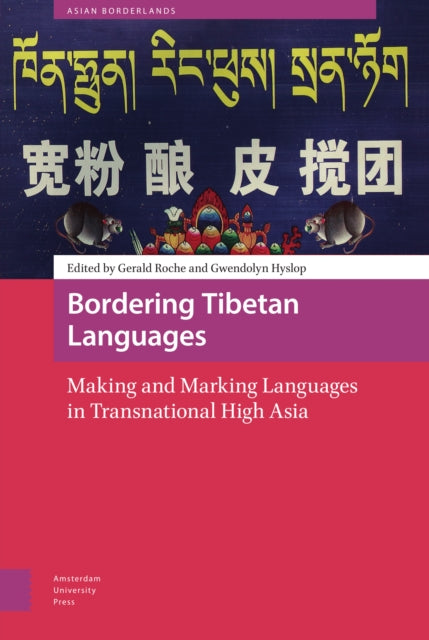
Bordering Tibetan Languages: Making and Marking Languages in Transnational High Asia
Bordering Tibetan Languages: Making and Marking Languages in Transnational High Asia
💎 Earn 689 Points (£6.89) on this item.
We can order this item for you. Delivery usually takes about 4 to 6 weeks.
This item is not held in our immediate stock. We will order it for you after checkout.
Estimated delivery: About 4 to 6 weeks
YOU SAVE £8.18
- Condition: Brand new
- UK Delivery times: Usually arrives within 2 - 3 working days
- UK Shipping: Fee starts at £2.39. Subject to product weight & dimension
Bulk ordering. Want 15 or more copies? Get a personalised quote and bigger discounts. Learn more about bulk orders.
Couldn't load pickup availability
- More about Bordering Tibetan Languages: Making and Marking Languages in Transnational High Asia
Bordering Tibetan Languages: Making and Marking Languages in Transnational High Asia explores the complex relationships between state, ethnic, and linguistic borders in the Himalayas, highlighting how people create and negotiate boundaries through language.
Format: Hardback
Length: 218 pages
Publication date: 01 September 2022
Publisher: Amsterdam University Press
Bordering Tibetan Languages: Making and Marking Languages in Transnational High Asia delves into the intricate interplay between state, ethnic, and linguistic borders in the Himalayas. Through comprehensive case studies from Bhutan, China, India, and Nepal, this book explores how individuals in the region actively shape and are shaped by borders, thereby contributing to the creation of these "talking borders." These borders exist in a world where state borders are subject to contention and are undergoing rapid transformations driven by social and economic developments. By centering language, this book offers a fresh perspective on this dynamic region, shedding light on the mutually influential relationship between borders and language. Moreover, it presents innovative approaches to understanding how borders and language shape and influence one another.
Introduction:
The Himalayas, a region of immense cultural and geographical diversity, serves as a backdrop for the study of bordering Tibetan languages. This book explores the complex dynamics between state, ethnic, and linguistic borders in the Himalayas, shedding light on how individuals and communities negotiate and redefine these boundaries. Through a series of case studies, it examines the ways in which language plays a crucial role in shaping and expressing identities, as well as in facilitating communication and cultural exchange across borders.
State Borders:
The Himalayas are home to a multitude of ethnic groups, each with its own distinct language and cultural heritage. State borders, drawn by colonial powers and subsequent nation-states, often fail to adequately reflect the linguistic and cultural diversity of the region. This leads to tensions and conflicts between different ethnic groups, as they struggle to maintain their distinct identities and languages within the boundaries of a nation-state.
Ethnic Identity and Language:
Ethnic identity is closely linked to language, and the preservation of ethnic languages is a significant concern in the Himalayas. Many ethnic groups have their own unique languages, which are essential for maintaining their cultural traditions, beliefs, and practices. However, the dominance of national languages and the pressure to adopt standardized languages can threaten the survival of ethnic languages.
Linguistic Diversity:
The Himalayas are home to a wide range of linguistic diversity, with over 400 languages spoken in the region. This linguistic diversity is a result of the complex history of the region, which has been influenced by migration, colonization, and cultural exchange. Each language has its own unique grammar, vocabulary, and cultural significance, and it plays a vital role in the identity and culture of the communities that speak it.
Case Studies:
The book includes case studies from Bhutan, China, India, and Nepal, each of which presents a unique perspective on bordering Tibetan languages. These case studies explore the ways in which language is used to negotiate borders, express cultural identity, and facilitate communication across ethnic and linguistic boundaries. They also highlight the challenges faced by communities in preserving their languages and cultural heritage in the face of rapid social and economic change.
Conclusion:
Bordering Tibetan Languages: Making and Marking Languages in Transnational High Asia offers a valuable insight into the complex interplay between state, ethnic, and linguistic borders in the Himalayas. By examining the role of language in shaping and expressing identities, as well as in facilitating communication and cultural exchange, this book provides new perspectives on the region's history, culture, and politics. It also highlights the importance of preserving linguistic diversity and promoting cultural exchange in order to maintain a harmonious and inclusive society in the Himalayas.
Dimension: 234 x 156 (mm)
ISBN-13: 9789463725040
This item can be found in:
UK and International shipping information
UK and International shipping information
UK Delivery and returns information:
- Delivery within 2 - 3 days when ordering in the UK.
- Shipping fee for UK customers from £2.39. Fully tracked shipping service available.
- Returns policy: Return within 30 days of receipt for full refund.
International deliveries:
Shulph Ink now ships to Australia, Belgium, Canada, France, Germany, Ireland, Italy, India, Luxembourg Saudi Arabia, Singapore, Spain, Netherlands, New Zealand, United Arab Emirates, United States of America.
- Delivery times: within 5 - 10 days for international orders.
- Shipping fee: charges vary for overseas orders. Only tracked services are available for most international orders. Some countries have untracked shipping options.
- Customs charges: If ordering to addresses outside the United Kingdom, you may or may not incur additional customs and duties fees during local delivery.