Shulph Ink
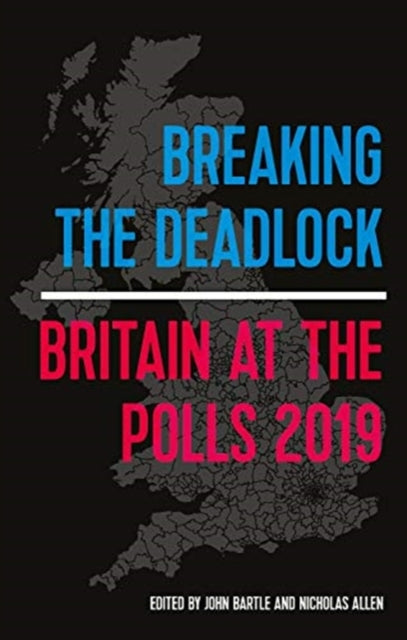
Breaking the Deadlock: Britain at the Polls, 2019
Breaking the Deadlock: Britain at the Polls, 2019
💎 Earn 110 Points (£1.10) on this item.
We can order this item for you. Delivery usually takes about 4 to 6 weeks.
This item is not held in our immediate stock. We will order it for you after checkout.
Estimated delivery: About 4 to 6 weeks
YOU SAVE £2.87
- Condition: Brand new
- UK Delivery times: Usually arrives within 2 - 3 working days
- UK Shipping: Fee starts at £2.39. Subject to product weight & dimension
Bulk ordering. Want 15 or more copies? Get a personalised quote and bigger discounts. Learn more about bulk orders.
Couldn't load pickup availability
- More about Breaking the Deadlock: Britain at the Polls, 2019
The 2019 General Election was historic, resolving the Brexit stalemate and redrew the electoral map of Britain. It broke the deadlock in Parliament and brought about the fall of Labours 'Red Wall'. The 2020 election was a significant departure from the status quo, with the Conservatives winning a definitive victory. This edition of a prestigious series surveys the build-up to the election and its immediate aftermath, offering conjecture about the future of British party politics and democracy.
\n Format: Paperback / softback
\n Length: 248 pages
\n Publication date: 28 September 2021
\n Publisher: Manchester University Press
\n
The 2019 General Election marked a historic moment in British politics, as it brought an end to the long-standing stalemate surrounding Brexit and reshaped the electoral landscape of the country. This pivotal election broke the deadlock in Parliament and led to the downfall of the Labour Party's so-called "Red Wall," a coalition of traditional Labour strongholds in the North and Midlands.
Since the 2016 referendum on EU membership, Members of Parliament (MPs) had faced a challenging task of reconciling direct democracy with the established institutions of representative government. The 2017 election, intended to provide a final resolution to Brexit, failed to achieve this goal, as its indecisive outcome only exacerbated the complexities and divisions within the country. Parliament, the courts, and even the Monarch herself became entangled in the tumultuous Brexit process.
The scale of the Conservative Party's resounding victory in December 2020 was a significant departure from the previous political landscape. This election marked a return to the status quo, with the Conservatives gaining a majority in Parliament and forming a government. The election's outcome has significant implications for British party politics and democracy, and this latest edition of a prestigious and venerable series provides a comprehensive analysis of the build-up to the election and its immediate aftermath.
The election was characterized by a strong sense of polarization and a surge in support for right-wing political parties. The Conservative Party, led by Prime Minister Boris Johnson, capitalized on public dissatisfaction with the Labour Party's handling of Brexit and its perceived inability to address the country's economic and social challenges. The party's campaign focused on themes such as national security, immigration control, and the need for economic recovery after the COVID-19 pandemic.
In contrast, the Labour Party, under the leadership of Jeremy Corbyn, faced significant challenges throughout the campaign. Corbyn's socialist agenda and his opposition to Brexit were widely criticized by both the public and some within his own party. The party's campaign lacked a clear message and struggled to connect with voters who were concerned about the impact of Brexit on their lives.
The election also saw the rise of other political parties, such as the Liberal Democrats and the Scottish National Party (SNP). The Liberal Democrats, led by Jo Swinson, gained support from voters who were concerned about the impact of Brexit on the country's economy and social cohesion. The SNP, meanwhile, benefited from a surge in support for Scottish independence and its promise to hold a second referendum on the issue.
The election's outcome has significant implications for the future of British politics and democracy. The Conservative Party's majority government will have the power to shape the country's future direction, including its relationship with the EU and its approach to domestic policy. The party's commitment to Brexit and its focus on national security and economic recovery will likely shape the country's political discourse for years to come.
At the same time, the election has raised concerns about the rise of right-wing populism and the potential for political polarization. The Conservative Party's victory has been attributed to its ability to appeal to voters who are concerned about immigration, national identity, and the perceived threat of socialism. These concerns have been echoed by other right-wing political parties across Europe and have raised questions about the future of democratic governance and the protection of individual rights.
The election's immediate aftermath has also been marked by significant political developments. The Conservative Party has begun to form a government, with Johnson appointed as Prime Minister and a new cabinet announced. The party has also begun to negotiate its exit from the EU, with discussions underway on a new trade deal.
However, the election has also been met with opposition and protests. Many voters who supported the Labour Party or other left-wing political parties are concerned about the Conservative Party's agenda and its impact on their rights and freedoms. There have been calls for a second referendum on Brexit and for greater accountability and transparency in government.
In conclusion, the 2019 General Election was a historic moment in British politics, as it brought an end to the long-standing stalemate surrounding Brexit and reshaped the electoral landscape of the country. The election's outcome has significant implications for British party politics and democracy, with the Conservative Party gaining a majority government and the Labour Party facing significant challenges. The election's outcome has also raised concerns about the rise of right-wing populism and the potential for political polarization. As the country moves forward, it will be important for all political parties and stakeholders to work together to address the country's challenges and ensure that democracy is protected and preserved.
\n Weight: 396g\n
Dimension: 157 x 234 x 21 (mm)\n
ISBN-13: 9781526152367\n \n
This item can be found in:
UK and International shipping information
UK and International shipping information
UK Delivery and returns information:
- Delivery within 2 - 3 days when ordering in the UK.
- Shipping fee for UK customers from £2.39. Fully tracked shipping service available.
- Returns policy: Return within 30 days of receipt for full refund.
International deliveries:
Shulph Ink now ships to Australia, Belgium, Canada, France, Germany, Ireland, Italy, India, Luxembourg Saudi Arabia, Singapore, Spain, Netherlands, New Zealand, United Arab Emirates, United States of America.
- Delivery times: within 5 - 10 days for international orders.
- Shipping fee: charges vary for overseas orders. Only tracked services are available for most international orders. Some countries have untracked shipping options.
- Customs charges: If ordering to addresses outside the United Kingdom, you may or may not incur additional customs and duties fees during local delivery.