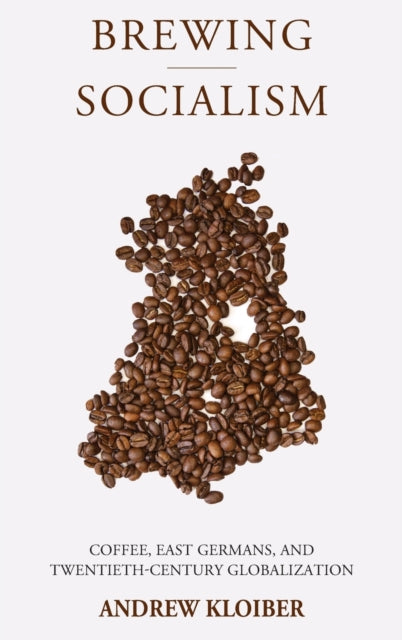
Andrew Kloiber
Brewing Socialism: Coffee, East Germans, and Twentieth-Century Globalization
Brewing Socialism: Coffee, East Germans, and Twentieth-Century Globalization
💎 Earn 496 Points (£4.96) on this item.
We can order this item for you. Delivery usually takes about 4 to 6 weeks.
This item is not held in our immediate stock. We will order it for you after checkout.
Estimated delivery: About 4 to 6 weeks
- Condition: Brand new
- UK Delivery times: Usually arrives within 2 - 3 working days
- UK Shipping: Fee starts at £2.39. Subject to product weight & dimension
Bulk ordering. Want 15 or more copies? Get a personalised quote and bigger discounts. Learn more about bulk orders.
Couldn't load pickup availability
- More about Brewing Socialism: Coffee, East Germans, and Twentieth-Century Globalization
Brewing Socialism explores the relationship between East Germany's consumption and food culture and its relationship to the wider world, revealing how everyday cultural practices connected East Germans to a global system of exchange and perpetuated a set of traditions and values that fit uneasily into the Socialist Unity Party's conceptualization of a modern Socialist Utopia.
Format: Hardback
Length: 262 pages
Publication date: 14 October 2022
Publisher: Berghahn Books
Brewing Socialism: East Germany's Coffee Culture and Global Connections
Andrew Kloiber's book, Brewing Socialism: East Germany's Coffee Culture and Global Connections, delves into the relationship between East Germany's consumption and food culture and its connection to the wider world. Kloiber reveals how everyday cultural practices surrounding coffee drinking not only connected East Germans to a global system of exchange but also perpetuated a set of traditions and values that fit uneasily into the Socialist Unity Party's conceptualization of a modern Socialist Utopia.
Kloiber's work examines the complex tapestry of traditions, history, and cultural values that underpinned the socialist German Democratic Republic (GDR). He argues that coffee drinking was not just a simple pleasure but also a means of connecting East Germans to a global network of exchange and a way of asserting their identity as a distinct society.
One of the key themes of Kloiber's book is the role of material culture in shaping ideology. He shows how coffee drinking was not just a physical act but also a cultural one, with specific rituals and practices associated with it. These rituals and practices, such as the use of coffee cups, the way coffee was prepared, and the social interactions that took place over a cup of coffee, were deeply ingrained in East German society and played a significant role in shaping their worldview.
Kloiber also explores the ways in which coffee drinking was used as a tool of propaganda and social control in the GDR. The Socialist Unity Party used coffee drinking as a way to promote its ideology and to control the behavior of its citizens. For example, coffee drinking was often associated with the working class and was seen as a way of promoting socialist values and ideals. However, Kloiber argues that coffee drinking was also used to control the behavior of the working class, with the Party using it to discourage dissent and to promote conformity.
In addition to its role in shaping ideology and social control, coffee drinking also played a significant role in the economic development of the GDR. The country was known for its high-quality coffee, and coffee production was a major industry. Coffee was exported to other countries, and the profits from coffee sales helped to fund the GDR's economic development. However, Kloiber argues that coffee production was also a source of exploitation and inequality, with many workers being paid low wages and working in poor conditions.
Kloiber's book also explores the ways in which coffee drinking has changed in the post-GDR era. The fall of the Berlin Wall and the reunification of Germany in 1990 led to a significant change in the country's political and economic landscape. Coffee drinking has become more popular in the post-GDR era, with many new coffee shops and cafes opening up. However, Kloiber argues that coffee drinking has also been affected by the globalization of the coffee industry, with many coffee shops and cafes now serving coffee from other countries.
Despite these changes, Kloiber argues that coffee drinking remains an important part of East German culture and identity. He argues that coffee drinking is a way of connecting East Germans to their past and to their cultural heritage, and that it is a way of asserting their identity as a distinct society.
In conclusion, Brewing Socialism: East Germany's Coffee Culture and Global Connections is a fascinating book that explores the relationship between East Germany's consumption and food culture and its connection to the wider world. Kloiber reveals how everyday cultural practices surrounding coffee drinking not only connected East Germans to a global system of exchange but also perpetuated a set of traditions and values that fit uneasily into the Socialist Unity Party's conceptualization of a modern Socialist Utopia. Kloiber's work also explores the role of material culture in shaping ideology and social control, the ways in which coffee drinking was used as a tool of propaganda and social control in the GDR, and the changes that have taken place in the post-GDR era. Despite these changes, Kloiber argues that coffee drinking remains an important part of East German culture and identity.
Weight: 466g
Dimension: 236 x 158 x 19 (mm)
ISBN-13: 9781800736696
UK and International shipping information
UK and International shipping information
UK Delivery and returns information:
- Delivery within 2 - 3 days when ordering in the UK.
- Shipping fee for UK customers from £2.39. Fully tracked shipping service available.
- Returns policy: Return within 30 days of receipt for full refund.
International deliveries:
Shulph Ink now ships to Australia, Belgium, Canada, France, Germany, Ireland, Italy, India, Luxembourg Saudi Arabia, Singapore, Spain, Netherlands, New Zealand, United Arab Emirates, United States of America.
- Delivery times: within 5 - 10 days for international orders.
- Shipping fee: charges vary for overseas orders. Only tracked services are available for most international orders. Some countries have untracked shipping options.
- Customs charges: If ordering to addresses outside the United Kingdom, you may or may not incur additional customs and duties fees during local delivery.