Shulph Ink
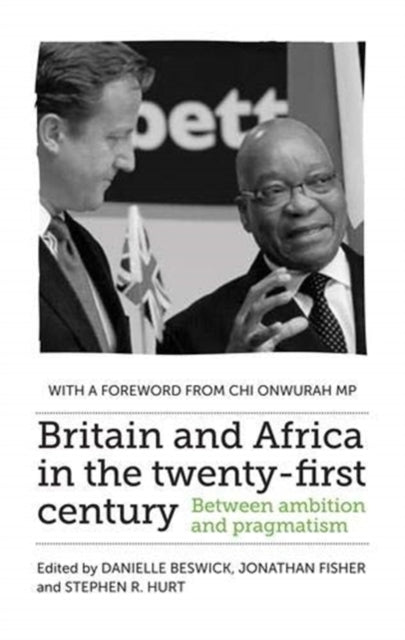
Britain and Africa in the Twenty-First Century: Between Ambition and Pragmatism
Britain and Africa in the Twenty-First Century: Between Ambition and Pragmatism
💎 Earn 110 Points (£1.10) on this item.
YOU SAVE £2.87
- Condition: Brand new
- UK Delivery times: Usually arrives within 2 - 3 working days
- UK Shipping: Fee starts at £3.89. Subject to product weight & dimension
Bulk ordering. Want 15 or more copies? Get a personalised quote and bigger discounts. Learn more about bulk orders.
Couldn't load pickup availability
- More about Britain and Africa in the Twenty-First Century: Between Ambition and Pragmatism
Britain and Africa in the twenty-first century explores UK-Africa policy in the era of austerity, Conservative government, and Brexit, examining trade, security, aid, peacekeeping, and the role of political parties, advocacy groups, and the UK population.
\n Format: Paperback / softback
\n Length: 248 pages
\n Publication date: 28 September 2021
\n Publisher: Manchester University Press
\n
Britain and Africa in the twenty-first century offers a comprehensive analysis of UK-Africa policy in the era of austerity, Conservative government, and Brexit. It delves into the evolution of Britain's relationship with Africa since the days of Tony Blair, Gordon Brown, and Make Poverty History, examining how a shifting UK political landscape and global context have impacted this longstanding and intricate partnership.
This edited collection features contributions from esteemed scholars based in the UK and Africa, as well as from the Head of the Chatham Houses Africa Programme and the Chair of the All-Party Parliamentary Group on Africa. It explores various aspects of the relationship, including trade, security, aid, peacekeeping, and the roles of political parties, advocacy groups, and the UK population. Britain and Africa serves as a vital reference point for researchers and practitioners seeking to understand contemporary UK-Africa relations and the significance of Africa in British foreign policy.
The book begins by tracing the historical roots of Britain's engagement with Africa, highlighting the colonial era, the post-colonial period, and the emergence of new political and economic dynamics. It examines how the UK's foreign policy towards Africa has evolved over time, considering the influence of factors such as imperialism, globalization, and the pursuit of national interests.
Chapter 1 explores the changing nature of UK-Africa trade relations, examining the trends in bilateral trade, investment, and the challenges and opportunities posed by the African Continental Free Trade Area (AfCFTA). The chapter also discusses the role of the UK as a major investor in Africa and the potential benefits and risks associated with this investment.
Chapter 2 examines the security dimension of UK-Africa relations, focusing on issues such as counterterrorism, piracy, and regional stability. It explores the UK's involvement in peacekeeping operations in Africa and the challenges faced by African countries in maintaining security.
Chapter 3 explores the role of aid in UK-Africa relations, examining the historical and contemporary patterns of aid provision, the effectiveness of aid, and the challenges and opportunities associated with aid dependency. The chapter also discusses the role of the UK government, international organizations, and civil society in promoting development and poverty reduction in Africa.
Chapter 4 examines the role of political parties, advocacy groups, and the UK population in shaping UK-Africa policy. It explores the influence of public opinion, media coverage, and civil society in shaping public attitudes towards Africa and the role of these groups in advocating for more positive and sustainable relationships between the UK and Africa.
Chapter 5 concludes the book
Britain and Africa in the twenty-first century offers a comprehensive analysis of UK-Africa policy in the era of austerity, Conservative government, and Brexit. It delves into the evolution of Britain's relationship with Africa since the days of Tony Blair, Gordon Brown, and Make Poverty History, examining how a shifting UK political landscape and global context have impacted this longstanding and intricate partnership.
This edited collection features contributions from esteemed scholars based in the UK and Africa, as well as from the Head of the Chatham Houses Africa Programme and the Chair of the All-Party Parliamentary Group on Africa. It explores various aspects of the relationship, including trade, security, aid, peacekeeping, and the roles of political parties, advocacy groups, and the UK population. Britain and Africa serves as a vital reference point for researchers and practitioners seeking to understand contemporary UK-Africa relations and the significance of Africa in British foreign policy.
The book begins by tracing the historical roots.
The book begins by tracing the historical roots.
The book begins by tracing the historical roots of Britain's engagement with Africa, highlighting the colonial era, the post-colonial period, and the emergence of new political and economic dynamics. It examines how the UK's foreign policy towards Africa has evolved over time, considering the influence of factors such as imperialism, globalization, and the pursuit of national interests.
Chapter 1 explores the changing nature of UK-Africa trade relations, examining the trends in bilateral trade, investment, and the challenges and opportunities posed by the African Continental Free Trade Area (AfCFTA). The chapter also discusses the role of the UK as a major investor in Africa and the potential benefits and risks associated with this investment.
Chapter 2 examines the security dimension of UK-Africa relations, focusing on issues such as counterterrorism, piracy, and regional stability. It explores the UK's involvement in peacekeeping the operations in Africa and the challenges faced by African countries in maintaining security.
Chapter 3 explores the role of aid in UK-Africa relations, examining the historical and contemporary patterns of aid provision, the effectiveness of aid, and the challenges and opportunities associated with aid dependency. The chapter also discusses the role of the UK government, international organizations, and civil society.
Chapter 4 examines the role of political parties, advocacy groups, and the UK population in shaping UK-Africa policy. It explores the influence of public opinion, media coverage, and civil society in shaping public attitudes towards Africa and the role of these groups in advocating for more positive and sustainable relationships between the UK and Africa.
Chapter 5 concludes the book.
\n Weight: 386g\n
Dimension: 234 x 155 x 18 (mm)\n
ISBN-13: 9781526160331\n \n
UK and International shipping information
UK and International shipping information
We deliver throughout the United Kingdom and to 128 countries and territories worldwide, including the United States, Australia, Canada, Germany, Spain and France.