Alan Steele
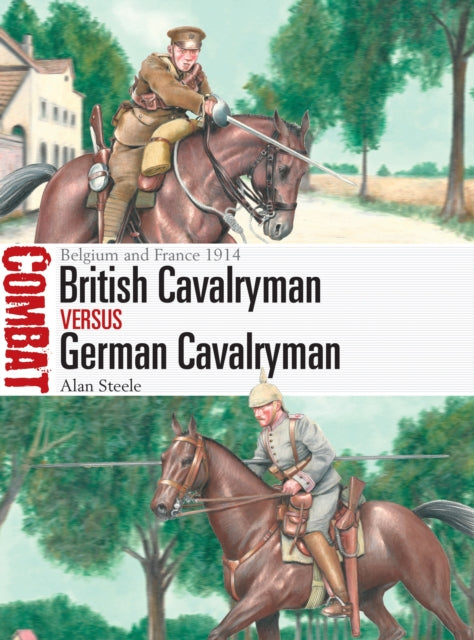
British Cavalryman vs German Cavalryman: Belgium and France 1914
British Cavalryman vs German Cavalryman: Belgium and France 1914
💎 Earn 53 Points (£0.53) on this item.
YOU SAVE £4.38
- Condition: Brand new
- UK Delivery times: Usually arrives within 2 - 3 working days
- UK Shipping: Fee starts at £2.39. Subject to product weight & dimension
Bulk ordering. Want 15 or more copies? Get a personalised quote and bigger discounts. Learn more about bulk orders.
Couldn't load pickup availability
- More about British Cavalryman vs German Cavalryman: Belgium and France 1914
This book explores the use and effectiveness of German and British cavalry in the early stages of World War I on the Western Front, including their doctrines, organization, equipment, and training, and their performance in key encounter actions.
Format: Paperback / softback
Length: 80 pages
Publication date: 18 August 2022
Publisher: Bloomsbury Publishing PLC
This comprehensive book delves into the significance and role of the German and British cavalry in the initial stages of World War I on the Western Front. During the early months of the war, before the conflict devolved into static trench warfare, there was a brief period of mobile combat as the German Army advanced through Belgium and northern France, forcing the French and British forces to retreat. Both sides in the escalating conflict deployed substantial numbers of cavalry units to screen their infantry forces, conduct reconnaissance, and leverage their superior mobility to execute aggressive combat operations. In the summer of 1914, the British cavalry faced a challenging task as they had to cover the withdrawal of the British Expeditionary Force and the German cavalry, who, after weeks of intense combat and forced marches, were tasked with maintaining contact with a rapidly retreating enemy.
In this book, a comprehensive assessment is conducted of each side's doctrine, organization, equipment, and training. This assessment is followed by a detailed analysis of their actual performance in three key encounter actions: Casteau/Soignies (August 22), Cérizy/Moÿ (August 28), and Le Montcel/Frétoy (September 7). Extensive photographs, specially commissioned full-color artwork, and maps are used to support this analysis, providing a visual representation of the events and terrain involved.
The German cavalry, known as the "German Light Horse," played a crucial role in the early stages of the war. They were highly mobile and equipped with modern weapons, such as the machine gun and the Maxim gun. The German cavalry units were organized into regiments, each consisting of several squadrons. These squadrons were further divided into detachments, which were used for reconnaissance and screening operations.
The British cavalry, on the other hand, had a different organizational structure. They were organized into regiments, but these regiments were larger and consisted of several squadrons. The British cavalry also had a higher proportion of officers compared to the German cavalry, which allowed for better command and control.
Both sides employed their cavalry in a variety of ways. The German cavalry were used for reconnaissance, screening, and harassing the enemy's rearguard. They were also used to exploit gaps in the enemy's lines and launch surprise attacks. The British cavalry, on the other hand, were primarily used for screening and protecting the infantry. They were also used to conduct raids and counterattacks against the enemy.
In terms of equipment, both the German and British cavalry were well-equipped. The German cavalry were equipped with the latest German military equipment, including the Mauser 98 rifle, the Maxim machine gun, and the German cavalry's iconic cavalry sword. The British cavalry, on the other hand, were equipped with the British military equipment, including the Lee-Enfield rifle, the Vickers machine gun, and the British cavalry's traditional cavalry sword.
Training was also an important aspect of the cavalry's effectiveness. Both the German and British cavalry underwent rigorous training before the war. The German cavalry, in particular, were known for their high standards of training and discipline. The British cavalry, on the other hand, were also well-trained and experienced, having served in various conflicts around the world.
The performance of the German and British cavalry in the early stages of World War I was mixed. The German cavalry, despite their superior mobility and equipment, were unable to break through the French and British lines. They were also hampered by their lack of coordination and communication, which often led to confusion and disorganization. The British cavalry, on the other hand, were able to hold their own against the German cavalry and even inflict some casualties on them. However, the British cavalry were also limited by their lack of numbers and the terrain they were fighting in.
In conclusion, the German and British cavalry played a significant role in the early stages of World War I on the Western Front. Both sides deployed substantial numbers of cavalry units to screen their infantry forces, conduct reconnaissance, and execute aggressive combat operations. While the German cavalry were highly mobile and equipped with modern weapons, they were unable to break through the French and British lines. The British cavalry, on the other hand, were able to hold their own against the German cavalry and even inflict some casualties on them. However, the British cavalry were also limited by their lack of numbers and the terrain they were fighting in.
Weight: 256g
Dimension: 184 x 248 x 9 (mm)
ISBN-13: 9781472848826
This item can be found in:
UK and International shipping information
UK and International shipping information
UK Delivery and returns information:
- Delivery within 2 - 3 days when ordering in the UK.
- Shipping fee for UK customers from £2.39. Fully tracked shipping service available.
- Returns policy: Return within 30 days of receipt for full refund.
International deliveries:
Shulph Ink now ships to Australia, Belgium, Canada, France, Germany, Ireland, Italy, India, Luxembourg Saudi Arabia, Singapore, Spain, Netherlands, New Zealand, United Arab Emirates, United States of America.
- Delivery times: within 5 - 10 days for international orders.
- Shipping fee: charges vary for overseas orders. Only tracked services are available for most international orders. Some countries have untracked shipping options.
- Customs charges: If ordering to addresses outside the United Kingdom, you may or may not incur additional customs and duties fees during local delivery.