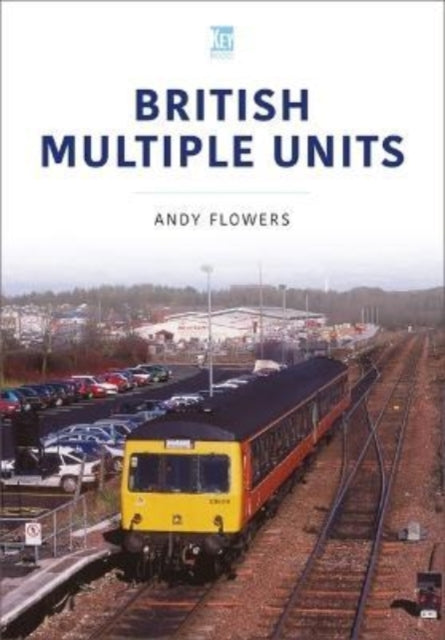

Andy Flowers
British Multiple Units
British Multiple Units
YOU SAVE £5.05
- Condition: Brand new
- UK Delivery times: Usually arrives within 2 - 3 working days
- UK Shipping: Fee starts at £3.89. Subject to product weight & dimension
Bulk ordering. Want 15 or more copies? Get a personalised quote and bigger discounts. Learn more about bulk orders.
Couldn't load pickup availability
- More about British Multiple Units
180 photographs The book details the history of the major unit types that have operated on the UK's rail network, from the earliest Victorian-era steam railcars to the modern hybrid-powered multiple units currently under development.
Format: Paperback / softback
Length: 96 pages
Publication date: 01 August 2022
Publisher: Key Publishing Ltd
The unsung heroes of the modern railway system are the multiple units, which form the primary mode of rolling stock for the majority of rail passenger services worldwide, particularly in high-density inner-city and urban traffic. Despite their significant role, these units receive less media coverage compared to the more popular locomotive types. However, there are numerous advantages to these units, making them an increasingly popular choice for modern, cost-conscious railway operators in Great Britain and beyond.
One of the key advantages of multiple units is their higher capacity. Unlike locomotive-hauled trains, multiple units can carry more passengers, resulting in increased efficiency and reduced waiting times. This is particularly beneficial in crowded urban areas where demand for transportation is high.
Another advantage is the reduced track damage caused by multiple units. Since they have fewer axles and wheels, they exert less pressure on the rail tracks, leading to less wear and tear. This not only reduces maintenance costs but also minimizes the environmental impact of railway operations.
Furthermore, multiple units have lower operating costs compared to locomotive-hauled trains. They require less manpower to operate and maintain, as well as less fuel consumption. This translates into cost savings for railway operators, allowing them to offer more affordable fares to passengers.
In terms of history, the development of multiple units has been a fascinating journey. From the earliest Victorian-era steam railcars to the first late-Victorian experiments with electric-powered traction, and finally to the modern hybrid-powered multiple units currently under development, these units have evolved to meet the changing needs of the railway industry.
This book, with its over 180 photographs, provides a detailed account of the history of the major unit types that have operated on the UK's rail network. It begins with the earliest Victorian-era steam railcars and traces the evolution of electric-powered traction, including the introduction of the iconic London Underground trains. The book also showcases the latest developments in multiple unit technology, including hybrid-powered units that combine the benefits of electric and diesel power.
The story is told through a selection of photographs, class details, and tables listing the major unit types classified by propulsion method and generation. These tables provide a clear overview of the different types of multiple units that have been used over the years, and their respective characteristics and capabilities.
In conclusion, multiple units are the unsung heroes of the modern railway system. Their higher capacity, reduced track damage, lower operating costs, and technological advancements have made them an increasingly popular choice for railway operators worldwide. This book provides a comprehensive and visually stunning account of the history and development of these units, making it an essential resource for anyone interested in the railway industry.
Weight: 294g
Dimension: 243 x 170 x 9 (mm)
ISBN-13: 9781913870591
UK and International shipping information
UK and International shipping information
We deliver throughout the United Kingdom and to 128 countries and territories worldwide, including the United States, Australia, Canada, Germany, Spain and France.