Tobias L. Kienlin
Bronze Age Tell Communities in Context: An Exploration into Culture, Society, and the Study of European Prehistory. Part 2: Practice - The Social, Space
Bronze Age Tell Communities in Context: An Exploration into Culture, Society, and the Study of European Prehistory. Part 2: Practice - The Social, Space
💎 Earn 212 Points (£2.12) on this item.
YOU SAVE £2.52
- Condition: Brand new
- UK Delivery times: Usually arrives within 2 - 3 working days
- UK Shipping: Fee starts at £2.39. Subject to product weight & dimension
Bulk ordering. Want 15 or more copies? Get a personalised quote and bigger discounts. Learn more about bulk orders.
Couldn't load pickup availability
- More about Bronze Age Tell Communities in Context: An Exploration into Culture, Society, and the Study of European Prehistory. Part 2: Practice - The Social, Space
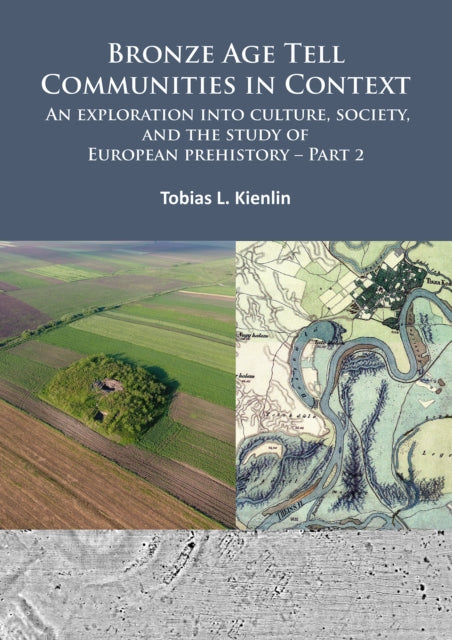
The second part of Bronze Age Tell Communities in Context: An exploration into culture, society, and the study of European prehistory explores the material remains of long-term architectural stability and references back to ancestral places, and an alternative theoretical approach that foregrounds architecture and the social use of space. Stability and change are contingent upon specific historical contexts, including traditional practices, their material setting, and human intentionality.
\n Format: Paperback / softback
\n Length: 250 pages
\n Publication date: 31 December 2020
\n Publisher: Archaeopress
\n
Practice – The Social, Space, and Materiality forms the second part of Bronze Age Tell Communities in Context: An exploration into culture, society, and the study of European prehistory. It studies Bronze Age tells and our approaches towards an understanding of this fascinating way of life, drawing on the material remains of long-term architectural stability and references back to ancestral places. While the first volume challenged Neo-Diffusionist models of the influence of Mediterranean palatial centres on the development of tell communities in the Carpathians and an attendant focus on social stratification, the second part sets out an alternative theoretical approach, which foregrounds architecture and the social use of space. Unlike the reductionist macro perspective of mainstream social modelling, inspired by aspects of practice theory outlined in this book, the account given seeks to allow for what is truly remarkable about these sites, and what we can infer from them about the way of life they once framed and enabled. The stability seen on tells, and their apparent lack of change on a macro scale, are specific features of the social field, in a given region and for a specific period of time. Both stability and change are contingent upon specific historical contexts, including traditional practices, their material setting, and human intentionality. They are not an inherent, given property of this or that ‘type of society or social structure. For our tells, it is argued here, underneath the specific manifestation of sociality maintained, we clearly do see social practices and corresponding material arrangements being negotiated and adjusted. Echoing the argument laid out in the first part of this study, it is suggested that archaeology should take an interest in such processes.
Practice – The Social, Space, and Materiality forms the second part of Bronze Age Tell Communities in Context: An exploration into culture, society, and the study of European prehistory. It studies Bronze Age tells and our approaches towards an understanding of this fascinating way of life, drawing on the material remains of long-term architectural stability and references back to ancestral places. While the first volume challenged Neo-Diffusionist models of the influence of Mediterranean palatial centres on the development of tell communities in the Carpathians and an attendant focus on social stratification, the second part sets out an alternative theoretical approach, which foregrounds architecture and the social use of space. Unlike the reductionist macro perspective of mainstream social modelling, inspired by aspects of practice theory outlined in this book, the account given seeks to allow for what is truly remarkable about these sites, and what we can infer from them about the way of life they once framed and enabled. The stability seen on tells, and their apparent lack of change on a macro scale, are specific features of the social field, in a given region and for a specific period of time. Both stability and change are contingent upon specific historical contexts, including traditional practices, their material setting, and human intentionality. They are not an inherent, given property of this or that ‘type of society or social structure. For our tells, it is argued here, underneath the specific manifestation of sociality maintained, we clearly do see social practices and corresponding material arrangements being negotiated and adjusted. Echoing the argument laid out in the first part of this study, it is suggested that archaeology should take an interest in such processes.
\n Weight: 934g\n
Dimension: 296 x 208 x 17 (mm)\n
ISBN-13: 9781789697506\n \n
UK and International shipping information
UK and International shipping information
UK Delivery and returns information:
- Delivery within 2 - 3 days when ordering in the UK.
- Shipping fee for UK customers from £2.39. Fully tracked shipping service available.
- Returns policy: Return within 30 days of receipt for full refund.
International deliveries:
Shulph Ink now ships to Australia, Belgium, Canada, France, Germany, Ireland, Italy, India, Luxembourg Saudi Arabia, Singapore, Spain, Netherlands, New Zealand, United Arab Emirates, United States of America.
- Delivery times: within 5 - 10 days for international orders.
- Shipping fee: charges vary for overseas orders. Only tracked services are available for most international orders. Some countries have untracked shipping options.
- Customs charges: If ordering to addresses outside the United Kingdom, you may or may not incur additional customs and duties fees during local delivery.