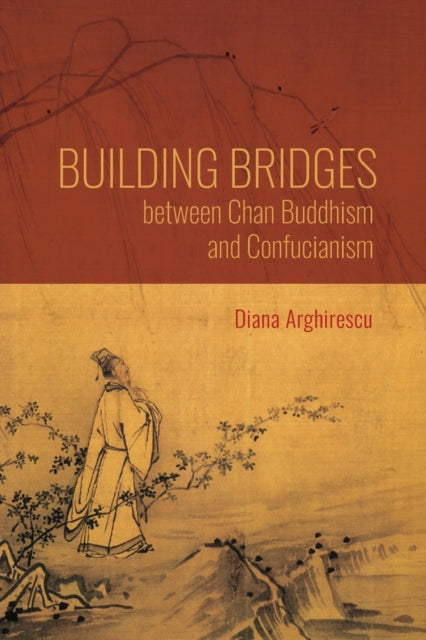
Diana Arghirescu
Building Bridges between Chan Buddhism and Confucianism: A Comparative Hermeneutics of Qisong's "Essays on Assisting the Teaching"
Building Bridges between Chan Buddhism and Confucianism: A Comparative Hermeneutics of Qisong's "Essays on Assisting the Teaching"
💎 Earn 166 Points (£1.66) on this item.
YOU SAVE £6.68
- Condition: Brand new
- UK Delivery times: Usually arrives within 2 - 3 working days
- UK Shipping: Fee starts at £2.39. Subject to product weight & dimension
Bulk ordering. Want 15 or more copies? Get a personalised quote and bigger discounts. Learn more about bulk orders.
Couldn't load pickup availability
- More about Building Bridges between Chan Buddhism and Confucianism: A Comparative Hermeneutics of Qisong's "Essays on Assisting the Teaching"
Diana Arghirescu's book explores the close connections between Buddhism and Confucianism during China's Song period, drawing on the writings of Chan monk-scholar Qisong. It reveals a Confucianized dimension of Qisong's thought and establishes a meaningful and influential intellectual and ethical bridge between the two traditions.
Format: Paperback / softback
Length: 310 pages
Publication date: 06 December 2022
Publisher: Indiana University Press
In her groundbreaking work, Diana Arghirescu delves into the intricate connections between Chan Buddhism and Confucianism during China's Song period (960–1279). Drawing upon the insightful Essays on Assisting the Teaching, penned by Chan monk-scholar Qisong (1007–1072), Arghirescu explores the profound influences between these two traditions. Qisong, in his writings, made pioneering efforts to compare the core dimensions of Confucian and Chan Buddhist thought from a philosophical standpoint, aiming to forge a meaningful and influential intellectual and ethical bridge between them. Arghirescu's meticulous analysis unveils a Confucianized dimension within Qisong's thought, demonstrating how he reinterpreted and repurposed Confucian terminology in his unique form of Chan, tailored for his contemporary Confucian readers and auditors who were unfamiliar with Buddhism. Qisong's form of eleventh-century Chan, as Arghirescu argues, stands out for its cohesive or nondual perspective on Chinese Buddhist, Confucian, and other philosophical traditions, recognizing their interdependence and shared root.
Building Bridges between Chan Buddhism and Confucianism is a groundbreaking book that pioneers the identification, examination, and expansion of a series of Confucian concepts and virtues that were specifically identified and discussed from a Buddhist perspective by a historical Buddhist writer. This work represents a significant contribution to the comparative understanding of both traditions.
In the opening chapter, Arghirescu provides a comprehensive overview of the historical context and cultural milieu during which Chan Buddhism and Confucianism flourished in China. She highlights the mutual respect and admiration that existed between these two philosophical systems and explores how they complemented and influenced each other. Arghirescu also sheds light on the challenges and complexities that arose from their interaction, particularly in the realm of religious syncretism and philosophical synthesis.
The second chapter delves into the philosophical foundations of Chan Buddhism and Confucianism. Arghirescu examines the core beliefs and principles of each tradition, highlighting their shared emphasis on ethical conduct, virtue, and the cultivation of the self. She explores how these traditions conceptualize the nature of reality, the purpose of human existence, and the means to achieve spiritual enlightenment. Arghirescu also discusses the concept of "emptiness" in Chan Buddhism, which emphasizes the interconnected and interconnected nature of all things, and how it aligns with Confucian notions of the unity of humanity and the natural world.
In the third chapter, Arghirescu examines the influence of Confucianism on Chan Buddhism. She explores how Chan monks and scholars incorporated Confucian concepts and virtues into their teachings and practices, adapting them to suit the unique philosophical and spiritual framework of Chan Buddhism. Arghirescu highlights how Confucian ideas such as filial piety, righteousness.
In the fourth chapter, Arghirescu examines the influence of Chan Buddhism on Confucianism. She explores how Chan's emphasis on mindfulness, meditation, and the cultivation of inner qualities influenced Confucian scholars and thinkers, leading to a reevaluation of their understanding of moral behavior and social harmony. Arghirescu also discusses how Chan's nondual perspective on the interconnected.
In the fifth chapter, Arghirescu examines the practical implications of building bridges between Chan Buddhism and Confucianism. She explores how these two traditions can be integrated into contemporary society to promote social justice, ethical behavior, and personal well-being. Arghirescu suggests that by recognizing the shared values and principles of these two traditions, individuals and communities can cultivate a deeper sense of interconnectedness and harmony, fostering a more peaceful and sustainable world.
In the conclusion, Arghirescu summarizes the key findings of her work and emphasizes the importance of continued research and exploration in this field. She calls for a more interdisciplinary approach that brings together scholars from different disciplines to study the intersections and interdependencies of Chan Buddhism and Confucianism, and to develop new insights and methodologies for promoting their harmonious coexistence.
Building Bridges between Chan Buddhism and Confucianism is a groundbreaking work that offers a comprehensive and insightful exploration of the close connections between these two philosophical traditions. Arghirescu's meticulous analysis and thoughtful presentation make this book an invaluable resource for scholars, students, and practitioners interested in comparative religion, philosophy, and social ethics. By highlighting the shared values and principles of Chan Buddhism and Confucianism, Arghirescu provides a valuable framework for promoting intercultural understanding and harmony in our increasingly interconnected world.
Weight: 478g
Dimension: 151 x 229 x 23 (mm)
ISBN-13: 9780253063687
This item can be found in:
UK and International shipping information
UK and International shipping information
UK Delivery and returns information:
- Delivery within 2 - 3 days when ordering in the UK.
- Shipping fee for UK customers from £2.39. Fully tracked shipping service available.
- Returns policy: Return within 30 days of receipt for full refund.
International deliveries:
Shulph Ink now ships to Australia, Belgium, Canada, France, Germany, Ireland, Italy, India, Luxembourg Saudi Arabia, Singapore, Spain, Netherlands, New Zealand, United Arab Emirates, United States of America.
- Delivery times: within 5 - 10 days for international orders.
- Shipping fee: charges vary for overseas orders. Only tracked services are available for most international orders. Some countries have untracked shipping options.
- Customs charges: If ordering to addresses outside the United Kingdom, you may or may not incur additional customs and duties fees during local delivery.