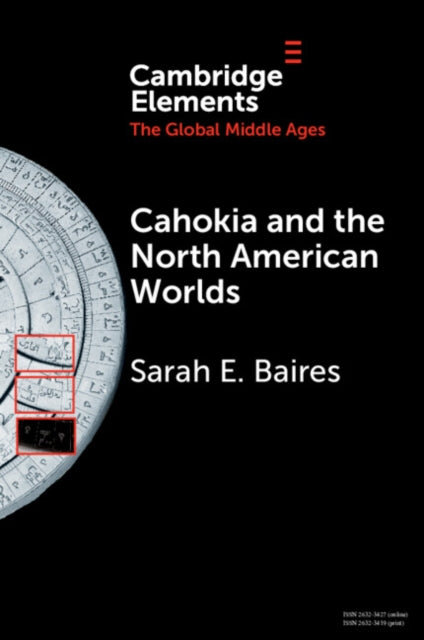
Sarah E. Baires
Cahokia and the North American Worlds
Cahokia and the North American Worlds
💎 Earn 84 Points (£0.84) on this item.
We can order this item for you. Delivery usually takes about 4 to 6 weeks.
This item is not held in our immediate stock. We will order it for you after checkout.
Estimated delivery: About 4 to 6 weeks
YOU SAVE £1.01
- Condition: Brand new
- UK Delivery times: Usually arrives within 2 - 3 working days
- UK Shipping: Fee starts at £2.39. Subject to product weight & dimension
Bulk ordering. Want 15 or more copies? Get a personalised quote and bigger discounts. Learn more about bulk orders.
Couldn't load pickup availability
- More about Cahokia and the North American Worlds
The City of Cahokia provides a unique case study of why people are drawn to a place, examining its emergence, decline, and intersection with the broader Native American world. It was a centre-place with expansive reach and cultural influence, shaped by social and political processes and reflecting the trajectory of Native American history.
Format: Paperback / softback
Length: 75 pages
Publication date: 10 March 2022
Publisher: Cambridge University Press
The City of Cahokia presents a captivating case study that delves into the allure of a place and the factors that attract people to it. This Element explores not only the rise and fall of this remarkable American city but also its intricate connection with the broader Native American world during the specified period. Cahokia was far from being an isolated enclave; rather, it stood as a vibrant landmark on the landscape, drawing individuals from far and wide for trade and religious purposes. Cahokia held a central position with a vast geographical reach and profound cultural impact. This Element examines the social and political dynamics that shaped the formation of this city while also offering insights into the trajectory of Native American history in North America.
The city of Cahokia emerged as a significant hub during the late Woodland period, approximately 1000-1400 CE. Located on the banks of the Mississippi River in present-day Illinois, Cahokia was home to a thriving Native American community. The city's population reached its peak during the 12th and 13th centuries, with an estimated 20,000-30,000 inhabitants.
Cahokia's rise to prominence can be attributed to several factors. Firstly, its strategic location on the Mississippi River facilitated trade with other Native American communities and European traders. The river provided a convenient waterway for the transportation of goods, including food, tools, and pottery. Additionally, Cahokia's proximity to the Great Lakes and the Ohio River allowed for trade with other regions, including the Midwest and the Southeast.
Secondly, Cahokia's economic and political power was evident in its architecture and infrastructure. The city was built on a grid-like plan, with streets laid out in a rectangular pattern. This layout made it easier for people to navigate and for trade to occur. The city also featured a large mound, which served as a ceremonial and political center. The mound was home to a complex of buildings, including temples, houses, and government structures.
Thirdly, Cahokia's cultural significance was evident in its art, religion, and social practices. The city was home to a diverse population of Native Americans, including the Mississippian, Mound Builder, and Woodland cultures. These cultures had their own unique traditions, languages, and customs, which were reflected in the city's art and architecture. Cahokia was also known for its religious practices, which included the worship of a pantheon of gods and goddesses. The city's temples were adorned with intricate carvings and sculptures, and the people held religious ceremonies and festivals throughout the year.
Despite its prosperity, Cahokia's decline began in the 15th century. This decline was attributed to several factors, including the arrival of European explorers and settlers, the spread of diseases, and the political instability of the region. The city's population began to dwindle, and many of its buildings were abandoned. By the 16th century, Cahokia had largely disappeared, and its ruins were forgotten for centuries.
However, Cahokia's legacy lived on. In the late 19th and early 20th centuries, archaeologists began to uncover the ruins of the city, and its significance was recognized. Today, Cahokia is a UNESCO World Heritage Site, and it is considered one of the most important archaeological sites in North America. The city's ruins provide a glimpse into the lives of the Native Americans who lived there, and they offer valuable insights into the cultural and economic practices of the time.
In conclusion, the City of Cahokia provides a unique case study that delves into the factors that attract people to a place and the reasons behind their decline. Cahokia's rise to prominence was due to its strategic location, economic and political power, cultural significance, and religious practices. Despite its decline in the 15th century, Cahokia's legacy lives on, and it continues to be a valuable resource for archaeologists and historians. The city's ruins provide a glimpse into the lives of the Native Americans who lived there, and they offer valuable insights into the cultural and economic practices of the time.
Weight: 141g
ISBN-13: 9781108928762
Edition number: New ed
UK and International shipping information
UK and International shipping information
UK Delivery and returns information:
- Delivery within 2 - 3 days when ordering in the UK.
- Shipping fee for UK customers from £2.39. Fully tracked shipping service available.
- Returns policy: Return within 30 days of receipt for full refund.
International deliveries:
Shulph Ink now ships to Australia, Belgium, Canada, France, Germany, Ireland, Italy, India, Luxembourg Saudi Arabia, Singapore, Spain, Netherlands, New Zealand, United Arab Emirates, United States of America.
- Delivery times: within 5 - 10 days for international orders.
- Shipping fee: charges vary for overseas orders. Only tracked services are available for most international orders. Some countries have untracked shipping options.
- Customs charges: If ordering to addresses outside the United Kingdom, you may or may not incur additional customs and duties fees during local delivery.