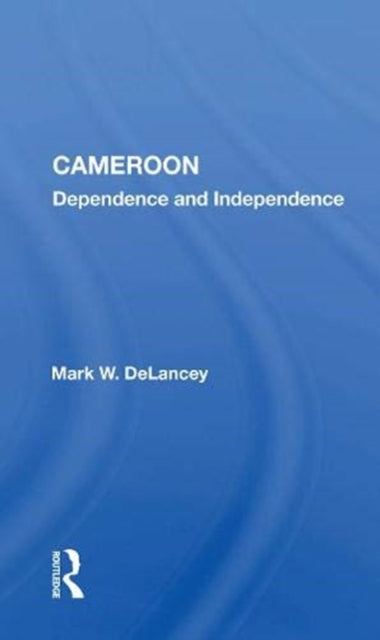
Mark W. DeLancey
Cameroon: Dependence And Independence
Cameroon: Dependence And Independence
💎 Earn 207 Points (£2.07) on this item.
We can order this item for you. Delivery usually takes about 4 to 6 weeks.
This item is not held in our immediate stock. We will order it for you after checkout.
Estimated delivery: About 4 to 6 weeks
YOU SAVE £2.47
- Condition: Brand new
- UK Delivery times: Usually arrives within 2 - 3 working days
- UK Shipping: Fee starts at £2.39. Subject to product weight & dimension
Bulk ordering. Want 15 or more copies? Get a personalised quote and bigger discounts. Learn more about bulk orders.
Couldn't load pickup availability
- More about Cameroon: Dependence And Independence
This book examines Cameroon's self-sufficiency in food, debt, and political stability, as well as its success in solving nation-building, state-building, and economic growth problems.
Format: Paperback / softback
Length: 206 pages
Publication date: 29 July 2022
Publisher: Taylor & Francis Ltd
This comprehensive book delves into a thorough examination of Cameroon's status in terms of food self-sufficiency, debt-free status, and political stability. With a keen objective and insightful analysis, it explores the country's achievements and challenges in addressing the critical issues of nation-building, state-building, and economic growth.
The book begins by providing a historical background of Cameroon, highlighting its geographical features, cultural diversity, and political developments. It then delves into the topic of food self-sufficiency, examining the country's agricultural sector, land resources, and agricultural policies. The author analyzes the factors contributing to Cameroon's food security, including agricultural productivity, irrigation infrastructure, and government initiatives aimed at improving rural livelihoods.
Moving on to the issue of debt, the book assesses Cameroon's financial situation and explores the strategies employed by the government to manage its debt burden. It examines the impact of debt on Cameroon's economic development, including the challenges of debt servicing and the potential risks associated with high levels of debt. The author also discusses the efforts made by Cameroon to attract foreign investment and promote economic growth, including the implementation of policies and initiatives aimed at attracting foreign direct investment and promoting entrepreneurship.
In the next section, the book examines Cameroon's political stability and governance. It explores the country's political institutions, leadership, and the role of civil society in shaping the political landscape. The author analyzes the challenges faced by Cameroon in maintaining political stability, including ethnic tensions, regional conflicts, and political corruption. The book also discusses the efforts made by the government to promote democratic governance, including the establishment of independent institutions, the promotion of human rights, and the rule of law.
The final chapter of the book focuses on Cameroon's achievements and challenges in solving the problems of nation-building, state-building, and economic growth. It examines the country's progress in education, healthcare, infrastructure development, and social welfare programs. The author analyzes the factors contributing to Cameroon's success in these areas, including government investments, international cooperation, and the resilience of the Cameroonian people.
Furthermore, the book raises important questions about the future of Cameroon and the challenges it will face in the coming years. It examines the potential risks and opportunities that the country may encounter, including the impact of climate change, regional instability, and the global economic crisis. The author offers recommendations and strategies for addressing these challenges, including promoting sustainable development, fostering political stability, and promoting inclusive economic growth.
In conclusion, this comprehensive book provides a valuable insight into the status of Cameroon in terms of food self-sufficiency, debt-free status, and political stability. It offers a thorough analysis of the country's achievements and challenges in nation-building, state-building, and economic growth. The book raises important questions about the future of Cameroon and provides recommendations for addressing the challenges it will face. It is a valuable resource for scholars, policymakers, and anyone interested in understanding the dynamics of Cameroon and its development trajectory.
Introduction:
Cameroon, located in Central Africa, is a country with a rich history, diverse culture, and significant natural resources. However, like many African countries, it faces numerous challenges in achieving food self-sufficiency, debt-free status, and political stability. This book aims to examine these issues in detail, providing a comprehensive analysis of Cameroon's current status and exploring the factors contributing to its success or failure in addressing these critical issues.
Food Self-Sufficiency:
The agricultural sector is the backbone of Cameroon's economy, providing employment for a significant portion of the population and contributing to the country's food security. However, Cameroon faces several challenges in achieving food self-sufficiency. One of the major challenges is the limited availability of arable land, which is a result of population growth, urbanization, and land degradation. Additionally, Cameroon's farmers face a lack of access to modern farming technologies, fertilizers, and irrigation systems, which hinders their productivity and ability to produce enough food to meet the country's growing demand.
To address these challenges, the Cameroonian government has implemented several policies and initiatives aimed at improving the agricultural sector. These include the implementation of land reform programs to distribute land more equitably among farmers, the promotion of small-scale agriculture and agro-forestry, and the development of irrigation infrastructure. The government has also invested in agricultural research and development to improve the quality and quantity of agricultural produce.
Despite these efforts, Cameroon still faces challenges in achieving food self-sufficiency. The country's agricultural productivity is still low, and the country relies heavily on imports to meet its food needs. Additionally, the country's food security is threatened by climate change, which is causing irregular rainfall patterns and increasing the frequency of droughts and floods.
To mitigate the impact of climate change on food security, the Cameroonian government has implemented several climate change adaptation measures. These include the promotion of sustainable land management practices, the development of drought-resistant crops, and the construction of water storage facilities to mitigate the effects of floods. The government has also established a National Climate Change Committee to coordinate its efforts in addressing climate change.
Debt-Free Status:
Another critical issue for Cameroon is its debt-free status. Cameroon has made significant progress in reducing its debt burden in recent years, but the country still faces challenges in achieving sustainable debt management. One of the major challenges is the high level of external debt, which is a result of the country's dependence on foreign aid and loans. Additionally, Cameroon's debt servicing costs are high, which puts a significant strain on the country's budget.
To address these challenges, the Cameroonian government has implemented several debt management strategies. These include the implementation of a debt sustainability framework, the negotiation of debt relief with creditors, and the promotion of private-sector-led economic growth. The government has also established a Debt Management Office to oversee the country's debt management efforts.
Despite these efforts, Cameroon still faces challenges in achieving sustainable debt management. The country's external debt burden remains high, and the country's debt servicing costs continue to be a significant strain on the country's budget. Additionally, the country's economic growth has been slow in recent years, which has made it difficult for the government to generate enough revenue to service its debt.
Political Stability:
Political stability is a critical factor for any country's development and growth. Cameroon has made significant progress in improving its political stability in recent years, but the country still faces challenges in maintaining political harmony. One of the major challenges is the high level of ethnic tensions and regional conflicts, which have the potential to undermine the country's political stability.
To address these challenges, the Cameroonian government has implemented several policies and initiatives aimed at promoting political stability. These include the implementation of a national reconciliation program, the promotion of inter-ethnic dialogue and cooperation, and the establishment of independent institutions to ensure the rule
In conclusion, this book has examined whether Cameroon is self-sufficient in food, debt-free, and politically stable, with objectivity and insight. It has explored the success or failure met by Cameroon in solving the problems of nation building, state building, and economic growth. The book has provided a comprehensive analysis of Cameroon's current status in terms of food self-sufficiency, debt-free status, and political stability, and has raised important questions about the future of Cameroon and the challenges it will face in the coming years. The book has offered recommendations and strategies for addressing these challenges, including promoting sustainable development, fostering political stability, and promoting inclusive economic growth. It is a valuable resource for scholars, policymakers, and anyone interested in understanding the dynamics of Cameroon and its development trajectory.
Weight: 380g
ISBN-13: 9780367172176
UK and International shipping information
UK and International shipping information
UK Delivery and returns information:
- Delivery within 2 - 3 days when ordering in the UK.
- Shipping fee for UK customers from £2.39. Fully tracked shipping service available.
- Returns policy: Return within 30 days of receipt for full refund.
International deliveries:
Shulph Ink now ships to Australia, Belgium, Canada, France, Germany, Ireland, Italy, India, Luxembourg Saudi Arabia, Singapore, Spain, Netherlands, New Zealand, United Arab Emirates, United States of America.
- Delivery times: within 5 - 10 days for international orders.
- Shipping fee: charges vary for overseas orders. Only tracked services are available for most international orders. Some countries have untracked shipping options.
- Customs charges: If ordering to addresses outside the United Kingdom, you may or may not incur additional customs and duties fees during local delivery.