Shulph Ink
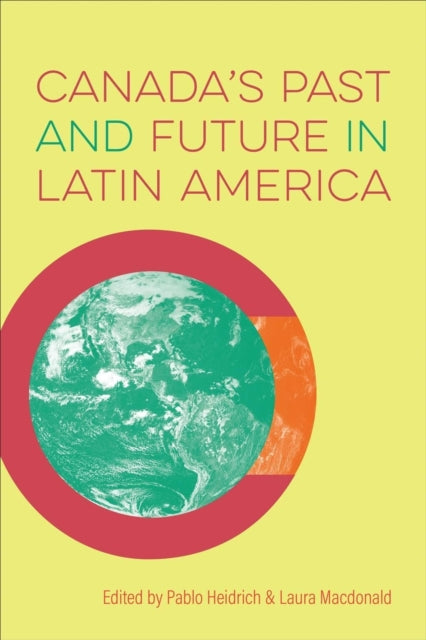
Canada's Past and Future in Latin America
Canada's Past and Future in Latin America
💎 Earn 107 Points (£1.07) on this item.
YOU SAVE £2.58
- Condition: Brand new
- UK Delivery times: Usually arrives within 2 - 3 working days
- UK Shipping: Fee starts at £2.39. Subject to product weight & dimension
Bulk ordering. Want 15 or more copies? Get a personalised quote and bigger discounts. Learn more about bulk orders.
Couldn't load pickup availability
- More about Canada's Past and Future in Latin America
Historians and political scientists argue that Canada and Latin America have had weak and intermittent ties due to lack of mutual interest and common objectives. However, Canada has attempted to expand its economic and diplomatic ties with the region, leading to questions about its imperialist power. Canadas Past and Future in Latin America examines the historical origins and recent developments in Canadian foreign policy in the region, offering insights from leading scholars on issues such as mining investment, security relations, democracy promotion, and Latin American migration to Canada. The book evaluates options for building stronger ties in the future.
Format: Paperback / softback
Length: 320 pages
Publication date: 31 May 2022
Publisher: University of Toronto Press
Historians and political scientists argue that Canada and Latin America have had weak and intermittent ties due to a lack of mutual interest and common objectives. However, has this record of diverging paths changed as Canada attempts to expand its economic and diplomatic ties with the region? Has Canada become an imperialist power?
Canadas Past and Future in Latin America delves into the historical origins and recent developments of Canadian foreign policy in the region. It provides a comprehensive evaluation of the approaches taken by the Harper and Trudeau governments, focusing on political diplomacy, bilateral development cooperation, and civil society initiatives. Leading scholars of Canada-Latin America relations offer insightful perspectives on various issues, including the impact of Canadian mining investment, security relations, democracy promotion, and the changing nature of Latin American migration to Canada.
Drawing on archival research, field interviews, and primary sources, Canadas Past and Future in Latin America enhances our understanding of Canadian engagement with the region and evaluates options for building stronger ties in the future.
The historical roots of Canada's engagement with Latin America can be traced back to the late 19th century, when the country began to expand its economic and political influence in the region. During this time, Canada established diplomatic relations with several Latin American countries, including Mexico, Brazil, and Chile. However, the relationship between Canada and Latin America has been characterized by periods of tension and divergence.
One of the key factors contributing to the weak and intermittent ties between Canada and Latin America has been the lack of mutual interest and common objectives. Historians and political scientists argue that Canada's focus on economic development and trade has often been at odds with the political and social concerns of Latin American countries. For example, Canada's mining industry has been a major source of foreign investment in the region, but it has also been criticized for its environmental and social impact on local communities.
Another factor that has contributed to the divergence of paths between Canada and Latin America is the changing nature of the region's political landscape. While many Latin American countries have experienced periods of democratic stability and economic growth, others have faced political crises, authoritarianism, and social unrest. This has created challenges for Canadian policymakers, who must navigate complex political dynamics and prioritize their interests in the region.
Despite these challenges, Canada has attempted to expand its economic and diplomatic ties with Latin America in recent years. The Harper government, in particular, prioritized relations with the region, particularly through the implementation of the Free Trade Agreement (FTA) with Mexico and the Central American Free Trade Agreement (CAFTA). These agreements have aimed to promote trade and investment between Canada and Latin American countries, but they have also been criticized for their impact on local industries and workers.
The Trudeau government has continued to prioritize relations with Latin America, but it has taken a more nuanced approach. The government has focused on promoting human rights.
security, democracy, and social development in the region, including through initiatives such as the Canada-Latin America Free Trade Agreement (CALFTA) and the Canada-Mexico Agreement. These agreements have aimed to promote trade and investment while also addressing issues such as labor rights, environmental protection, and human rights.
Despite these efforts, there are still challenges that Canada must face in its engagement with Latin America. One of the key challenges is the impact of Canadian mining investment on the region. While mining has been a major source of foreign investment in Latin America, it has also been criticized for its environmental and social impact on local communities. The government has taken steps.
steps to address these concerns, including through the implementation of environmental and social impact assessments and the promotion of sustainable development practices in the mining industry. However, there is still a need for more progress in this area, and there are concerns that Canadian mining companies may not be held accountable for their actions in the region.
Another challenge that Canada must face in its engagement with Latin America is the issue of security. The region is characterized by a range of security challenges, including drug trafficking, organized crime, and terrorism. Canada has been a key player in the global fight against these threats, including through the implementation of the Merida Initiative and the provision of humanitarian assistance to affected communities. However, there is still a need for more cooperation and coordination between Canada and Latin American countries to address these challenges effectively.
In conclusion, Canada's engagement with Latin America has been characterized by periods of tension and divergence, but there are signs that the relationship is evolving. The Harper and Trudeau governments have taken steps.
steps to expand economic and diplomatic ties with the region, focusing on promoting trade and investment, human security, democracy, and social development. However, there are still challenges that Canada must face in its engagement with Latin America, including the impact of Canadian mining investment, security relations, democracy promotion, and the changing nature of Latin American migration to Canada. By continuing to prioritize dialogue and cooperation with Latin American countries, Canada can build stronger ties and contribute to the region's economic and social development.
Weight: 400g
Dimension: 226 x 152 x 20 (mm)
ISBN-13: 9781487540432
This item can be found in:
UK and International shipping information
UK and International shipping information
UK Delivery and returns information:
- Delivery within 2 - 3 days when ordering in the UK.
- Shipping fee for UK customers from £2.39. Fully tracked shipping service available.
- Returns policy: Return within 30 days of receipt for full refund.
International deliveries:
Shulph Ink now ships to Australia, Belgium, Canada, France, Germany, Ireland, Italy, India, Luxembourg Saudi Arabia, Singapore, Spain, Netherlands, New Zealand, United Arab Emirates, United States of America.
- Delivery times: within 5 - 10 days for international orders.
- Shipping fee: charges vary for overseas orders. Only tracked services are available for most international orders. Some countries have untracked shipping options.
- Customs charges: If ordering to addresses outside the United Kingdom, you may or may not incur additional customs and duties fees during local delivery.