Shulph Ink
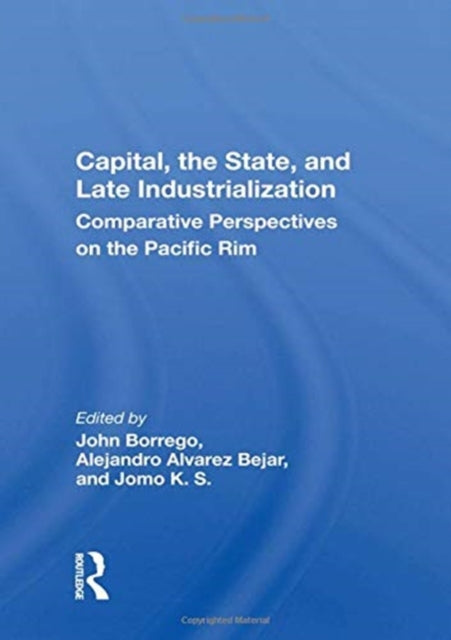
Capital, The State, And Late Industrialization: Comparative Perspectives On The Pacific Rim
Capital, The State, And Late Industrialization: Comparative Perspectives On The Pacific Rim
💎 Earn 207 Points (£2.07) on this item.
We can order this item for you. Delivery usually takes about 4 to 6 weeks.
This item is not held in our immediate stock. We will order it for you after checkout.
Estimated delivery: About 4 to 6 weeks
YOU SAVE £2.47
- Condition: Brand new
- UK Delivery times: Usually arrives within 2 - 3 working days
- UK Shipping: Fee starts at £2.39. Subject to product weight & dimension
Bulk ordering. Want 15 or more copies? Get a personalised quote and bigger discounts. Learn more about bulk orders.
Couldn't load pickup availability
- More about Capital, The State, And Late Industrialization: Comparative Perspectives On The Pacific Rim
This book explores the foundation and nature of the relationship between capitalist accumulation and the state in East Asia and Latin America, influencing industrialization and macroeconomic performance.
Format: Paperback / softback
Length: 272 pages
Publication date: 29 July 2022
Publisher: Taylor & Francis Ltd
This book delves into the intricate relationship between capitalist accumulation and the state in East Asia and Latin America, exerting a profound impact on industrialization and macroeconomic performance. It examines the historical roots, dynamics, and consequences of this relationship, shedding light on the mechanisms through which capital accumulation is shaped by state policies and institutions. The book explores the diverse ways in which states have intervened in the economy, including through fiscal policies, regulation, and social welfare programs, to promote or hinder capitalist accumulation. It also examines the impact of these interventions on economic development, inequality, and social stability.
Moreover, the book explores the interplay between state and capital in the context of global economic integration, examining how national economies are interconnected and how international institutions and trade policies shape the dynamics of capitalist accumulation. By examining this relationship in both historical and contemporary contexts, the book offers valuable insights into the complex dynamics of economic growth and transformation in East Asia and Latin America.
The historical roots of the relationship between capitalist accumulation and the state in East Asia and Latin America can be traced back to the late 19th and early 20th centuries. During this time, these regions were undergoing rapid industrialization and economic transformation, driven by the forces of globalization and the expansion of the global economy. As capital accumulation became a central feature of these economies, states began to play a more active role in shaping the economic landscape.
One of the key mechanisms through which states influenced capitalist accumulation was through fiscal policies. Governments implemented various measures to promote investment and economic growth, such as tax cuts, subsidies, and infrastructure development. These policies aimed to attract foreign capital and stimulate domestic production, which in turn led to increased employment and economic growth.
However, states also used fiscal policies to regulate capitalist accumulation and prevent economic instability. For example, governments may implement policies to control inflation, maintain a stable exchange rate, or promote labor market flexibility. These policies were designed to ensure that capitalist accumulation did not lead to excessive speculation, overproduction, or economic crises.
Another important mechanism through which states influenced capitalist accumulation was through regulation. Governments implemented various regulations to protect consumers, workers, and the environment from the negative consequences of capitalist accumulation. These regulations may include labor laws, environmental regulations, and consumer protection laws.
Furthermore, states also played a role in promoting social welfare programs to address the needs of marginalized communities and promote social stability. These programs may include education, healthcare, and social security programs. By providing these services, states aimed to reduce inequality and ensure that all members of society had access to basic needs.
The relationship between capitalist accumulation and the state in East Asia and Latin America has had a profound impact on economic development, inequality, and social stability. While states have used various mechanisms to promote capitalist accumulation, they have also been responsible for addressing the negative consequences of this process.
One of the most significant impacts of this relationship has been on economic development. Capitalist accumulation has led to increased productivity, innovation, and economic growth in these regions. However, it has also led to increased inequality, with a small percentage of the population controlling a disproportionate amount of wealth and resources.
Furthermore, capitalist accumulation has also contributed to environmental degradation and social unrest. The pursuit of profit has often led to the exploitation of natural resources and the neglect of social and environmental concerns. This has led to environmental crises, such as air pollution and climate change, and social unrest, such as labor strikes and protests.
To address these challenges, states have implemented various policies to promote sustainable development and address inequality. For example, governments may implement policies to promote renewable energy, reduce carbon emissions, and invest in social infrastructure. They may also implement policies to promote labor market flexibility, increase access to education and healthcare, and reduce income inequality.
In conclusion, this book explores the foundation and nature of the relationship between capitalist accumulation and the state in East Asia and Latin America, exerting a profound impact on industrialization and macroeconomic performance. It examines the historical roots, dynamics, and consequences of this relationship, shedding light on the mechanisms through which capital accumulation is shaped by state policies and institutions. The book offers valuable insights into the complex dynamics of economic growth and transformation in East Asia and Latin America, and highlights the need for states to implement policies that promote sustainable development and address inequality.
Weight: 500g
ISBN-13: 9780367160241
UK and International shipping information
UK and International shipping information
UK Delivery and returns information:
- Delivery within 2 - 3 days when ordering in the UK.
- Shipping fee for UK customers from £2.39. Fully tracked shipping service available.
- Returns policy: Return within 30 days of receipt for full refund.
International deliveries:
Shulph Ink now ships to Australia, Belgium, Canada, France, Germany, Ireland, Italy, India, Luxembourg Saudi Arabia, Singapore, Spain, Netherlands, New Zealand, United Arab Emirates, United States of America.
- Delivery times: within 5 - 10 days for international orders.
- Shipping fee: charges vary for overseas orders. Only tracked services are available for most international orders. Some countries have untracked shipping options.
- Customs charges: If ordering to addresses outside the United Kingdom, you may or may not incur additional customs and duties fees during local delivery.