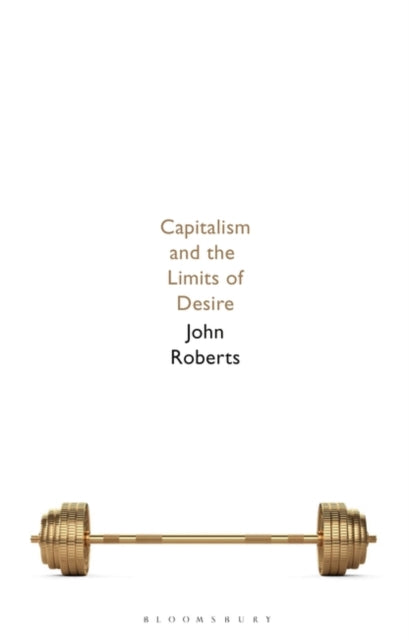
JohnRoberts
Capitalism and the Limits of Desire
Capitalism and the Limits of Desire
💎 Earn 103 Points (£1.03) on this item.
YOU SAVE £4.35
- Condition: Brand new
- UK Delivery times: Usually arrives within 2 - 3 working days
- UK Shipping: Fee starts at £2.39. Subject to product weight & dimension
Bulk ordering. Want 15 or more copies? Get a personalised quote and bigger discounts. Learn more about bulk orders.
Couldn't load pickup availability
- More about Capitalism and the Limits of Desire
Capitalism and the Limits of Desire explores why the masses fight for their servitude as if it were salvation. John Roberts argues that we love the love of self that capitalism enables, making it difficult to imagine ourselves outside of it. He suggests that disentangling ourselves from this collapsing of self into capitalism is possible and that understanding the insidious nature of capitalist thinking is the starting point. Roberts uses early and late Marx, Lacans distinction between pleasure and desire, and the recent debate on perfectionism to lay out a way for individuals to move forward and forge a link between self and desire outside the oppressive demands of platform capitalism.
\n Format: Paperback / softback
\n Length: 264 pages
\n Publication date: 09 September 2021
\n Publisher: Bloomsbury Publishing PLC
\n
Capitalism and the Limits of Desire delves into the intricate relationship between self-love and the pursuit of pleasure, raising a perennial question: why do the masses fight for their servitude as if it were salvation? In the face of ongoing austerity and misery for many, the seemingly insurmountable nature of capitalism becomes a pressing concern. John Roberts offers a compelling explanation for this phenomenon: it is because we cherish the love of self that capitalism thrives, even though it brings forth anxiety and self-scrutiny. Capitalism, in the form of commodities and the online platforms through which we express ourselves, has become so integral to our identity that envisioning a life outside of it seems impossible.
Roberts argues that it is possible to disentangle ourselves from this collapsing of self into capitalism and that understanding the insidious nature of capitalist thinking, even in our deepest pleasures, is the key to forging a link between self and desire outside the oppressive demands of platform capitalism. Drawing upon early and late Marx, Lacan's distinction between pleasure and desire, and the recent debate on perfectionism (Hurka), Roberts provides a roadmap for individuals to navigate this complex terrain and reclaim their autonomy.
In the era of platform capitalism, where the boundaries between personal and commercial interests are blurred, individuals are subjected to relentless marketing and advertising that perpetuates the notion of endless consumption. Roberts cautions against falling prey to this trap, recognizing that the pursuit of pleasure alone is not sufficient for true fulfillment. Instead, he advocates for a shift towards a more nuanced understanding of desire, where self-love and the care of the self are intertwined with the pursuit of meaningful relationships, social justice, and environmental sustainability.
Roberts encourages individuals to cultivate a sense of self-awareness and mindfulness, recognizing the ways in which capitalist thinking shapes our desires and expectations. By questioning the societal norms and pressures that perpetuate consumerism, we can break free from the cycle of endless desire and find solace in more authentic forms of self-expression and fulfillment.
Furthermore, Roberts suggests that we should embrace the complexities and contradictions of human nature rather than seeking to eliminate them. He advocates for a more nuanced approach to desire, where we can find pleasure in both material possessions and meaningful experiences, and where we can balance our individual desires with the collective well-being of society.
In conclusion, Capitalism and the Limits of Desire offers a thought-provoking exploration of the relationship between self-love and the pursuit of pleasure in the context of capitalism. By challenging the dominant narrative and advocating for a more nuanced understanding of desire, Roberts provides a roadmap for individuals to reclaim their autonomy and forge a link between self and desire outside the oppressive demands of platform capitalism.
\n Weight: 338g\n
Dimension: 139 x 217 x 19 (mm)\n
ISBN-13: 9781350214958\n \n
This item can be found in:
UK and International shipping information
UK and International shipping information
UK Delivery and returns information:
- Delivery within 2 - 3 days when ordering in the UK.
- Shipping fee for UK customers from £2.39. Fully tracked shipping service available.
- Returns policy: Return within 30 days of receipt for full refund.
International deliveries:
Shulph Ink now ships to Australia, Belgium, Canada, France, Germany, Ireland, Italy, India, Luxembourg Saudi Arabia, Singapore, Spain, Netherlands, New Zealand, United Arab Emirates, United States of America.
- Delivery times: within 5 - 10 days for international orders.
- Shipping fee: charges vary for overseas orders. Only tracked services are available for most international orders. Some countries have untracked shipping options.
- Customs charges: If ordering to addresses outside the United Kingdom, you may or may not incur additional customs and duties fees during local delivery.