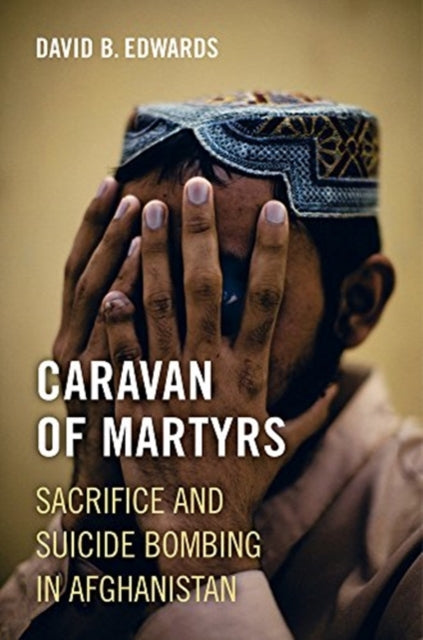
David B. Edwards
Caravan of Martyrs: Sacrifice and Suicide Bombing in Afghanistan
Caravan of Martyrs: Sacrifice and Suicide Bombing in Afghanistan
💎 Earn 101 Points (£1.01) on this item.
YOU SAVE £4.77
- Condition: Brand new
- UK Delivery times: Usually arrives within 2 - 3 working days
- UK Shipping: Fee starts at £2.39. Subject to product weight & dimension
Bulk ordering. Want 15 or more copies? Get a personalised quote and bigger discounts. Learn more about bulk orders.
Couldn't load pickup availability
- More about Caravan of Martyrs: Sacrifice and Suicide Bombing in Afghanistan
The rise of suicide bombing is linked to the cultural beliefs and ritual practices of sacrifice, according to David Edwards' book Caravan of Martyrs. He argues that political leaders exploited a cult of martyrs created by Afghan jihadis, leading to the transnational scattering of suicide bombers. Edwards traces the transformation of sacrifice using a wide range of sources, including early poetry of jihad, martyr magazines, school primers, legal handbooks, martyr hagiographies, videos produced by suicide bombers, and Facebook posts.
Format: Paperback / softback
Length: 296 pages
Publication date: 02 April 2019
Publisher: University of California Press
The motivation behind a person who willingly straps a vest laden with explosives onto their body and detonates it in a crowded street is a complex and multifaceted issue that has been the subject of extensive scholarly inquiry. Scholars have approached this question from various angles, including examining the pathology of the "terrorist mind" or the "brainwashing" practices employed by terrorist organizations. In his book, Caravan of Martyrs, David Edwards argues that understanding the rise of suicide bombing requires us to delve into the cultural beliefs and ritual practices associated with sacrifice.
Before the war in Afghanistan commenced, the sacrificial killing of a sheep served as a symbol of a tribe's longing for peace. However, the aftermath of the Soviet invasion in 1979 brought about a significant shift in the meaning of sacrifice. Thousands of lives were lost, and the deceased were revered as martyrs. This informal conferring of status on the casualties of war soon evolved into a cult of martyrs, which was subsequently exploited by political leaders for their own gain. This initial repurposing of the machinery of sacrifice set in motion a transformative process that led to the hijacking of airplanes by nineteen Arabs trained in Afghanistan on September 11, ultimately transforming what began as a small group of Afghan jihadis' cult into the transnational phenomenon of suicide bombers that we encounter today.
Edwards' book is a comprehensive exploration of the transformation of sacrifice, drawing on a wide range of sources. These include early poetry of jihad, illustrated martyr magazines, school primers, legal handbooks, martyr hagiographies, videos produced by suicide bombers, the manual of ritual instructions used by the 9/11 hijackers, and Facebook posts by contemporary "Talifans" who promote the virtues of self-destruction. By meticulously analyzing these diverse sources, Edwards provides a detailed account of how sacrifice has evolved over time and how it has been repurposed by different groups and individuals.
One of the key insights that Edwards offers is the connection between sacrifice and the construction of identity. He argues that sacrifice plays a crucial role in shaping the identity of individuals and communities, particularly in times of conflict. By engaging in acts of sacrifice, individuals and groups can assert their allegiance to a particular cause, demonstrate their commitment to a higher power, and seek to gain recognition and respect from others. However, the exploitation of sacrifice by political leaders can also lead to the distortion and perversion of its original meaning.
Edwards' book also sheds light on the role of religion in the perpetuation of sacrifice. He notes that religious beliefs and practices often provide a framework for individuals to justify acts of violence and self-sacrifice. For example, some religious traditions may promote the idea of martyrdom, in which individuals are willing to die for their faith. However, the use of martyrdom as a tool of political manipulation can lead to the exploitation and abuse of innocent people.
Furthermore, Edwards explores the psychological factors that drive individuals to engage in acts of suicide bombing. He argues that the desire for revenge, the quest for social recognition, and the belief in a just cause can all contribute to the willingness to sacrifice oneself for a greater purpose. However, the psychological toll of such acts can be severe, with many suicide bombers experiencing feelings of isolation, guilt, and trauma.
In conclusion, the motivation behind a person who straps a vest laden with explosives onto their body and detonates it in a crowded street is a complex and multifaceted issue that requires a comprehensive understanding of cultural beliefs, ritual practices, and psychological factors. By examining the various sources cited in Edwards' book, we can gain a deeper insight into the origins and evolution of the cult of martyrs and the transnational scattering of suicide bombers that haunts our world today.
Weight: 370g
Dimension: 142 x 220 x 15 (mm)
ISBN-13: 9780520303461
This item can be found in:
UK and International shipping information
UK and International shipping information
UK Delivery and returns information:
- Delivery within 2 - 3 days when ordering in the UK.
- Shipping fee for UK customers from £2.39. Fully tracked shipping service available.
- Returns policy: Return within 30 days of receipt for full refund.
International deliveries:
Shulph Ink now ships to Australia, Belgium, Canada, France, Germany, Ireland, Italy, India, Luxembourg Saudi Arabia, Singapore, Spain, Netherlands, New Zealand, United Arab Emirates, United States of America.
- Delivery times: within 5 - 10 days for international orders.
- Shipping fee: charges vary for overseas orders. Only tracked services are available for most international orders. Some countries have untracked shipping options.
- Customs charges: If ordering to addresses outside the United Kingdom, you may or may not incur additional customs and duties fees during local delivery.