Shulph Ink
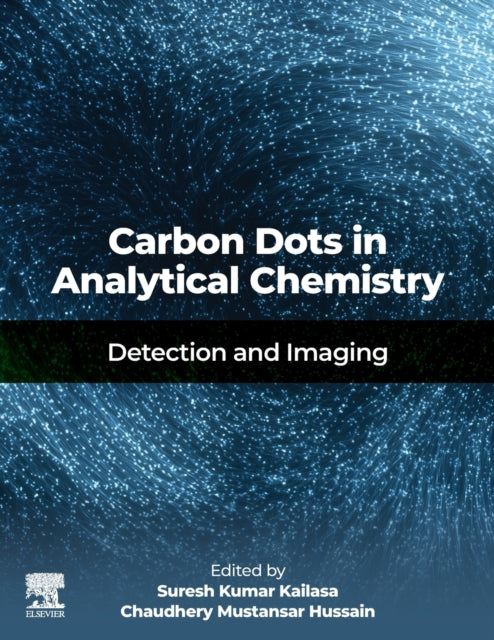
Carbon Dots in Analytical Chemistry: Detection and Imaging
Carbon Dots in Analytical Chemistry: Detection and Imaging
💎 Earn 680 Points (£6.80) on this item.
YOU SAVE £18.99
- Condition: Brand new
- UK Delivery times: Usually arrives within 2 - 3 working days
- UK Shipping: Fee starts at £2.39. Subject to product weight & dimension
Bulk ordering. Want 15 or more copies? Get a personalised quote and bigger discounts. Learn more about bulk orders.
Couldn't load pickup availability
- More about Carbon Dots in Analytical Chemistry: Detection and Imaging
Carbon Dots in Analytical Chemistry: Detection and Imaging highlights the synthesis, properties, and applications of carbon dots in analytical chemistry, including clinical microbiology, pharmaceutical analysis, and environmental analysis. It covers synthetic approaches, sample preparation, analytical techniques, and biomedical and food analysis.
Format: Paperback / softback
Length: 364 pages
Publication date: 02 September 2022
Publisher: Elsevier - Health Sciences Division
Carbon Dots in Analytical Chemistry: Detection and Imaging delves into the recent advancements in the synthesis and properties of carbon dots, as well as their integration with various miniaturized analytical devices for the detection of chemical species and imaging of cells. This comprehensive book is dedicated to exploring the vast potential applications of carbon dots in analytical chemistry for clinical microbiology, pharmaceutical analysis, and environmental analysis.
The book is organized into several sections, covering synthetic approaches and properties, sample preparation, analytical techniques for the detection of chemical species, imaging of molecules and cells, and analytical tools for biomedical and food analysis. Each section provides in-depth insights into the key aspects of carbon dots and their applications, making it a valuable resource for analytical and materials scientists, physical and chemical scientists, and engineers interested in utilizing carbon nanomaterials in their analytical procedures.
Carbon dots, also known as carbon nanodots, are tiny particles with a diameter ranging from a few nanometers to a few micrometers. They possess unique properties such as high brightness, excellent photostability, and a wide absorption spectrum, making them highly suitable for various analytical applications. One of the key advantages of carbon dots is their ability to selectively bind to specific chemical species, making them highly sensitive and selective detectors.
In the field of clinical microbiology, carbon dots have shown promising results in the detection and identification of bacteria, viruses, and other microorganisms. By conjugating carbon dots with specific antibodies or ligands, they can be used to label and visualize these organisms, allowing for rapid and accurate identification in clinical samples. This has significant implications in the diagnosis and treatment of infectious diseases.
In pharmaceutical analysis, carbon dots can be used as fluorescent probes to detect and quantify various pharmaceutical compounds and biological molecules. They offer high sensitivity, selectivity, and reproducibility, making them valuable tools in drug discovery, quality control, and drug metabolism studies. Carbon dots can also be used to label and track pharmaceutical products throughout the supply chain, ensuring the safety and efficacy of medicines.
In environmental analysis, carbon dots have been used to detect and quantify pollutants, such as heavy metals, pesticides, and organic compounds. They offer a non-destructive and sensitive approach to monitoring environmental quality, allowing for early detection of pollution and the implementation of effective mitigation measures.
Furthermore, carbon dots have potential applications in imaging of cells and tissues. By conjugating carbon dots with specific biomolecules or antibodies, they can be used to label and visualize cells, providing insights into their structure, function, and interactions within tissues. This has significant implications in medical research, drug development, and disease diagnosis.
In conclusion, Carbon Dots in Analytical Chemistry: Detection and Imaging is a comprehensive and authoritative book that provides a deep understanding of the synthesis, properties, and applications of carbon dots in analytical chemistry. It is a valuable resource for researchers, scientists, and engineers interested in utilizing carbon nanomaterials in their analytical procedures. With its extensive coverage of topics and practical insights, this book will undoubtedly contribute to the further development of carbon dots as a promising tool in various analytical fields.
Weight: 450g
Dimension: 229 x 152 (mm)
ISBN-13: 9780323983501
This item can be found in:
UK and International shipping information
UK and International shipping information
UK Delivery and returns information:
- Delivery within 2 - 3 days when ordering in the UK.
- Shipping fee for UK customers from £2.39. Fully tracked shipping service available.
- Returns policy: Return within 30 days of receipt for full refund.
International deliveries:
Shulph Ink now ships to Australia, Belgium, Canada, France, Germany, Ireland, Italy, India, Luxembourg Saudi Arabia, Singapore, Spain, Netherlands, New Zealand, United Arab Emirates, United States of America.
- Delivery times: within 5 - 10 days for international orders.
- Shipping fee: charges vary for overseas orders. Only tracked services are available for most international orders. Some countries have untracked shipping options.
- Customs charges: If ordering to addresses outside the United Kingdom, you may or may not incur additional customs and duties fees during local delivery.