Shulph Ink
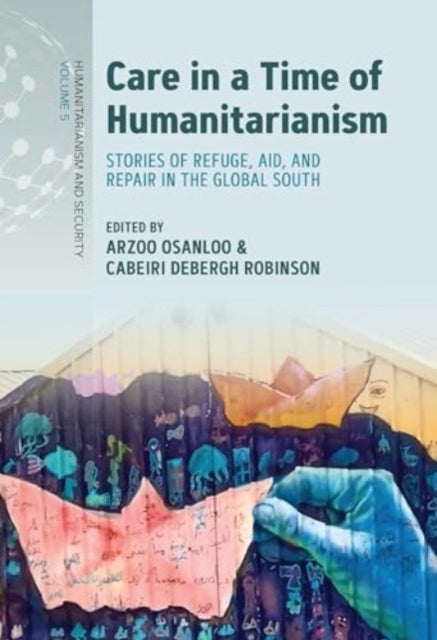
Care in a Time of Humanitarianism: Stories of Refuge, Aid, and Repair in the Global South
Care in a Time of Humanitarianism: Stories of Refuge, Aid, and Repair in the Global South
💎 Earn 68 Points (£0.68) on this item.
YOU SAVE £2.21
- Condition: Brand new
- UK Delivery times: Usually arrives within 2 - 3 working days
- UK Shipping: Fee starts at £2.39. Subject to product weight & dimension
Bulk ordering. Want 15 or more copies? Get a personalised quote and bigger discounts. Learn more about bulk orders.
Couldn't load pickup availability
- More about Care in a Time of Humanitarianism: Stories of Refuge, Aid, and Repair in the Global South
Forced migrants and refugees seek shelter and respite in countries of the Global South, where humanitarian spaces and practices of care are part of a project founded on hybrid forms of care that include local and vernacular practices. Care in a Time of Humanitarianism presents complex histories of forced migration and humanitarianism in an accessible way, applying a comparative approach to highlight the diverse cultural and religious traditions of care adopted across the Global South for the "distant others."
Format: Paperback / softback
Length: 358 pages
Publication date: 01 August 2024
Publisher: Berghahn Books
Forced migrants and refugees often find shelter and respite in countries of the Global South, where humanitarian spaces and practices of care are integral to international humanitarianism. These spaces and practices are not mere extensions of international humanitarianism but rather part of a project that embraces hybrid forms of care that include local and vernacular practices. "Care in a Time of Humanitarianism" offers a comprehensive exploration of the complex histories of forced migration and humanitarianism, presenting them in a manner that is accessible to a wide audience. By employing a comparative approach, the book highlights the diverse cultural and religious traditions of care that are adopted across the Global South for the "distant others."
The book begins by tracing the origins of humanitarianism in the late 19th and early 20th centuries, when the international community began to recognize the plight of refugees and displaced persons. It then examines the various forms of humanitarianism that have emerged since then, including the development of international organizations, the provision of aid and assistance, and the establishment of refugee camps.
One of the key themes of the book is the impact of humanitarianism on the lives of forced migrants and refugees. The authors argue that humanitarianism has often been driven by a sense of moral obligation and a desire to help those in need, but that it has also had negative consequences. For example, humanitarianism has been used to justify the exploitation of refugees and to prevent them from returning to their homes. It has also been used to promote a particular political agenda, such as the promotion of Western values and the suppression of local cultures.
To address these negative consequences, the authors propose a new approach to humanitarianism that is based on a more holistic and inclusive understanding of care. They argue that care should be seen as a fundamental human right that should be available to all individuals, regardless of their nationality, ethnicity, or religion. They also argue that care should be provided in a way that is respectful of the cultural and religious traditions of the individuals receiving care.
One of the ways that the book explores the impact of humanitarianism on the lives of forced migrants and refugees is through the case studies of several individuals and communities. These case studies include the experiences of refugees from Syria, Iraq, and Afghanistan, as well as the experiences of migrants from Central America and Africa. The authors use these case studies to illustrate the different ways that humanitarianism has been implemented and the different effects that it has had on the individuals and communities involved.
One of the key findings of the book is that humanitarianism has often been implemented in a top-down manner, with international organizations and governments making decisions about the provision of aid and assistance without consulting the individuals and communities involved. This has led to a lack of accountability and a lack of respect for the cultural and religious traditions of the individuals receiving care.
To address this problem, the authors propose a more decentralized and participatory approach to humanitarianism. They argue that individuals and communities should be involved in the decision-making process about the provision of aid and assistance, and that they should have a say in the design and implementation of the programs that are being implemented.
Another key finding of the book is that humanitarianism has often been driven by a sense of urgency and a desire to respond to crises as quickly as possible. This has led to a focus on short-term solutions and a neglect of long-term solutions. The authors argue that this approach is not sustainable and that it can lead to further harm to the individuals and communities involved.
To address this problem, the authors propose a more long-term and sustainable approach to humanitarianism. They argue that humanitarianism should be focused on building resilience and capacity in communities, rather than just providing short-term relief. This can be done by investing in education, healthcare, and infrastructure, as well as by promoting social and economic development.
In addition to its exploration of the impact of humanitarianism on the lives of forced migrants and refugees, "Care in a Time of Humanitarianism" also offers a critical analysis of the role of the media in humanitarianism. The authors argue that the media has often been used to sensationalize the plight of refugees and to promote a particular political agenda. They argue that the media should be used to provide accurate and unbiased information about the situation in the Global South, and that it should be used to promote empathy and understanding between different groups.
To address this problem, the authors propose a more ethical and responsible approach to the media. They argue that the media should be held accountable for the information that it publishes, and that it should be required to provide accurate and unbiased information about the situation in the Global South. They also argue that the media should be used to promote empathy and understanding between different groups, rather than to promote a particular political agenda.
In conclusion, "Care in a Time of Humanitarianism" offers a comprehensive exploration of the complex histories of forced migration and humanitarianism, presenting them in a manner that is accessible to a wide audience. By employing a comparative approach, the book highlights the diverse cultural and religious traditions of care that are adopted across the Global South for the "distant others." The book also offers a critical analysis of the role of the media in humanitarianism, and proposes a more ethical and responsible approach to the media. By implementing these recommendations, we can work towards a more just and equitable world for all individuals, regardless of their nationality, ethnicity, or religion.
Weight: 490g
Dimension: 151 x 229 x 21 (mm)
ISBN-13: 9781805394914
This item can be found in:
UK and International shipping information
UK and International shipping information
UK Delivery and returns information:
- Delivery within 2 - 3 days when ordering in the UK.
- Shipping fee for UK customers from £2.39. Fully tracked shipping service available.
- Returns policy: Return within 30 days of receipt for full refund.
International deliveries:
Shulph Ink now ships to Australia, Belgium, Canada, France, Germany, Ireland, Italy, India, Luxembourg Saudi Arabia, Singapore, Spain, Netherlands, New Zealand, United Arab Emirates, United States of America.
- Delivery times: within 5 - 10 days for international orders.
- Shipping fee: charges vary for overseas orders. Only tracked services are available for most international orders. Some countries have untracked shipping options.
- Customs charges: If ordering to addresses outside the United Kingdom, you may or may not incur additional customs and duties fees during local delivery.