Katharina N. Piechocki
Cartographic Humanism: The Making of Early Modern Europe
Cartographic Humanism: The Making of Early Modern Europe
💎 Earn 146 Points (£1.46) on this item.
YOU SAVE £1.74
- Condition: Brand new
- UK Delivery times: Usually arrives within 2 - 3 working days
- UK Shipping: Fee starts at £3.89. Subject to product weight & dimension
Bulk ordering. Want 15 or more copies? Get a personalised quote and bigger discounts. Learn more about bulk orders.
Couldn't load pickup availability
- More about Cartographic Humanism: The Making of Early Modern Europe
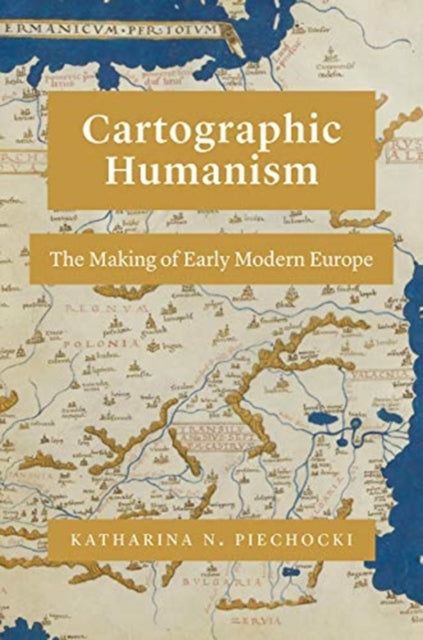
In the 15th and 16th centuries, the term "Europe" began to circulate widely, but Katharina N. Piechocki's book "Cartographic Humanism" argues that the continent itself was only in the making during this time. Cartography was used to shape and promote an image of Europe that was unparalleled in previous centuries, engaging with poets, historians, and mapmakers to resist easy categorization and scrutinize Europe as an unexamined category.
Format: Paperback / softback
Length: 304 pages
Publication date: 13 September 2021
Publisher: The University of Chicago Press
In the Renaissance, the term "Europe" gained widespread circulation, but as Katharina N. Piechocki argues in her compelling book, the continent itself was only truly coming into existence in the fifteenth and sixteenth centuries. Cartographic Humanism offers a fresh perspective on how humanists negotiated and defined the boundaries of Europe during a pivotal period in its formation: when a new imagining of Europe was propelled by the rise of cartography. As Piechocki demonstrates, this tool of geography, philosophy, and philology was not only used to represent but also to shape and promote an image of Europe that was unparalleled in previous centuries. Engaging with poets, historians, and mapmakers, Piechocki resists the temptation to categorize the continent, scrutinizing Europe as an unexamined category that demands a much more careful and nuanced investigation than scholars of early modernity have hitherto undertaken. Unprecedented in its geographic scope, Cartographic Humanism is the first book to chart new itineraries across Europe, bringing France, Germany, Italy, Poland, and Portugal into a lively and interdisciplinary dialogue.
In the Renaissance, the term "Europe" gained widespread circulation, but as Katharina N. Piechocki argues in her compelling book, the continent itself was only truly coming into existence in the fifteenth and sixteenth centuries. Cartographic Humanism offers a fresh perspective on how humanists negotiated and defined the boundaries of Europe during a pivotal period in its formation: when a new imagining of Europe was propelled by the rise of cartography. As Piechocki demonstrates, this tool of geography, philosophy, and philology was not only used to represent but also to shape and promote an image of Europe that was unparalleled in previous centuries. Engaging with poets, historians, and mapmakers, Piechocki resists the temptation to categorize the continent, scrutinizing Europe as an unexamined category that demands a much more careful and nuanced investigation than scholars of early modernity have hitherto undertaken. Unprecedented in its geographic scope, Cartographic Humanism is the first book to chart new itineraries across Europe, bringing France, Germany, Italy, Poland, and Portugal into a lively and interdisciplinary dialogue.
Weight: 494g
Dimension: 152 x 229 x 24 (mm)
ISBN-13: 9780226816814
UK and International shipping information
UK and International shipping information
We deliver throughout the United Kingdom and to 128 countries and territories worldwide, including the United States, Australia, Canada, Germany, Spain and France.