Shulph Ink
Cases of Teachers' Data Use
Cases of Teachers' Data Use
💎 Earn 235 Points (£2.35) on this item.
We can order this item for you. Delivery usually takes about 4 to 6 weeks.
This item is not held in our immediate stock. We will order it for you after checkout.
Estimated delivery: About 4 to 6 weeks
YOU SAVE £2.80
- Condition: Brand new
- UK Delivery times: Usually arrives within 2 - 3 working days
- UK Shipping: Fee starts at £3.89. Subject to product weight & dimension
Bulk ordering. Want 15 or more copies? Get a personalised quote and bigger discounts. Learn more about bulk orders.
Couldn't load pickup availability
- More about Cases of Teachers' Data Use
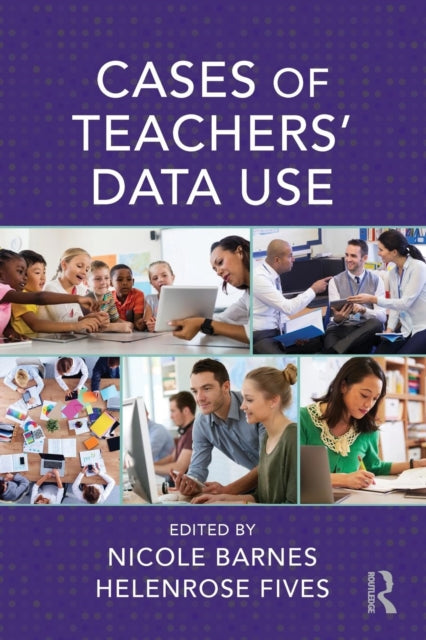
Cases of Teachers Data Use provides practical case studies of teachers data use in instruction, evaluation, and planning, offering strategies and routines for sound data use. It is a valuable resource for researchers, students, and professionals interested in classroom assessment and adaptive instruction.
Format: Paperback / softback
Length: 198 pages
Publication date: 13 April 2018
Publisher: Taylor & Francis Ltd
The book "Cases of Teachers Data Use" delves into the practical applications of student data beyond theoretical examinations, focusing on real-world case studies of teachers' data utilization in education. In the context of data-driven education reform policies, the authors explore the effective and ineffective strategies employed by teachers when it comes to using student data for instruction, evaluation, and planning. Through empirical research, the book presents promising practices and strategies for sound data use that can be implemented in schools. Chapters authored by scholars from diverse methodological backgrounds provide readers with multiple lenses to examine issues related to data use, challenging existing theoretical assumptions and advancing the field. This comprehensive yet focused work serves as a valuable resource for researchers, students, and professionals interested in classroom assessment and supporting teachers in utilizing student performance data for adaptive instruction.
Introduction:
The use of student data has become increasingly important in education, as policymakers and educators seek to improve student outcomes and personalize learning experiences. However, the effective and ethical use of student data is a complex issue that requires careful consideration. This book aims to provide a comprehensive examination of the cases of teachers' data use, exploring the effective and ineffective strategies employed by educators in their efforts to leverage student data for instructional purposes.
Chapter 1:
In the first chapter, the authors provide an overview of the current landscape of teacher data use, including the legal and ethical considerations surrounding student data collection and use. They discuss the importance of transparency, consent, and privacy in data use and the potential risks and benefits associated with data-driven decision-making. The chapter also highlights the need for teachers to have access to high-quality data and the importance of data literacy and data analysis skills in order to make informed decisions about instruction.
Chapter 2:
The second chapter focuses on the effective use of student data in instruction. The authors present case studies of teachers who have successfully integrated student data into their teaching practices, using data to identify areas of strength and weakness, tailor instruction to individual student needs, and monitor student progress. The chapter also discusses the challenges associated with using student data, such as the need for reliable data systems, the potential for bias in data analysis, and the challenges of interpreting and applying data to classroom practice.
Chapter 3:
In the third chapter, the authors explore the use of student data in evaluation and assessment. They present case studies of teachers who have used student data to evaluate student performance, identify areas for improvement, and develop personalized assessment strategies. The chapter also discusses the challenges associated with evaluating student data, such as the need for valid and reliable measures, the potential for bias in assessment, and the challenges of interpreting and applying data to instructional decisions.
Chapter 4:
The fourth chapter focuses on the use of student data in planning and goal setting. The authors present case studies of teachers who have used student data to develop effective instructional plans, set goals for student achievement, and monitor progress toward. The chapter also discusses the challenges associated with planning and setting goals using student data, such as the need for data-driven decision-making, the potential for over-reliance on standardized tests, and the challenges of interpreting and applying data to instructional decisions.
Conclusion:
In conclusion, this book provides a valuable resource for researchers, educators, and policymakers interested in understanding the cases of teachers' data use. By presenting real-world case studies of teachers' data utilization in education, the book offers practical insights and strategies for effective and ethical data use in teaching and learning. The authors emphasize the importance of transparency, consent, and privacy in data use and the need for teachers to have access to high-quality data and the skills necessary to make informed decisions about instruction. The book also highlights the potential benefits of data-driven decision-making, such as improved student outcomes and personalized learning experiences. However, the book also raises important concerns about the risks and challenges associated with data use, such as the potential for bias, the need for reliable data systems, and the challenges of interpreting and applying data to classroom practice. By addressing these issues, the book provides a roadmap
practical insights and strategies for effective and ethical data use in teaching and learning. The authors emphasize the importance of transparency, consent, and privacy in data use and the need for teachers to have access to high-quality data and the skills necessary to make informed decisions about instruction. The book also highlights the potential benefits of data-driven decision-making, such as improved student outcomes and personalized learning experiences. However, the book also raises important concerns about the risks and challenges associated with data use, such as the potential for bias, the need for reliable data systems, and the challenges of interpreting and applying data to classroom practice. By addressing these issues, the book provides a valuable resource for researchers, educators, and policymakers interested in understanding the cases of teachers' data use. By presenting real-world case studies of teachers' data utilization in education, the book offers practical insights and strategies for effective and ethical data use in teaching and learning. The authors emphasize the importance of transparency, consent, and privacy in data use and the need for teachers to have access to high-quality data and the skills necessary to make informed decisions about instruction. The book also highlights the potential benefits of data-driven decision-making, such as improved student outcomes and personalized learning experiences. However, the book also raises important concerns about the risks and challenges associated with data use, such as the potential for bias, the need for reliable data systems, and the challenges of interpreting and applying data to classroom practice. By addressing these issues, the book provides a valuable resource for researchers, educators, and policymakers interested in understanding the cases of teachers' data use. By presenting real-world case studies of teachers' data utilization in education, the book offers practical insights and strategies for effective and ethical data use in teaching and learning. The authors emphasize the importance of transparency, consent, and privacy in data use and the need for teachers to have access to high-quality data and the skills necessary to make informed decisions about instruction. The book also highlights the potential benefits of data-driven decision-making, such as improved student outcomes and personalized learning experiences. However, the book also raises important concerns about the risks and challenges associated with data use, such as the potential for bias, the need for reliable data systems, and the challenges of interpreting and applying data to classroom practice. By addressing these issues, the book provides a valuable resource for researchers, educators, and policymakers interested in understanding the cases of teachers' data use.
Weight: 326g
Dimension: 153 x 229 x 17 (mm)
ISBN-13: 9781138056404
UK and International shipping information
UK and International shipping information
We deliver throughout the United Kingdom and to 128 countries and territories worldwide, including the United States, Australia, Canada, Germany, Spain and France.