Shulph Ink
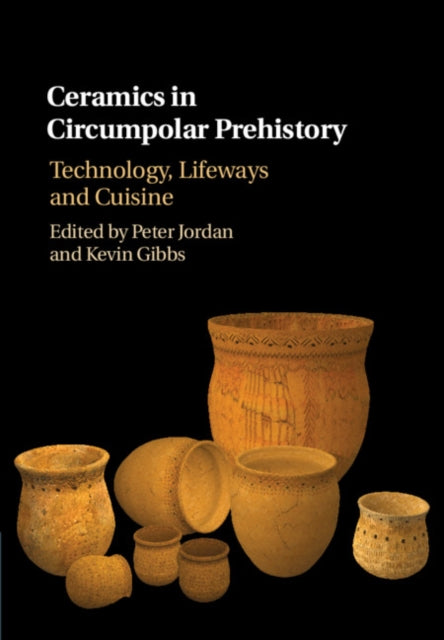
Ceramics in Circumpolar Prehistory: Technology, Lifeways and Cuisine
Ceramics in Circumpolar Prehistory: Technology, Lifeways and Cuisine
💎 Earn 467 Points (£4.67) on this item.
YOU SAVE £5.54
- Condition: Brand new
- UK Delivery times: Usually arrives within 2 - 3 working days
- UK Shipping: Fee starts at £2.39. Subject to product weight & dimension
Bulk ordering. Want 15 or more copies? Get a personalised quote and bigger discounts. Learn more about bulk orders.
Couldn't load pickup availability
- More about Ceramics in Circumpolar Prehistory: Technology, Lifeways and Cuisine
Hunter-gatherers inhabited the Circumpolar World, but pottery-making spread widely across the Northern World, playing a key role in subsistence and social life. This book explores the human motivations behind the adoption of pottery, the challenges faced in its production, and the solutions that emerged.
Format: Hardback
Length: 246 pages
Publication date: 07 March 2019
Publisher: Cambridge University Press
Throughout prehistory, the Circumpolar World was inhabited by hunter-gatherers, making pottery-making a daunting task in the cold, northern environments. The craft's dissemination into this region seemed unlikely, as it required specialized skills and resources. However, recent archaeological discoveries have revealed that pottery traditions were widely adopted across the Northern World, playing a crucial role in subsistence and social life.
In this comprehensive book, a team of international scholars explores the human motivations behind the adoption of pottery, the challenges faced in its production, and the innovative solutions that emerged. The volume includes essays that provide insights into the role of pottery cooking technologies in northern lifeways, both in prehistoric times and in more recent ethnographic contexts.
The adoption of pottery was driven by various factors, including increased food production, improved storage capabilities, and social and cultural interactions. Hunter-gatherers in the Circumpolar World had to overcome numerous challenges to produce pottery, such as sourcing suitable clay materials, mastering the pottery-making process, and adapting to the harsh northern climate.
Despite these obstacles, pottery-making became a widespread practice in the Northern World, with different cultures developing their unique styles and techniques. Pottery was used for cooking, storing food, and serving as a medium of exchange and decoration. It played a vital role in maintaining social relationships, as it allowed individuals to gather and share meals, and it also facilitated trade and communication between different communities.
The production of pottery was a complex process that involved several stages, including selecting and preparing the clay, molding and shaping the pottery, and firing it at high temperatures. Different techniques were used depending on the region and the available resources, such as hand-building, wheel-throwing, and pit firing.
One of the most significant innovations in pottery-making was the development of kilns, which allowed for the controlled burning of pottery at high temperatures. This allowed for the production of durable and high-quality pottery, which could be used for extended periods of time. Kilns also facilitated the spread of pottery-making technologies, as they could be used to produce pottery in remote locations that were not accessible to traditional hunting and gathering practices.
In addition to its practical uses, pottery also played a cultural and symbolic role in northern lifeways. It was often used to represent social status, religious beliefs, and artistic traditions. Different cultures had their own unique pottery styles and motifs, which reflected their cultural identity and heritage.
The adoption of pottery was not limited to the Circumpolar World, but it also occurred in other regions of the world, such as Europe, Asia, and Africa. Pottery-making technologies and styles varied widely across these regions, reflecting the diverse cultural and environmental contexts in which they were developed.
In conclusion, the adoption of pottery-making in the Northern World was a remarkable achievement that had a profound impact on subsistence, social life, and cultural development. This book sheds light on the human motivations that lay behind the adoption of pottery, the challenges that had to be overcome in order to produce it, and the solutions that emerged. By exploring the role of pottery in northern lifeways, this volume offers a compelling portrait of the role that pottery cooking technologies played in shaping the human history and heritage of the Circumpolar World.
Weight: 682g
Dimension: 188 x 262 x 16 (mm)
ISBN-13: 9781107118249
UK and International shipping information
UK and International shipping information
UK Delivery and returns information:
- Delivery within 2 - 3 days when ordering in the UK.
- Shipping fee for UK customers from £2.39. Fully tracked shipping service available.
- Returns policy: Return within 30 days of receipt for full refund.
International deliveries:
Shulph Ink now ships to Australia, Belgium, Canada, France, Germany, Ireland, Italy, India, Luxembourg Saudi Arabia, Singapore, Spain, Netherlands, New Zealand, United Arab Emirates, United States of America.
- Delivery times: within 5 - 10 days for international orders.
- Shipping fee: charges vary for overseas orders. Only tracked services are available for most international orders. Some countries have untracked shipping options.
- Customs charges: If ordering to addresses outside the United Kingdom, you may or may not incur additional customs and duties fees during local delivery.